The University of California (UC) is a public land-grant research university system in the U.S. state of California. Headquartered in Oakland, the system is composed of its ten campuses at Berkeley, Davis, Irvine, Los Angeles, Merced, Riverside, San Diego, San Francisco, Santa Barbara, and Santa Cruz, along with numerous research centers and academic abroad centers. The system is the state's land-grant university. Major publications generally rank most UC campuses as being among the best universities in the world. In 1900, UC was one of the founders of the Association of American Universities and since the 1970s seven of its campuses, in addition to Berkeley, have been admitted to the association. Berkeley, Davis, Santa Cruz, Irvine, Los Angeles, Santa Barbara, and San Diego are considered Public Ivies, making California the state with the most universities in the nation to hold the title. UC campuses have large numbers of distinguished faculty in almost every academic discipline, with UC faculty and researchers having won 71 Nobel Prizes as of 2021.

The California State University is a public university system in California, and the largest public university system in the United States. It consists of 23 campuses and seven off-campus centers, which together enroll 457,992 students and employ 56,256 faculty and staff members. In California, it is one of the three public higher education systems, along with the University of California and the California Community Colleges systems. The CSU system is officially incorporated as The Trustees of the California State University, and is headquartered in Long Beach, California.

The University of the Cumberlands is a private Christian university in Williamsburg, Kentucky. Over 20,000 students are enrolled at the university.

Upward Bound is a federally funded educational program within the United States. The program is one of a cluster of programs now referred to as TRiO, all of which owe their existence to the federal Economic Opportunity Act of 1964 and the Higher Education Act of 1965. Upward Bound programs are implemented and monitored by the United States Department of Education. The goal of Upward Bound is to provide certain categories of high school students better opportunities for attending college. The categories of greatest concern are those with low income, those with parents who did not attend college, and those living in rural areas. The program works through individual grants, each of which covers a restricted geographic area and provides services to approximately 59,000 students annually. The program focuses on academic and nonacademic resources and activities like visits to museums or tutoring for school work. Students are encouraged to be involved in Upward Bound for the entire academic year and a 6-week long summer program. Many students who are also granted access into the Upward Bound program are labeled as first generation college students, who are students that are the first in their family to attend college. This program is set in place for students who come from low income families as well as underrepresented schools and gives them an opportunity to excel in college.
The University of California College of the Law, San Francisco is a public law school in San Francisco, California, United States. The law school was formerly known as the University of California, Hastings College of the Law from 1878 to 2023.

The California Community Colleges is a postsecondary education system in the U.S. state of California. Despite its plural name, the system is consistently referred to in California law as a singular entity. The system includes the Board of Governors of the California Community Colleges and 73 community college districts. The districts currently operate 116 accredited colleges. The California Community Colleges is the largest system of higher education in the United States, and third largest system of higher education in the world, serving more than 1.8 million students.

Thurgood Marshall College (Marshall) is one of the eight undergraduate colleges at the University of California, San Diego. The college, named after Thurgood Marshall, the first African-American Supreme Court Justice and lawyer for the landmark 1954 Supreme Court case Brown v. Board of Education, emphasizes "scholarship, social responsibility and the belief that a liberal arts education must include an understanding of [one's] role in society." Marshall College's general education requirements emphasize the culture of community involvement and multiculturalism; accordingly Marshall houses the minors in Public Service and Film Studies for the campus. Significant academic programs and departments have come out of the college over many decades: Communication, Ethnic Studies, Third World Studies, African American Studies, Urban Studies & Planning, and Education Studies.

Charles Bass Reed served as chancellor of the State University System of Florida from 1985 to 1998 and chancellor of the California State University (CSU) system from 1998 to 2012.
California Pacific University was a private university originally founded in Escondido, California. Its law school was originally located in Bakersfield, California. The university was aimed towards working professionals in business management. The school of law was accredited by the California State Bar Committee of Bar Examiners of the State Bar of California.
The California Bureau for Private Postsecondary and Vocational Education (BPPVE) was a unit of the California Department of Consumer Affairs whose purpose was to protect students by establishing academic standards for private institutions of higher education in California. BPPVE approval or exemption was required by the State of California to ensure consumer safety from fraudulent or substandard education providers. The agency ceased operation on July 1, 2007, when the legislative authority for its creation expired. A new agency, the California Bureau for Private Postsecondary Education, took its place on January 1, 2010.
Education in Kentucky includes elementary school, middle school, high school, and post-secondary institutions. Most Kentucky schools and colleges are accredited through the Southern Association of Colleges and Schools (SACS).
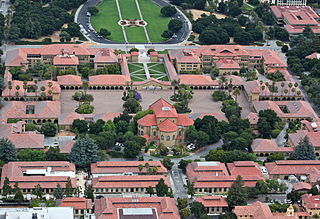
The educational system in California consists of public, NPS, and private schools in the U.S. state of California, including the public University of California, California State University, and California Community Colleges systems, private colleges and universities, and elementary, middle, and high schools.
The California Postsecondary Education Commission (CPEC) was the higher education planning and coordinating agency of the government of the U.S. state of California. It closed in 2011.
The University of California, Irvine has over fourteen academic divisions.
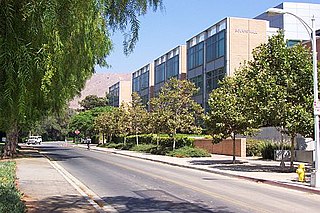
The University of California, Riverside, is organized into three academic colleges, two professional schools, and two graduate schools. These units provide 81 majors and 52 minors, 48 master's degree programs, and 42 PhD programs. It is the only UC campus to offer undergraduate degrees in Creative Writing and Public Policy, and one of only three UCs to offer an undergraduate degree in Business Administration. Additionally, UCR's doctoral program in the emerging field of Dance theory, founded in 1992, was the first program of its kind in the United States. UCR's various academic units are as follows:
Remedial education is assigned to assist students in order to achieve expected competencies in core academic skills such as literacy and numeracy.
The Kentucky Council on Postsecondary Education coordinates change and improvement in Kentucky's postsecondary education system as directed by the Kentucky Postsecondary Education Improvement Act of 1997. The Council is a statewide coordinating agency with 16 members: 14 citizens, one faculty member and one student appointed by the Governor; the Commissioner of Education is an ex officio member.
Placement testing is a practice that many colleges and universities use to assess college readiness and determine which classes a student should initially take. Since most two-year colleges have open, non-competitive admissions policies, many students are admitted without college-level academic qualifications. Placement exams or placement tests assess abilities in English, mathematics and reading; they may also be used in other disciplines such as foreign languages, computer and internet technologies, health and natural sciences. The goal is to offer low-scoring students remedial coursework to prepare them for regular coursework.

The UCLA Institute for Research on Labor and Employment (IRLE) is an interdisciplinary research unit within the College of Letters & Science, Division of Social Science, dedicated to research, teaching, and discussion of labor and employment issues. It was founded in 1945 as the UCLA Institute of Industrial Relations. It is one of the two research programs in the University of California system along with the UC Berkeley Institute for Research on Labor and Employment. The IRLE consists of four bodies: the IRLE Academic Unit, UCLA Labor Center, Human Resources Round Table, and the Labor Occupational Safety and Health Program.

The Oregon Higher Education Coordinating Commission is a volunteer state board established in 2011 in the U.S. state of Oregon, with responsibilities for advising the governor, the legislature and the Chief Education Office on statewide postsecondary education policies and funding. The fifteen-member commission has authorities for "development of biennial budget recommendations for public postsecondary education in Oregon, making funding allocations to Oregon's public community colleges and public universities, approving new academic programs for the public institutions, allocating Oregon Opportunity Grants, authorizing degrees that are proposed by private and out-of-state (distance) providers, licensing private career and trade schools, overseeing programs for veterans, and additional legislative directives".