Related Research Articles
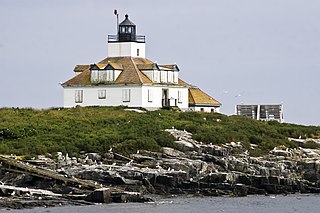
Hancock County is a county located in the U.S. state of Maine. As of the 2020 census, the population was 55,478. Its county seat is Ellsworth. The county was incorporated on June 25, 1789, and named for John Hancock, the first governor of the Commonwealth of Massachusetts.

Old Town is a city in Penobscot County, Maine, United States. The population was 7,431 at the 2020 census. The city's developed area is chiefly located on the relatively large Marsh Island, but its boundaries extend beyond it. The island is surrounded and defined by the Penobscot River to the east and the Stillwater River to the west.

Veazie is a town in Penobscot County, Maine, United States. The population was 1,814 at the 2020 census. The town is named after General Samuel Veazie, an early lumber baron and railroad operator. Veazie was originally part of Bangor, using Penobscot River water power to operate sawmills. It became a separate town in 1853 because General Veazie, its wealthiest citizen, felt that Bangor's property taxes were excessive.

Frankfort is a town on the Penobscot River estuary in Waldo County, Maine, United States. The population was 1,231 at the 2020 census.

Bucksport is an unincorporated community and census-designated place (CDP) in Horry County, South Carolina, United States. The population was 876 at the 2010 census. It is a rural port on the Atlantic Intracoastal Waterway at the merger point with the Waccamaw River. The port has some services available for boaters and is also home to the Bucksport Restaurant.

The Penobscot River is a 109-mile-long (175 km) river in the U.S. state of Maine. Including the river's West Branch and South Branch increases the Penobscot's length to 264 miles (425 km), making it the second-longest river system in Maine and the longest entirely in the state. Its drainage basin contains 8,610 square miles (22,300 km2).

Phillips University was a private university in Enid, Oklahoma. It opened in 1906 and closed in 1998. It was affiliated with the Christian Church. It included an undergraduate college and a graduate seminary. The university was also home to the Enid-Phillips Symphony Orchestra, and its campus regularly hosted events for the Tri-State Music Festival.
Liberty School was a private secondary school in Blue Hill, Maine, United States, that operated for nearly ten years.

Foxcroft Academy is a private preparatory high school located in Dover-Foxcroft, Piscataquis County, Maine. Foxcroft Academy is accredited by the New England Association of Schools and Colleges and a member of the Independent School Association of Northern New England, College Board and the National Association of Independent Schools.

Clarence Melville Condon was a United States Army Sergeant who received the Medal of Honor for actions during the Philippine–American War.
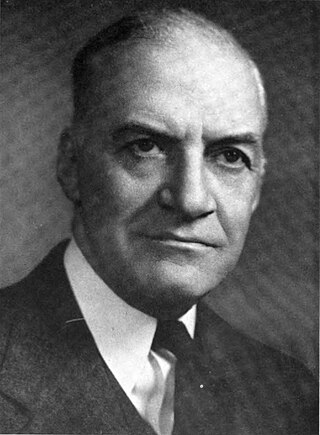
Frank Fellows was a U.S. Representative from Maine serving from 1941 until his death in Bangor, Maine in 1951.
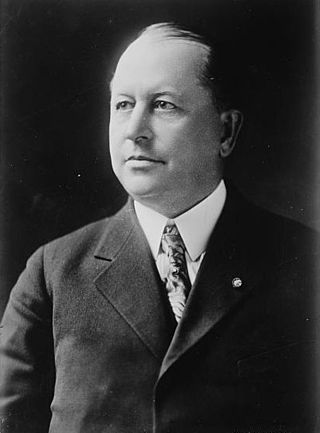
Frank Edward Guernsey was a U.S. Representative from Maine.

Wilson Hall is a historic Methodist seminary building on Franklin Street in Bucksport, Maine. Built in 1850-51 by the Eastern Maine Methodist Conference, it housed East Maine Conference Seminary, which was the only Methodist seminary in eastern Maine, and was the only seminary in Hancock County. Of the two surviving buildings of the seminary, this is the finest, a handsome Greek Revival structure that is a distinctive local landmark. The building was listed on the National Register of Historic Places in 1983.
DeForest Henry Perkins was an American educator, real estate developer, and political activist who was the Grand Dragon of the Ku Klux Klan in Maine from 1925 to 1928. Perkins served as Superintendent of Portland Public Schools from 1911 – 1918. He was then hired as secretary of the Portland Chamber of Commerce from 1918 – 1921. During his time as Grand Dragon, the Klan experienced both its peak in political strength before dramatically declining. of the Klan's ascendency nationally, and in Maine. He resigned in 1928 after a Klan-backed Republican candidate for U.S. Senator, Ralph Owen Brewster, lost his primary contest to Sen. Frederick Hale, signaling the eclipse of the Klan as a force in Maine politics.
Bucksport is a census-designated place (CDP) in the town of Bucksport in Hancock County, Maine, United States. The population was 2,885 at the 2010 census, down from 2,970 at the 2000 census.

Bucksport is a historical town in Hancock County, Maine, United States. The population was 4,944 at the 2020 census. Bucksport is across the Penobscot River estuary from Fort Knox and the Penobscot Narrows Bridge, which replaced the Waldo–Hancock Bridge.
Bucksport High School is a public high school in Bucksport, Maine, United States. It is part of Regional School Unit (RSU) 25. Between 350 and 400 students study at Bucksport High School. It also provides a satellite program on campus for Hancock County Technical Center.

Winterport is a census-designated place (CDP) in the town of Winterport in Waldo County, Maine, United States. The population was 1,307 at the 2000 census.
Raymond Fellows, of Bucksport, Maine, was a justice of the Maine Supreme Judicial Court from May 1, 1946, to September 15, 1956, serving as chief justice from April 7, 1954, to September 15, 1956.
Oscar F. Fellows was an American attorney politician from Maine. A Republican from Bucksport, Fellows served two terms in the Maine House of Representatives. In his second term, he was elected Speaker.
References
- ↑ "East Maine Conference Seminary, Bucksport, ca. 1910". Maine Memory Network. Retrieved 13 February 2020.
- ↑ "Nicole K. Staples, "Bucksport, Maine History"". Archived from the original on April 14, 2008. Retrieved April 29, 2008.
44°34′31″N68°47′53″W / 44.5753°N 68.7981°W
 | This Maine-related article is a stub. You can help Wikipedia by expanding it. |