
Look up ecosystem in Wiktionary, the free dictionary.
Ecosystem is a community of living organisms together with the nonliving components of their environment.
By metaphorical extension, the term may also reference:
Ecosystem is a community of living organisms together with the nonliving components of their environment.
By metaphorical extension, the term may also reference:


An ecosystem is a system that environments and their organisms form through their interaction. The biotic and abiotic components are linked together through nutrient cycles and energy flows.
Respiration may refer to:
Diversity, diversify, or diverse may refer to:

Bottom–up and top–down are both strategies of information processing and ordering knowledge, used in a variety of fields including software, humanistic and scientific theories, and management and organization. In practice they can be seen as a style of thinking, teaching, or leadership.
Boreal may refer to:
Indonesian is anything of, from, or related to Indonesia, an archipelagic country in Southeast Asia. It may refer to:

A keystone species is a species that has a disproportionately large effect on its natural environment relative to its abundance, a concept introduced in 1969 by the zoologist Robert T. Paine. Keystone species play a critical role in maintaining the structure of an ecological community, affecting many other organisms in an ecosystem and helping to determine the types and numbers of various other species in the community. Without keystone species, the ecosystem would be dramatically different or cease to exist altogether. Some keystone species, such as the wolf, are also apex predators.
Terrestrial refers to things related to land or the planet Earth.
Aquatic means relating to water; living in or near water or taking place in water; does not include groundwater, as "aquatic" implies an environment where plants and animals live.
Production may refer to:

An ecosystem engineer is any species that creates, significantly modifies, maintains or destroys a habitat. These organisms can have a large impact on species richness and landscape-level heterogeneity of an area. As a result, ecosystem engineers are important for maintaining the health and stability of the environment they are living in. Since all organisms impact the environment they live in one way or another, it has been proposed that the term "ecosystem engineers" be used only for keystone species whose behavior very strongly affects other organisms.

Ecosystem services are the many and varied benefits to humans provided by the natural environment and healthy ecosystems. Such ecosystems include, for example, agroecosystems, forest ecosystem, grassland ecosystems, and aquatic ecosystems. These ecosystems, functioning in healthy relationships, offer such things as natural pollination of crops, clean air, extreme weather mitigation, and human mental and physical well-being. Collectively, these benefits are becoming known as ecosystem services, and are often integral to the provision of food, the provisioning of clean drinking water, the decomposition of wastes, and the resilience and productivity of food ecosystems.
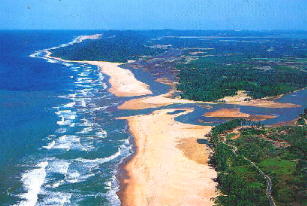
An aquatic ecosystem is an ecosystem found in and around a body of water, in contrast to land-based terrestrial ecosystems. Aquatic ecosystems contain communities of organisms—aquatic life—that are dependent on each other and on their environment. The two main types of aquatic ecosystems are marine ecosystems and freshwater ecosystems. Freshwater ecosystems may be lentic ; lotic ; and wetlands.
Ecoforestry has been defined as selection forestry or restoration forestry. The main idea of ecoforestry is to maintain or restore the forest to standards where the forest may still be harvested for products on a sustainable basis. Ecoforestry is forestry that emphasizes holistic practices which strive to protect and restore ecosystems rather than maximize economic productivity. Sustainability of the forest also comes with uncertainties. There are other factors that may affect the forest furthermore than that of the harvesting. There are internal conditions such as effects of soil compaction, tree damage, disease, fire, and blow down that also directly affect the ecosystem. These factors have to be taken into account when determining the sustainability of a forest. If these factors are added to the harvesting and production that comes out of the forest, then the forest will become less likely to survive, and will then become less sustainable.

Systems ecology is an interdisciplinary field of ecology, a subset of Earth system science, that takes a holistic approach to the study of ecological systems, especially ecosystems. Systems ecology can be seen as an application of general systems theory to ecology. Central to the systems ecology approach is the idea that an ecosystem is a complex system exhibiting emergent properties. Systems ecology focuses on interactions and transactions within and between biological and ecological systems, and is especially concerned with the way the functioning of ecosystems can be influenced by human interventions. It uses and extends concepts from thermodynamics and develops other macroscopic descriptions of complex systems.

An ecological pyramid is a graphical representation designed to show the biomass or bioproductivity at each trophic level in an ecosystem.

In ecology, a disturbance is a temporary change in environmental conditions that causes a pronounced change in an ecosystem. Disturbances often act quickly and with great effect, to alter the physical structure or arrangement of biotic and abiotic elements. A disturbance can also occur over a long period of time and can impact the biodiversity within an ecosystem.
Ecological indicators are used to communicate information about ecosystems and the impact human activity has on ecosystems to groups such as the public or government policy makers. Ecosystems are complex and ecological indicators can help describe them in simpler terms that can be understood and used by non-scientists to make management decisions. For example, the number of different beetle taxa found in a field can be used as an indicator of biodiversity.
An ecological cascade effect is a series of secondary extinctions that are triggered by the primary extinction of a key species in an ecosystem. Secondary extinctions are likely to occur when the threatened species are: dependent on a few specific food sources, mutualistic, or forced to coexist with an invasive species that is introduced to the ecosystem. Species introductions to a foreign ecosystem can often devastate entire communities, and even entire ecosystems. These exotic species monopolize the ecosystem's resources, and since they have no natural predators to decrease their growth, they are able to increase indefinitely. Olsen et al. showed that exotic species have caused lake and estuary ecosystems to go through cascade effects due to loss of algae, crayfish, mollusks, fish, amphibians, and birds. However, the principal cause of cascade effects is the loss of top predators as the key species. As a result of this loss, a dramatic increase of prey species occurs. The prey is then able to overexploit its own food resources, until the population numbers decrease in abundance, which can lead to extinction. When the prey's food resources disappear, they starve and may go extinct as well. If the prey species is herbivorous, then their initial release and exploitation of the plants may result in a loss of plant biodiversity in the area. If other organisms in the ecosystem also depend upon these plants as food resources, then these species may go extinct as well. An example of the cascade effect caused by the loss of a top predator is apparent in tropical forests. When hunters cause local extinctions of top predators, the predators' prey's population numbers increase, causing an overexploitation of a food resource and a cascade effect of species loss. Recent studies have been performed on approaches to mitigate extinction cascades in food-web networks.
The Apple ecosystem is a term used to describe Apple Inc.'s digital ecosystem of products, including the iPhone, iPad, Apple Watch, HomePod etc. It is often praised for its seamless integration and optimization between various networks of devices, software and services, and is largely emphasized by Apple's focus on privacy, but criticized for its closed system and lack of consumer control.