Related Research Articles

Maria Edgeworth was a prolific Anglo-Irish novelist of adults' and children's literature. She was one of the first realist writers in children's literature and a significant figure in the evolution of the novel in Europe. She held critical views on estate management, politics, and education, and corresponded with some of the leading literary and economic writers, including Sir Walter Scott and David Ricardo. During the first decade of the 19th century she was one of the most widely read novelists in Britain and Ireland. Her name today is most commonly associated with Castle Rackrent, her first novel, in which she adopted an Irish Catholic voice to narrate the dissipation and decline of a family from her own landed Anglo-Irish class.

Castle Rackrent is a short novel by Maria Edgeworth published in 1800. Unlike many of her other novels, which were heavily "edited" by her father, Richard Lovell Edgeworth, before their publication, the published version is close to her original intention.
Lee is a common surname in English-speaking countries.
Cochrane is a surname with multiple independent origins, two Scottish and one Irish. One of the Scottish names derives from a place in Scotland; the Irish surname and the other Scottish surname are both anglicisations of surnames from the Irish language and Scottish Gaelic respectively.

Edgeworthstown or Mostrim is a small town in County Longford, Ireland. The town is in the east of the county, near the border with County Westmeath. Nearby towns are Longford 12 km to the west, Mullingar 26 km to the east, Athlone 40 km to the south and Cavan 42 km to the north. The N4 and N55 roads meet in the town. The town is in the townland of Edgeworthstown and in the civil parish of Mostrim.
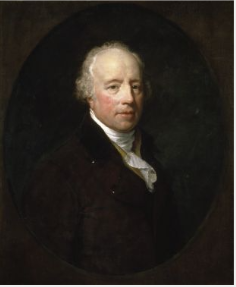
Richard Lovell Edgeworth was an Anglo-Irish politician, writer and inventor. He had 22 children.
Klemperer is a German-language occupational surname literally meaning "tinker". It is suggested that in the case of the conductor's immediate family the original name was Klopper - one who knocks on doors to get people to go to Synagogue - and was later changed to the better sounding Klemperer which rhymes with Emperor.
Bergin is a surname. Notable people with the surname include:

Catherine Sarah Dorothea Wellesley, Duchess of Wellington, known before her marriage as Kitty Pakenham, was the wife of Arthur Wellesley, 1st Duke of Wellington.
McWilliams is a surname. Notable people with the surname include:
Lang is a surname of Germanic origin, closely related to Lange, Laing and Long, all of which mean "tall".

Michael Pakenham Edgeworth was an Irish botanist who specialized in seed plants and ferns, and spent most of his life working in India. He was also a pioneer of photography.
Wallis is a surname of English and Scottish origin. It is a variant spelling of Wallace, a common family name in Scotland.
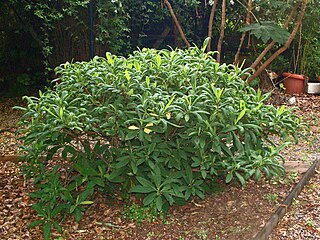
Edgeworthia chrysantha is a plant in the family Thymelaeaceae.
Claude is a surname. It may refer to :
Conway is a Welsh, Irish & Scottish surname. It can be an anglicised spelling of Conwy, Mac Connmhaigh, Ó Connmhacháin, or the Scottish Coneway.
Pakenham is a surname of Old English origin. It is a locational surname from Pagham, Sussex, or Pakenham, Suffolk.

Bi is a Chinese surname. It is listed 76th in the Song dynasty classic text, the Hundred Family Surnames.
Frances Anne Edgeworth (1769–1865), known as Fanny, was an Irish botanical artist and memoirist. She was the stepmother and confidant of the author Maria Edgeworth.
Kearney or Kearneys is an Irish surname.
References
- ↑ George Redmonds; et al. (2011). Surnames, DNA and Family History . OUP Oxford. p. 96. ISBN 978-0-19-958264-8.

If an internal link intending to refer to a specific person led you to this page, you may wish to change that link by adding the person's given name(s) to the link.