Related Research Articles
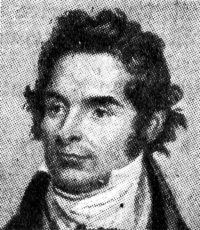
William Scoresby was an English whaler, Arctic explorer, scientist and clergyman.

Edgar Douglas Adrian, 1st Baron Adrian was an English electrophysiologist and recipient of the 1932 Nobel Prize for Physiology, won jointly with Sir Charles Sherrington for work on the function of neurons. He provided experimental evidence for the all-or-none law of nerves.

Charles Sutherland Elton was an English zoologist and animal ecologist. He is associated with the development of population and community ecology, including studies of invasive organisms.

Sir George Clarke Simpson KCB CBE FRS HFRSE was a British meteorologist. He was President of the Royal Meteorological Society 1940/41.
Sir Charles Maurice Yonge, CBE, FRS FRSE was an English marine zoologist.
Sir Francis Martin Rouse Walshe, FRS was a British neurologist.

Group Captain James Martin Stagg, was a Met Office meteorologist attached to the Royal Air Force during the Second World War who notably persuaded General Dwight D. Eisenhower to change the date of the Allied invasion of Europe from 5 to 6 June 1944.

Sir James Mann WordieCBE FRS FRSGS LLD was a Scottish polar explorer and geologist. Friends knew him as Jock Wordie.

Sir John Graham Kerr, known to his friends as Graham Kerr, was a British embryologist and Unionist Member of Parliament (MP). He is best known for his studies of the embryology of lungfishes. He was involved in ship camouflage in the First World War, and through his pupil Hugh B. Cott influenced military camouflage thinking in the Second World War also.
Hugh Robert Mill was a British geographer and meteorologist who was influential in the reform of geography teaching, and in the development of meteorology as a science. He was President of the Royal Meteorological Society for 1907/8, and President of the Geographical Association in 1932.

Reginald William James was a British researcher and teacher of physics in England and South Africa. He is best known for his service in the Imperial Trans-Antarctic Expedition of 1914–1916, for which he was awarded the Silver Polar Medal.
John Macnaghten Whittaker FRS FRSE LLD was a British mathematician and Vice-Chancellor of the University of Sheffield from 1953 to 1965.
William Marshall Smart was a 20th-century Scottish astronomer.
Thomas Thomson Paterson (1909–1994) was a Scottish archaeologist, palaeontologist, geologist, glaciologist, geographer, anthropologist, ethnologist, sociologist, and world authority on administration. He was curator of the Museum of Archaeology and Anthropology in Cambridge from 1937 to 1948.

Brian Birley Roberts was a British polar expert, ornithologist and diplomat who played a key role in the development of the Antarctic Treaty System. A biography of Roberts has been published.
Mungo McCallum Fairgrieve FRSE (1872-1937) was a Scottish educator, academic author and amateur meteorologist.
Charles Henry Brian (Bill) Priestley, FRS was a British meteorologist who was born in London, UK
James Balfour Lockhart FRSE was a Scottish mathematician and teacher. He was generally known as J. B. Lockhart or simply JBL. He was a Fellow of the Royal Society of Edinburgh.
Francis Ian Gregory Rawlins CBE FRSE FSA FIP was a British physicist and crystallographer. Professionally he was known as Ian Rawlins however most friends called him Fig Rawlins. He was an expert on x-ray photography and shadowgraphs.
Captain Owen Fiennes Temple Roberts FRSE MC (1896–1968) was a British astronomer and meteorologist.
References
- ↑ Biographical Index of Former Fellows of the Royal Society of Edinburgh 1783–2002 (PDF). The Royal Society of Edinburgh. July 2006. ISBN 0 902 198 84 X.
- ↑ Cambridge Journals: obituaries 1953
- ↑ "Une Radiosonde ancienne : Kew Mk2b". radiosonde.eu. Retrieved 2 June 2019.