
Forensic engineering has been defined as "the investigation of failures—ranging from serviceability to catastrophic—which may lead to legal activity, including both civil and criminal". The forensic engineering field is very broad in terms of the many disciplines that it covers, investigations that use forensic engineering are case of environmental damages to structures, system failures of machines, explosions, electrical, fire point of origin, vehicle failures and many more.
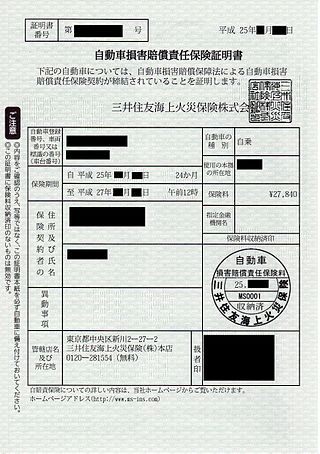
Vehicle insurance is insurance for cars, trucks, motorcycles, and other road vehicles. Its primary use is to provide financial protection against physical damage or bodily injury resulting from traffic collisions and against liability that could also arise from incidents in a vehicle. Vehicle insurance may additionally offer financial protection against theft of the vehicle, and against damage to the vehicle sustained from events other than traffic collisions, such as vandalism, weather or natural disasters, and damage sustained by colliding with stationary objects. The specific terms of vehicle insurance vary with legal regulations in each region.
IT disaster recovery (also, simply disaster recovery (DR)) is the process of maintaining or reestablishing vital infrastructure and systems following a natural or human-induced disaster, such as a storm or battle. DR employs policies, tools, and procedures with a focus on IT systems supporting critical business functions. This involves keeping all essential aspects of a business functioning despite significant disruptive events; it can therefore be considered a subset of business continuity (BC). DR assumes that the primary site is not immediately recoverable and restores data and services to a secondary site.
A catastrophic failure is a sudden and total failure from which recovery is impossible. Catastrophic failures often lead to cascading systems failure. The term is most commonly used for structural failures, but has often been extended to many other disciplines in which total and irrecoverable loss occurs, such as a head crash occurrence on a hard disk drive.
Given organizations' increasing dependency on information technology (IT) to run their operations, business continuity planning covers the entire organization, while disaster recovery focuses on IT.
In computing, data recovery is a process of retrieving deleted, inaccessible, lost, corrupted, damaged, or formatted data from secondary storage, removable media or files, when the data stored in them cannot be accessed in a usual way. The data is most often salvaged from storage media such as internal or external hard disk drives (HDDs), solid-state drives (SSDs), USB flash drives, magnetic tapes, CDs, DVDs, RAID subsystems, and other electronic devices. Recovery may be required due to physical damage to the storage devices or logical damage to the file system that prevents it from being mounted by the host operating system (OS).
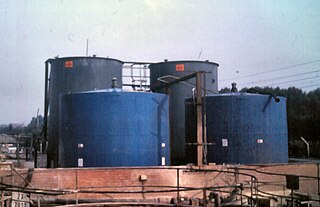
Bunding, also called a bund wall, is a constructed retaining wall around storage "where potentially polluting substances are handled, processed or stored, for the purposes of containing any unintended escape of material from that area until such time as a remedial action can be taken."
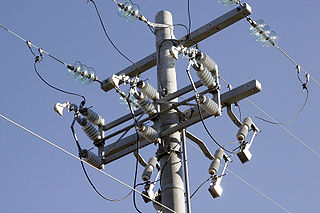
Forensic electrical engineering is a branch of forensic engineering, and is concerned with investigating electrical failures and accidents in a legal context. Many forensic electrical engineering investigations apply to fires suspected to be caused by electrical failures. Forensic electrical engineers are most commonly retained by insurance companies or attorneys representing insurance companies, or by manufacturers or contractors defending themselves against subrogation by insurance companies. Other areas of investigation include accident investigation involving electrocution, and intellectual property disputes such as patent actions. Additionally, since electrical fires are most often cited as the cause for "suspect" fires an electrical engineer is often employed to evaluate the electrical equipment and systems to determine whether the cause of the fire was electrical in nature.

Farmers Insurance Group is an American insurer group of vehicles, homes and small businesses and also provides other insurance and financial services products. Farmers Insurance has more than 48,000 exclusive and independent agents and approximately 21,000 employees. Farmers is the trade name for three reciprocal exchanges, Farmers, Fire, and Truck, each a managed by Farmers Group, Inc. as attorney-in-fact on behalf of their respective policyholders. Farmers Group, Inc. is a wholly owned subsidiary of Swiss-based Zurich Insurance Group.
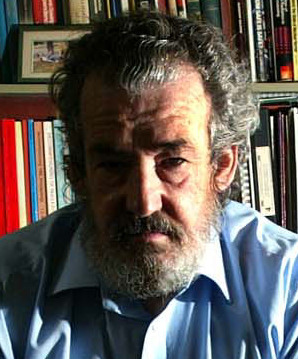
John Henry Large was an English consulting Chartered Engineer primarily known for his work in assessing and reporting upon nuclear safety and nuclear related accidents and incidents, work which has often featured in the media.

Deepwater Horizon was an ultra-deepwater, dynamically positioned, semi-submersible offshore drilling rig owned by Transocean and operated by the BP company. On April 20, 2010, while drilling in the Gulf of Mexico at the Macondo Prospect, a blowout caused an explosion on the rig that killed 11 crewmen and ignited a fireball visible from 40 miles (64 km) away. The fire was inextinguishable and, two days later, on April 22, the Horizon collapsed, leaving the well gushing at the seabed and becoming the largest marine oil spill in history.

Vehicle recovery is the recovery of any vehicle to another place, generally speaking with a commercial vehicle known as a recovery vehicle, tow truck or spectacle lift.
Natural Hazards Commission – Toka Tū Ake, also known as the Earthquake Commission Toka Tū Ake, is a New Zealand Crown entity that invests in natural disaster research and education as well as providing natural disaster insurance to residential property owners. The Natural Hazards Insurance Act 2023, which came into effect on 1 July 2024, made a number of changes, including changing the name of the Earthquake Commission to Natural Hazards Commission.
Accident management is the centralised handling of a motorist’s claim following a road traffic collision or other damages or mishaps that happen to a vehicle while on or off road. It is a cost-effective intermediary service which assists drivers in getting back on the road quickly and in managing the claims process alone. Whilst it is significantly more cost-effective for the innocent motorist, the service costs significantly more as a result - a cost borne by the insurer of the 'at-fault' driver.

A single point of failure (SPOF) is a part of a system that, if it fails, will stop the entire system from working. SPOFs are undesirable in any system with a goal of high availability or reliability, be it a business practice, software application, or other industrial system.

FTI Consulting is a business consultancy firm founded in 1982 and headquartered in Washington, D.C., United States. The company specializes in corporate finance and restructuring, economic consulting, forensic and litigation consulting, strategic communications and technology. FTI Consulting employs more than 7,700 staff in 31 countries and is one of the largest financial consulting firms worldwide.
Public Law 113-2, containing Division A: Disaster Relief Appropriations Act, 2013 and Division B: Sandy Recovery Improvement Act of 2013 is a U.S. appropriations bill authorizing $60 billion for disaster relief agencies. The Budget Control Act of 2011 (BCA), had authorized only disaster spending and emergency spending to exceed established spending caps. While emergency spending is not subject to the caps in the BCA, spending for disaster relief is calculated by taking the average of the previous ten years disaster relief spending, excluding the highest and lowest spending years.

Orbital-3, also known as Orb-3, was an attempted flight of Cygnus, an automated cargo spacecraft developed by United States–based company Orbital Sciences, on 28 October 2014. The mission was intended to launch at 22:22:38 UTC that evening. This flight, which would have been its fourth to the International Space Station and the fifth of an Antares launch vehicle, resulted in the Antares rocket exploding seconds after liftoff.

Disaster preparedness in museums, galleries, libraries, archives and private collections, involves any actions taken to plan for, prevent, respond or recover from natural disasters and other events that can cause damage or loss to cultural property. 'Disasters' in this context may include large-scale natural events such as earthquakes, flooding or bushfire, as well as human-caused events such as theft and vandalism. Increasingly, anthropogenic climate change is a factor in cultural heritage disaster planning, due to rising sea levels, changes in rainfall patterns, warming average temperatures, and more frequent extreme weather events.

The conservation and restoration of lighthouses is when lighthouse structures are preserved through detailed examination, cleaning, and in-kind replacement of materials. Given the wide variety of materials used to construct lighthouses, a variety of techniques and considerations are required. Lighthouses alert seagoers of rocky shores nearby and provide landmark navigation. They also act as a physical representation to maritime history and advancement. These historic buildings are prone to deterioration due to their location on rocky outcrops of land near the water, as well as severe weather events, and the continued rise of sea levels. Given these conditions preservation and conservation efforts have increased.

