A biocide is defined in the European legislation as a chemical substance or microorganism intended to destroy, deter, render harmless, or exert a controlling effect on any harmful organism. The US Environmental Protection Agency (EPA) uses a slightly different definition for biocides as "a diverse group of poisonous substances including preservatives, insecticides, disinfectants, and pesticides used for the control of organisms that are harmful to human or animal health or that cause damage to natural or manufactured products". When compared, the two definitions roughly imply the same, although the US EPA definition includes plant protection products and some veterinary medicines.

A safety data sheet (SDS), material safety data sheet (MSDS), or product safety data sheet (PSDS) is a document that lists information relating to occupational safety and health for the use of various substances and products. SDSs are a widely used system for cataloguing information on chemicals, chemical compounds, and chemical mixtures. SDS information may include instructions for the safe use and potential hazards associated with a particular material or product, along with spill-handling procedures. The older MSDS formats could vary from source to source within a country depending on national requirements; however, the newer SDS format is internationally standardized.
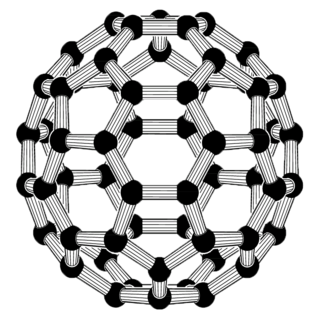
Nanomaterials describe, in principle, materials of which a single unit small sized between 1 and 100 nm.

Registration, Evaluation, Authorisation and Restriction of Chemicals (REACH) is a European Union regulation dating from 18 December 2006. REACH addresses the production and use of chemical substances, and their potential impacts on both human health and the environment. Its 849 pages took seven years to pass, and it has been described as the most complex legislation in the Union's history and the most important in 20 years. It is the strictest law to date regulating chemical substances and will affect industries throughout the world. REACH entered into force on 1 June 2007, with a phased implementation over the next decade. The regulation also established the European Chemicals Agency, which manages the technical, scientific and administrative aspects of REACH.

The European Community number is a unique seven-digit identifier that was assigned to substances for regulatory purposes within the European Union by the European Commission. The EC Inventory comprises three individual inventories, EINECS, ELINCS and the NLP list.

The European Chemicals Agency is an agency of the European Union which manages the technical and administrative aspects of the implementation of the European Union regulation called Registration, Evaluation, Authorisation and Restriction of Chemicals (REACH). ECHA is the driving force among regulatory authorities in implementing the EU's chemicals legislation. ECHA has to ascertain that companies comply with the legislation, advances the safe use of chemicals, provides information on chemicals and addresses chemicals of concern. It is located in Helsinki, Finland. ECHA is an independent and mature regulatory agency established by REACH. It is not a subsidiary entity of the European Commission.

Decamethylcyclopentasiloxane (D5) is an organosilicon compound with the formula [(CH3)2SiO]5. It is a colorless and odorless liquid that is slightly volatile.
The impact of nanotechnology extends from its medical, ethical, mental, legal and environmental applications, to fields such as engineering, biology, chemistry, computing, materials science, and communications.
IUCLID is a software application to capture, store, maintain and exchange data on intrinsic and hazard properties of chemical substances. Distributed free of charge, the software is especially useful to chemical industry companies and to government authorities. It is the key tool for chemical industry to fulfill data submission obligations under REACH, the most important European Union legal document covering the production and use of chemical substances. The software is maintained by the European Chemicals Agency, ECHA. The latest version, version 6, was made available on 29 April 2016.

Cosmetics ingredients come from a variety of sources but, unlike the ingredients of food, are often not considered by most consumers. Cosmetics often use vibrant colors that are derived from a wide variety of sources, ranging from crushed insects to rust.
The European Chemicals Bureau (ECB) was the focal point for the data and assessment procedure on dangerous chemicals within the European Union (EU). The ECB was located in Ispra, Italy, under the responsibility of the Institute for Health and Consumer Protection (IHCP) of the Joint Research Centre (JRC) of the European Commission. In 2008 the ECB completed its mandate. Some of its activities were taken over by the European Chemicals Agency (ECHA); others remained within the Joint Research Centre's Institute for Health & Consumer Protection (IHCP). Tasks of the former ECB still managed by JRC-IHCP include: the Review Programme on the risk assessment of Biocides, the development of a methodology for the future Regulation on the Prioritisation of Chemical Substances and its corresponding Environmental Quality Standards (EQS); the harmonisation of testing methods and 'non-testing methods'.
The CLP Regulation is a European Union regulation from 2008, which aligns the European Union system of classification, labelling and packaging of chemical substances and mixtures to the Globally Harmonised System (GHS). It is expected to facilitate global trade and the harmonised communication of hazard information of chemicals and to promote regulatory efficiency. It complements the 2006 Registration, Evaluation, Authorisation and Restriction of Chemicals (REACH) Regulation and replaces the current system contained in the Dangerous Substances Directive (67/548/EEC) and the Dangerous Preparations Directive (1999/45/EC).
Because of the ongoing controversy on the implications of nanotechnology, there is significant debate concerning whether nanotechnology or nanotechnology-based products merit special government regulation. This mainly relates to when to assess new substances prior to their release into the market, community and environment.

The International Organization for Standardization defines Engineered Nanomaterials, or ENMS, as materials with external dimensions between 1 and 100nm, the nanoscale, or having an internal surface structure at these dimensions. Nanoparticles can be both incidental and engineered. Incidental nanoparticles include particles from dust storms, volcanic eruptions, forest fires, and ocean water evaporation. Engineered nanoparticles (EMMs) are nanoparticles that are made for use in cosmetics or pharmaceuticals like ZnO and TiO2. They are also found from sources such as cigarette smoke and building demolition. Engineered nanoparticles have become increasingly important for many applications in consumer and industrial products, which has resulted in an increased presence in the environment. This proliferation has instigated a growing body of research into the effects of nanoparticles in the environment.
A substance of very high concern (SVHC) is a chemical substance concerning which it has been proposed that use within the European Union be subject to authorisation under the REACH Regulation. Indeed, listing of a substance as an SVHC by the European Chemicals Agency (ECHA) is the first step in the procedure for authorisation or restriction of use of a chemical. The first list of SVHCs was published on 28 October 2008 and the list has been updated many times to include new candidates. The most recent update occurred in January 2022 to include a total of 223 SVHC.
The European chemical Substances Information System (ESIS) was a chemoinformatics database that stored information system on chemicals of the European Union. It was created by the former European Chemicals Bureau, which completed its mandate in 2008, in the year 2003. ESIS was set up by the Joint Research Centre of the European Commission in order to make data on the safety of chemicals more readily accessible to the public, offering a single search tool on chemicals and the legislation under which they are presently covered. By October 3, 2013, ESIS contained 14,897 substance records.

The European Partnership for Alternative Approaches to Animal Testing (EPAA) promotes the application of Russell and Burch’s 3Rs principles in meeting regulatory requirements for products such as pharmaceuticals, chemicals, soaps, detergents and cosmetics. The EPAA covers research and development, as well as the use of 3Rs approaches in regulatory compliance and communication and dissemination.
The EU NanoSafety Cluster (NSC) is a cluster of European Commission-funded projects in the funding programs FP6 (2002–2006), FP7 (2007–2013), and Horizon 2020 aka H2020 (2014–2020) framework programmes, aimed at harmonizing the research done in these projects. The cluster coordinates work done by the NanoSafety Cluster projects to study and establish the safety of nanomaterials. The coordination by the cluster is organized in half-yearly meetings and various working groups. An example of a result of the NanoSafety Cluster's harmonization was the prioritization of which nanomaterials to study. The NSC has become a reference actor for consumers' associations in the field.
The health and safety hazards of nanomaterials include the potential toxicity of various types of nanomaterials, as well as fire and dust explosion hazards. Because nanotechnology is a recent development, the health and safety effects of exposures to nanomaterials, and what levels of exposure may be acceptable, are subjects of ongoing research. Of the possible hazards, inhalation exposure appears to present the most concern, with animal studies showing pulmonary effects such as inflammation, fibrosis, and carcinogenicity for some nanomaterials. Skin contact and ingestion exposure, and dust explosion hazards, are also a concern.
Nanoinformatics is the application of informatics to nanotechnology. It is an interdisciplinary field that develops methods and software tools for understanding nanomaterials, their properties, and their interactions with biological entities, and using that information more efficiently. It differs from cheminformatics in that nanomaterials usually involve nonuniform collections of particles that have distributions of physical properties that must be specified. The nanoinformatics infrastructure includes ontologies for nanomaterials, file formats, and data repositories.
