
Christopher Columbus was an Italian explorer and navigator from the Republic of Genoa who completed four Spanish-based voyages across the Atlantic Ocean sponsored by the Catholic Monarchs, opening the way for the widespread European exploration and colonization of the Americas. His expeditions were the first known European contact with the Caribbean and Central and South America.

During the Age of Discovery, a large scale colonization of the Americas, involving a number of European countries, took place primarily between the late 15th century and the early 19th century. The Norse explored and colonized areas of Europe and the North Atlantic, colonizing Greenland and creating a short term settlement near the northern tip of Newfoundland circa 1000 AD. However, due to its long duration and importance, the later colonization by the European powers involving the continents of North America and South America is more well-known.

The Spanish colonization of the Americas began in 1493 on the Caribbean island of Hispaniola after the initial 1492 voyage of Genoese mariner Christopher Columbus under license from Queen Isabella I of Castile. These overseas territories of the Spanish Empire were under the jurisdiction of Crown of Castile until the last territory was lost in 1898. Spaniards saw the dense populations of indigenous peoples as an important economic resource and the territory claimed as potentially producing great wealth for individual Spaniards and the crown. Religion played an important role in the Spanish conquest and incorporation of indigenous peoples, bringing them into the Catholic Church peacefully or by force. The crown created civil and religious structures to administer the vast territory. Spanish men and women settled in greatest numbers where there were dense indigenous populations and the existence of valuable resources for extraction.

Early modern Europe, also referred to as the post-medieval period, is the period of European history between the end of the Middle Ages and the beginning of the Industrial Revolution, roughly the mid 15th century to the late 18th century. Historians variously mark the beginning of the early modern period with the invention of moveable type printing in the 1450s, the Fall of Constantinople and end of the Hundred Years' War in 1453, the end of the Wars of the Roses in 1485, the beginning of the High Renaissance in Italy in the 1490s, the end of the Reconquista and subsequent voyages of Christopher Columbus to the Americas in 1492, or the start of the Protestant Reformation in 1517. The precise dates of its end point also vary and are usually linked with either the start of the French Revolution in 1789 or with the more vaguely defined beginning of the Industrial Revolution in late 18th century England.
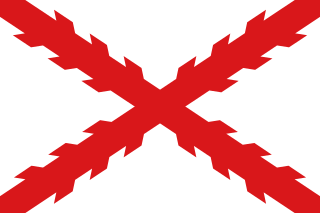
The Spanish Empire, sometimes referred to as the Hispanic Monarchy or the Catholic Monarchy, was a colonial empire that existed between 1492 and 1976. In conjunction with the Portuguese Empire, it ushered in the European Age of Discovery. It achieved a global scale, controlling vast portions of the Americas, Africa, various islands in Asia and Oceania, as well as territory in other parts of Europe. It was one of the most powerful empires of the early modern period, becoming known as "the empire on which the sun never sets". At its greatest extent in the late 1700s and early 1800s, the Spanish Empire covered over 13 million square kilometres, making it one of the largest empires in history.

Conquistadors or conquistadores is the term used to refer to Spanish and Portuguese soldiers and explorers who carried out the conquests and explorations of the Age of Discovery. Conquistadors sailed beyond the Iberian Peninsula to the Americas, Oceania, Africa and Asia, establishing new colonies and trade routes. They brought much of the "New World" under the dominion of Spain and Portugal.
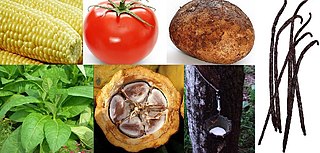
The Columbian exchange, also known as the Columbian interchange, was the widespread transfer of plants, animals, precious metals, commodities, culture, human populations, technology, diseases, and ideas between the New World in the Western Hemisphere, and the Old World (Afro-Eurasia) in the Eastern Hemisphere, in the late 15th and following centuries. It is named after the Italian explorer Christopher Columbus and is related to the European colonization and global trade following his 1492 voyage. Some of the exchanges were purposeful while others were unintended. Communicable diseases of Old World origin resulted in an 80 to 95 percent reduction in the number of Indigenous peoples of the Americas from the 15th century onwards, most severely in the Caribbean. The cultures of both hemispheres were significantly impacted by the migration of people, both free and enslaved, from the Old World to the New. European colonists and African slaves replaced Indigenous populations across the Americas, to varying degrees. The number of Africans taken to the New World was far greater than the number of Europeans moving to the New World in the first three centuries after Columbus.

The Age of Discovery, also known as the Age of Exploration, was part of the early modern period and largely overlapping with the Age of Sail. It was a period from approximately the late 15th century to the 17th century, during which seafarers from a number of European countries explored, colonized, and conquered regions across the globe. The Age of Discovery was a transformative period in world history when previously isolated parts of the world became connected to form the world-system and laid the groundwork for globalization. The extensive overseas exploration, particularly the opening of maritime routes to the Indies and the European colonization of the Americas by the Spanish and Portuguese, later joined by the English, French and Dutch, spurred in the International global trade. The interconnected global economy of the 21st century has its origins in the expansion of trade networks during this era.
The first European contact in 1492 started an influx of communicable diseases into the Caribbean. Diseases originating in the Old World (Afro-Eurasia) came to the New World for the first time, resulting in demographic and sociopolitical changes due to the Columbian Exchange from the late 15th century onwards. The Indigenous peoples of the Americas had little immunity to the predominantly Old World diseases, resulting in significant loss of life and contributing to their enslavement and exploitation perpetrated by the European colonists. Waves of enslaved Africans were brought to replace the dwindling Indigenous populations, solidifying the position of disease in triangular trade.
Ocean exploration is a part of oceanography describing the exploration of ocean surfaces. Notable explorations were undertaken by the Greeks, the Romans, the Polynesians, the Phoenicians, Phytheas, Herodotus, the Vikings, the Portuguese and Muslims. Scientific investigations began with early scientists such as James Cook, Charles Darwin, and Edmund Halley. Ocean exploration itself coincided with the developments in shipbuilding, diving, navigation, depth, measurement, exploration, and cartography.

The term "New World" is used to describe the majority of lands of Earth's Western Hemisphere, particularly the Americas. The term gained prominence in the early 16th century during Europe's Age of Discovery, after Italian explorer Amerigo Vespucci published the Latin-language pamphlet Mundus Novus, presenting his conclusion that these lands, soon called America based on Amerigo's name, constitute a new continent.

The historical phenomenon of colonization is one that stretches around the globe and across time. Ancient and medieval colonialism was practiced by the Phoenicians, Greeks, Romans, Turks, Han Chinese, and Arabs.

Between 1492 and 1504, the Italian navigator and explorer Christopher Columbus led four transatlantic maritime expeditions in the name of the Catholic Monarchs of Spain to the Caribbean and to Central and South America. These voyages led to the widespread knowledge of the New World. This breakthrough inaugurated the period known as the Age of Discovery, which saw the colonization of the Americas, a related biological exchange, and trans-Atlantic trade. These events, the effects and consequences of which persist to the present, are often cited as the beginning of the modern era.

The Western world, also known as the West, primarily refers to various nations and states in the regions of Western Europe, Northern America, and Australasia; with some debate as to whether those in Eastern Europe and Latin America also constitute the West. The Western world likewise is called the Occident in contrast to the Eastern world known as the Orient. The West is considered an evolving concept; made up of cultural, political, and economic synergy among diverse groups of people, and not a rigid region with fixed borders and members. Definitions of "Western world" vary according to context and perspectives.
The exploration of North America by European sailors and geographers was an effort by major European powers to map and explore the continent with the goal of economic, religious and military expansion. The combative and rapid nature of this exploration is the result of a series of countering actions by neighboring European nations to ensure no single country had garnered enough wealth and power from the Americas to militarily tip the scales over on the European continent. It spanned the late 15th to early 17th centuries, and consisted primarily of expeditions funded by Spain, England, France, and Portugal. See also the European colonization of the Americas.

The Spanish diaspora consists of Spanish people and their descendants who emigrated from Spain. In the Americas, the term may refer to those of Spanish nationality living there; "Hispanic" is usually a more appropriate term to describe the general Spanish-speaking populations of the Americas together with those in Spain. The diaspora is concentrated in places that were part of the Spanish Empire. Countries with sizeable populations are Argentina, Bolivia, Chile, Colombia, Costa Rica, Cuba, Dominican Republic, Ecuador, El Salvador, Guatemala, Honduras, Mexico, Nicaragua, Panama, Paraguay, Peru, Uruguay, Venezuela, and, to a lesser extent, Brazil, Belize, Haiti, United States, Canada, the Philippines and the rest of Europe.
American settlers is a broad-concept term which may refer to:
The following outline is provided as an overview of and topical guide to the history of Western civilization:

Dudum siquidem was a papal bull issued by Pope Alexander VI on 26 September 1493, one of the Bulls of Donation addressed to the Catholic Monarchs Isabella I of Castile and Ferdinand II of Aragon which supplemented the bull Inter caetera and purported to grant to them "all islands and mainlands whatsoever, found and to be found, discovered and to be discovered, that are or may be or may seem to be in the route of navigation or travel towards the west or south, whether they be in western parts, or in the regions of the south and east and of India".

The Columbian Viceroyalty, Viceroyalty of the Indies or First Viceroyalty in the Indies is the name that designates the number of titles and rights granted to Christopher Columbus by the Catholic Monarchs in 1492 on the lands discovered and undiscovered, before embarking on his first trip that culminated in the colonization of the Americas.
