Related Research Articles

Edmund Gustav Albrecht Husserl was a German philosopher who established the school of phenomenology. In his early work, he elaborated critiques of historicism and of psychologism in logic based on analyses of intentionality. In his mature work, he sought to develop a systematic foundational science based on the so-called phenomenological reduction. Arguing that transcendental consciousness sets the limits of all possible knowledge, Husserl redefined phenomenology as a transcendental-idealist philosophy. Husserl's thought profoundly influenced 20th-century philosophy, and he remains a notable figure in contemporary philosophy and beyond.
In the philosophy of mathematics, intuitionism, or neointuitionism, is an approach where mathematics is considered to be purely the result of the constructive mental activity of humans rather than the discovery of fundamental principles claimed to exist in an objective reality. That is, logic and mathematics are not considered analytic activities wherein deep properties of objective reality are revealed and applied, but are instead considered the application of internally consistent methods used to realize more complex mental constructs, regardless of their possible independent existence in an objective reality.
Mathematical logic is a subfield of mathematics exploring the applications of formal logic to mathematics. It bears close connections to metamathematics, the foundations of mathematics, and theoretical computer science. The unifying themes in mathematical logic include the study of the expressive power of formal systems and the deductive power of formal proof systems.

Richard of Saint Victor was a Medieval Scottish philosopher and theologian and one of the most influential religious thinkers of his time. A canon regular, he was a prominent mystical theologian, and was prior of the famous Augustinian Abbey of Saint Victor in Paris from 1162 until his death in 1173.

In the foundations of mathematics, Russell's paradox, discovered by Bertrand Russell in 1901, showed that some attempted formalizations of the naive set theory created by Georg Cantor led to a contradiction. The same paradox had been discovered in 1899 by Ernst Zermelo but he did not publish the idea, which remained known only to David Hilbert, Edmund Husserl, and other members of the University of Göttingen. At the end of the 1890s Cantor himself had already realized that his definition would lead to a contradiction, which he told Hilbert and Richard Dedekind by letter.
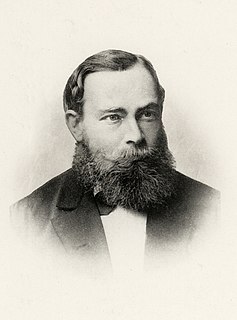
Friedrich Ludwig Gottlob Frege was a German philosopher, logician, and mathematician. He worked as a mathematics professor at the University of Jena, and is understood by many to be the father of analytic philosophy, concentrating on the philosophy of language, logic, and mathematics. Though he was largely ignored during his lifetime, Giuseppe Peano (1858–1932), Bertrand Russell (1872–1970), and, to some extent, Ludwig Wittgenstein (1889–1951) introduced his work to later generations of philosophers.

The history of logic deals with the study of the development of the science of valid inference (logic). Formal logics developed in ancient times in India, China, and Greece. Greek methods, particularly Aristotelian logic as found in the Organon, found wide application and acceptance in Western science and mathematics for millennia. The Stoics, especially Chrysippus, began the development of predicate logic.
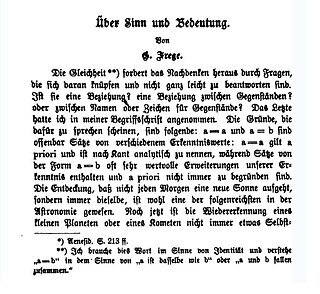
In the philosophy of language, the distinction between sense and reference was an innovation of the German philosopher and mathematician Gottlob Frege in 1892, reflecting the two ways he believed a singular term may have meaning.
In the philosophy of language, the distinction between concept and object is attributable to the German philosopher Gottlob Frege in 1892.
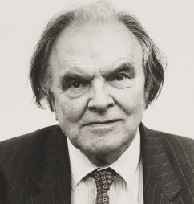
Peter Thomas Geach (1916–2013) was an English philosopher and professor of logic at the University of Leeds. His areas of interest were philosophical logic, ethics, history of philosophy, philosophy of religion and the theory of identity.
David Benjamin Kaplan is an American philosopher. He is the Hans Reichenbach Professor of Scientific Philosophy at the UCLA Department of Philosophy. His philosophical work focuses on the philosophy of language, logic, metaphysics, epistemology and the philosophy of Frege and Russell. He is best known for his work on demonstratives, propositions, and reference in intensional contexts. He was elected a Fellow of the American Academy of Arts & Sciences in 1983 and a Corresponding Fellow of the British Academy in 2007.
Hans D. Sluga is a German academic. Since 1970, Sluga has been a professor of philosophy at the University of California, Berkeley, and since 2009 he has been the William and Trudy Ausfahl Professor of Philosophy there. He previously served as a lecturer in philosophy at University College London. He teaches and writes on topics in analytic philosophy as well as on political philosophy and has been particularly influenced by the thought of Gottlob Frege, Ludwig Wittgenstein, Martin Heidegger, Friedrich Nietzsche, and Michel Foucault.
Intensional logic is an approach to predicate logic that extends first-order logic, which has quantifiers that range over the individuals of a universe (extensions), by additional quantifiers that range over terms that may have such individuals as their value (intensions). The distinction between intensional and extensional entities is parallel to the distinction between sense and reference.
In mathematics, logic and philosophy of mathematics, something that is impredicative is a self-referencing definition. Roughly speaking, a definition is impredicative if it invokes the set being defined, or another set that contains the thing being defined. There is no generally accepted precise definition of what it means to be predicative or impredicative. Authors have given different but related definitions.
In the philosophy of language, the descriptivist theory of proper names is the view that the meaning or semantic content of a proper name is identical to the descriptions associated with it by speakers, while their referents are determined to be the objects that satisfy these descriptions. Bertrand Russell and Gottlob Frege have both been associated with the descriptivist theory, which is sometimes called the Frege–Russell view.
In the philosophy of language, metaphysics, and metasemantics, meaning "is a relationship between two sorts of things: signs and the kinds of things they intend, express, or signify".
"Function and Concept" is a lecture delivered by Gottlob Frege in 1891. The lecture involves a clarification of his earlier distinction between concepts and objects. It was first published as an article in 1962.

Muslims consider the Quran to be a holy book, the word of God, and a miracle. One feature of the book believed to be miraculous is the expressiveness of its verses, as it is claimed they are too eloquent to be written by a human. Another is the amount of scientific information believed to be in the Quran that was not known in the 7th century when the Quran was revealed, which is said to prove that the Quran's origin must be divine.

The Foundations of Arithmetic is a book by Gottlob Frege, published in 1884, which investigates the philosophical foundations of arithmetic. Frege refutes other theories of number and develops his own theory of numbers. The Grundlagen also helped to motivate Frege's later works in logicism. The book was not well received and was not read widely when it was published. It did, however, draw the attentions of Bertrand Russell and Ludwig Wittgenstein, who were both heavily influenced by Frege's philosophy. An English translation was published by J. L. Austin, with a second edition in 1960.
The Frege–Church ontology is an ontology, a theory of existence. Everything is considered as being in three categories, object, name, or concept (sense). The ontology was developed by Alonzo Church based on ideas of Gottlob Frege to resolve some paradoxes. The ontology is related to certain modal logics.
References
- ↑ Long, P. and White, A., 'On the Translation of Frege's Bedeutung: A Reply to Dr. Bell', Analysis 40 pp. 196-202, 1980, p. 196. See also Bell, D., "On the Translation of Frege's Bedeutung", Analysis Vol. 40, No. 4 (Oct., 1980), pp. 191-195.
 | This article about translation is a stub. You can help Wikipedia by expanding it. |