
The British Empire was composed of the dominions, colonies, protectorates, mandates, and other territories ruled or administered by the United Kingdom and its predecessor states. It began with the overseas possessions and trading posts established by England between the late 16th and early 18th centuries. At its height it was the largest empire in history and, for over a century, was the foremost global power. By 1913 the British Empire held sway over 412 million people, 23 per cent of the world population at the time, and by 1920 it covered 35,500,000 km2 (13,700,000 sq mi), 24 percent of the Earth's total land area. As a result, its constitutional, legal, linguistic, cultural and ethnic legacy is widespread. At the peak of its power, it was described as "the empire on which the sun never sets", as the sun was always shining on at least one of its territories.

The Kuril Islands dispute, known as the Northern Territories dispute in Japan, is a territorial dispute between Japan and the Russian Federation over the ownership of the four southernmost Kuril Islands. The Kuril Islands are a chain of islands that stretch between the Japanese island of Hokkaido at their southern end and the Russian Kamchatka Peninsula at their northern end. The islands separate the Sea of Okhotsk from the Pacific Ocean. The four disputed islands, like other islands in the Kuril chain that are not in dispute, were annexed by the Soviet Union following the Kuril Islands landing operation at the end of World War II. The disputed islands are under Russian administration as the South Kuril District of the Sakhalin Oblast. They are claimed by Japan, which refers to them as its Northern Territories or Southern Chishima, and considers them part of the Nemuro Subprefecture of Hokkaido Prefecture.

The Paris Peace Conference was the formal meeting in 1919 and 1920 of the victorious Allies after the end of World War I to set the peace terms for the defeated Central Powers. Dominated by the leaders of Britain, France, the United States and Italy, it resulted in five treaties that rearranged the map of Europe and parts of Asia, Africa and the Pacific Islands and imposed financial penalties. Germany and the other losing nations had no voice which gave rise to political resentments that lasted for decades.
Decolonization or decolonisation is the undoing of colonialism, the latter being the process whereby a nation establishes and maintains its domination of foreign territories. The concept particularly applies to the dismantlement, during the second half of the 20th century, of the colonial empires established prior to World War I throughout the world.Some scholars of decolonization focus especially on the movements in the colonies demanding independence, such as Creole nationalism.

The Japanese Instrument of Surrender was the written agreement that formalized the surrender of the Empire of Japan, marking the end of hostilities in World War II. It was signed by representatives from the Empire of Japan and from the Allied nations: the United States of America, the Republic of China, the United Kingdom of Great Britain and Northern Ireland, the Union of Soviet Socialist Republics, the Commonwealth of Australia, the Dominion of Canada, the Provisional Government of the French Republic, the Kingdom of the Netherlands, and the Dominion of New Zealand. The signing took place on the deck of USS Missouri in Tokyo Bay on September 2, 1945.
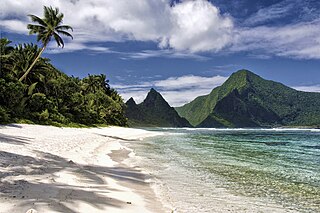
In the law of the United States, an insular area refers to U.S.-associated jurisdictions not part of the 50 states or the District of Columbia. This includes fourteen U.S. territories administered under U.S. sovereignty, as well as three sovereign states each with a Compact of Free Association with the United States. The term also may be used to refer to the previous status of the Philippine Islands and the Trust Territory of the Pacific Islands when it existed.
Territories of the United States are sub-national administrative divisions overseen by the U.S. federal government. The various U.S. territories differ from the U.S. states and Native American tribes in that they are not sovereign entities. In contrast, each state has a sovereignty separate from that of the federal government and each federally recognized Native American tribe possesses limited tribal sovereignty as a "dependent sovereign nation". Territories are classified by incorporation and whether they have an "organized" government through an organic act passed by the Congress. U.S. territories are under U.S. sovereignty and, consequently, may be treated as part of the United States proper in some ways and not others. Unincorporated territories in particular are not considered to be integral parts of the United States, and the Constitution of the United States applies only partially in those territories.
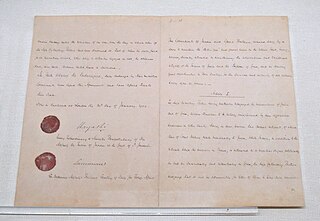
The first Anglo-Japanese Alliance was an alliance between Britain and Japan, signed in January 1902. The alliance was signed in London at Lansdowne House on 30 January 1902 by Lord Lansdowne, British foreign secretary, and Hayashi Tadasu, Japanese diplomat. A diplomatic milestone that saw an end to Britain's splendid isolation, the alliance was renewed and expanded in scope twice, in 1905 and 1911, before its demise in 1921 and termination in 1923. The main threat for both sides was from Russia. France was concerned about war with Britain and, in cooperation with Britain, abandoned its ally, Russia, to avoid the Russo-Japanese War of 1904. However, it angered the United States and some British dominions, which were hostile to Japan.
During the 1920s and 1930s, the United States military Joint Army and Navy Board developed a number of color-coded war plans that outlined potential U.S. strategies for a variety of hypothetical war scenarios. The plans, developed by the Joint Planning Committee, were officially withdrawn in 1939 at the outbreak of World War II in favor of five Rainbow Plans developed to meet the threat of a two-ocean war against multiple enemies.
The territorial evolution of the British Empire is considered to have begun with the foundation of the English colonial empire in the late 16th century. Since then, many territories around the world have been under the control of the United Kingdom or its predecessor states. When the Kingdom of Great Britain was formed in 1707 by the union of the Kingdom of Scotland with the Kingdom of England, the latter country's colonial possessions passed to the new state. Similarly, when Great Britain was united with the Kingdom of Ireland in 1801 to form the United Kingdom, control over its colonial possessions passed to the latter state. Collectively, these territories are referred to as the British Empire. Upon much of Ireland gaining independence in 1922 as the Irish Free State, the other territories of the Empire remained under the control of the United Kingdom.

The Allies, later known formally as the United Nations, were an international military coalition formed during the Second World War (1939–1945) to oppose the Axis powers, led by Nazi Germany, the Empire of Japan, and Fascist Italy. Its principal members by 1941 were the United Kingdom, United States, Soviet Union, and China.
The Fleet Faction was an unofficial and informal political faction within the Imperial Japanese Navy in the 1920s and 1930s of officers opposed to the conditions imposed by the Washington Naval Treaty.

The Treaty Faction was an unofficial and informal political faction within the Imperial Japanese Navy in the 1920s-1930s of officers supporting the Washington Naval Treaty.
The Halibut Treaty was a 1923 Canadian–American agreement concerning fishing rights in the northern Pacific Ocean. The treaty established the International Pacific Halibut Commission (IPHC) as a mechanism for the joint management of the Pacific halibut which, at that time, was in severe decline. The commission originally had four members but now has six, which are selected from industry and related government agencies. Half the members are Canadian and half are from the United States. The treaty also had a provision for a closed season, so halibut could not be fished during the more dangerous winter months. The treaty has been revised numerous times, often based on recommendations from the IPHC and its team of scientific researchers.
A colonial empire is a collective of territories, either contiguous with the imperial center or located overseas, settled by the population of a certain state and governed by that state.

The history of post-confederation Canada began on July 1, 1867, when the British North American colonies of Canada, New Brunswick, and Nova Scotia were united to form a single Dominion within the British Empire. Upon Confederation, the United Province of Canada was immediately split into the provinces of Ontario and Quebec. The colonies of Prince Edward Island and British Columbia joined shortly after, and Canada acquired the vast expanse of the continent controlled by the Hudson's Bay Company, which was eventually divided into new territories and provinces. Canada evolved into a fully sovereign state by 1982.

Pearl Harbor is an American lagoon harbor on the island of Oahu, Hawaii, west of Honolulu. It has been long visited by the Naval fleet of the United States, before it was acquired from the Hawaiian Kingdom by the U.S. with the signing of the Reciprocity Treaty of 1875. Much of the harbor and surrounding lands are now a United States Navy deep-water naval base. It is also the headquarters of the United States Pacific Fleet. The U.S. government first obtained exclusive use of the inlet and the right to maintain a repair and coaling station for ships here in 1887. The surprise attack by the Imperial Japanese Navy on December 7, 1941, led the United States to declare war on the Empire of Japan, making the attack on Pearl Harbor the immediate cause of the United States' entry into World War II.
The decolonization of Asia was the gradual growth of independence movements in Asia, leading ultimately to the retreat of foreign powers and the creation of a number of nation-states in the region.

The 1763 Treaty of Paris ended the major war known by Americans as the French and Indian War and by Canadians as the Seven Years' War / Guerre de Sept Ans, or by French-Canadians, La Guerre de la Conquête. It was signed by Great Britain, France and Spain, with Portugal in agreement. Preferring to keep Guadeloupe, France gave up Canada and all of its claims to territory east of the Mississippi River to Britain. With France out of North America this dramatically changed the European political scene on the continent.
This is a timeline of geopolitical changes around the world prior to 1900. It includes dates of declarations of independence, changes in country name, changes of capital city or name, and changes in territorial ownership such as the annexation, occupation, cession, concession, or secession of land. Territorial conquests as a result of war are included on the timeline at the conclusion of major military campaigns, but changes in the course of specific battles and day-to-day operations are generally not included.

