
Rosetta or Rashid is a port city of the Nile Delta, 65 km (40 mi) east of Alexandria, in Egypt's Beheira governorate. The Rosetta Stone was discovered there in 1799.

Al-Malik Al-Ashraf Salāh ad-Dīn Khalil ibn Qalawūn was the eighth Turkic Bahri Mamluk sultan, succeeding his father Qalawun. He served from 12 November 1290 until his assassination in December 1293. He was well known for conquering the last of the Crusader states in Palestine after the siege of Acre in 1291. While walking with a friend, Khalil was attacked and assassinated by Baydara and his followers, who was then killed under the orders of Kitbugha.

Al-Malik al-Zahir Rukn al-Din Baybars al-Bunduqdari, commonly known as Baibars or Baybars and nicknamed Abu al-Futuh, was the fourth Mamluk sultan of Egypt and Syria, of Turkic Kipchak origin, in the Bahri dynasty, succeeding Qutuz. He was one of the commanders of the Egyptian forces that inflicted a defeat on the Seventh Crusade of King Louis IX of France. He also led the vanguard of the Egyptian army at the Battle of Ain Jalut in 1260, which marked the first substantial defeat of the Mongol army and is considered a turning point in history.
On April 15, 1277, the Mamluk Sultan Baybars marched from Syria into the Mongol-dominated Seljuk Sultanate of Rûm and attacked the Mongol occupation force in the Battle of Elbistan (Abulustayn). Upon reaching Elbistan with at least 10,000 horseman, Baibars made ready for battle with the Mongols, expecting them to be around 30,000. The Mongol forces were smaller but they were supported by Armenians, Georgians and Rum Seljuks that bolstered their numbers. The Mamluk army was led by Baybars and his Bedouin Arab general Isa ibn Muhanna and his Egyptian companionship vizier Zayn al-Din Ahmad bin Hanna.

The kingdom of al-Abwab was a medieval Nubian monarchy in present-day central Sudan. Initially the most northerly province of Alodia, it appeared as an independent kingdom from 1276. Henceforth it was repeatedly recorded by Arabic sources in relation to the wars between its northern neighbour Makuria and the Egyptian Mamluk sultanate, where it generally sided with the latter. In 1367 it is mentioned for the last time, but based on pottery finds it has been suggested that the kingdom continued to exist until the 15th, perhaps even the 16th, century. During the reign of Funj king Amara Dunqas the region is known to have become part of the Funj sultanate.
Muhammad ibn Abd al-Aziz al-Dabbagh was a Moroccan jurisprudent and writer.
Hussein Abdullah Al-Amri is a Yemeni diplomat and writer. He served as ambassador of Yemen to the United Kingdom from 1995 to 2001.
Alaa el-Din Ali bin el-Emam, commonly known as Alaa el-Din bin el-Emam and nicknamed Abu el-ostool, was an Egyptian emir from the Egyptian el-Emam family. He is the descendant of the Sheikh of Islam, the Egyptian judge Abu Uday el-Masry bin el-Emam. He rose through the political ladder during the era of the Egyptian Sultan al-Ashraf Qansuh al-Ghuri, until he was appointed to the highest positions in the Egyptian Sultanate. He was one of the most powerful figures in the era of the Egyptian Sultanate. He held the positions of Amir al-Hajj, supervisor of Special, supervisor of Endowments, Secret writer and supervisor of the Egyptian armies.
Abdel Aziz bin Ali bin Ahmad bin Mahammad bin Ishaq bin el-Farag Abu Uday el-Masry bin el-Emam, commonly known as Abu Uday el-Masry bin el-Emam and nicknamed Sheikh al-Islam and Assad al-Sunnah wa al-Jama'a, was an Egyptian judge, religious scholar and Sheikh of Islam and is considered one of the famous Egyptian judges and religious scholars in the Abbasid and Fatimid eras, and the first to bear the name 'bin el-Emam'. It is the name of the el-Emam family, a noble Egyptian family from which many judges and princes appeared in the Middle Ages. To this day, it is considered one of the largest and most notable Egyptian families. He is considered the founder of the el-Emam family and is the ancestor of the famous Egyptian prince Alaa el-Din bin el-Emam, one of the most famous and powerful princes of the Egyptian Sultanate.
Ibrahim bin Abu Bakr bin Shaddad bin Saber, commonly known as Ibrahim bin Shaddad, was the muqadam of El Mahalla El Kubra and later the muqadam al-Dawla. He comes from the Egyptian Shaddad family, and he was the closest companion to the Mamluk sultan al-Nasir Mahammad.
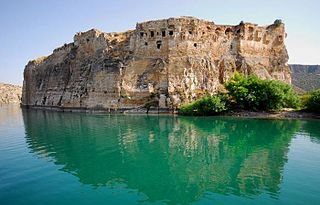
The siege of Rumkale or the fall of Rumkale took place in 691 AH/1292 AD and resulted in the Armenian Kingdom of Cilicia losing the castle of Rumkale to the Mamluk Sultanate of Egypt.
Nasir el-Din Shafi’ bin Ali bin Abbas el-Kinani el-Asqalani el-Masry, commonly known as Shafi' bin Ali el-Masry was an Egyptian writer, historian, biographer, poet and military commander who participated in the conquests of the Egyptian army during the era of Sultan El-Mansur Seif el-Din Qalawun.

The Military of the Mamluk Sultanate, officially known as Al-Asakir al-Masria or Al-Askar al-Masri or Al-Jund al-Masri or Al-Asakir al-Mansoura, was the official armed forces of the Egyptian Mamluk Sultanate.
Ruk is a Coptic word, from Rosh, which means measuring the land in acres and valuing it, that is, estimating its degree of fertility in order to estimate the Kharaj on it. Today, ruk corresponds to the process of public surveying and the process of tax assessment. In contemporary management terminology, it is called loosening and adjusting the reins.
The El-Emam family, sometimes spelled el-Imam, is an Egyptian noble family which has had prominent members since the Abbasid era, through the Fatimid, Ayyubid and Mamluk era. To this day they still have influence.
Al-Ruk al-Nasiri refers to the process of land surveying that took place during the reign of the Sultan Al-Nasir Mahammad bin Qalawun. Al-Qalqashandi mentioned that the Al-Ruk al-Nasiri began in the year 716 AH/1316 AD, but Al-Maqrizi mentioned that it began in the year 715 AH/1315 AD. Al-Ruk al-Nasiri helped in the equitable distribution of lands and control over the feudal lords.
Izz al-Din al-Kawrani was an Egyptian politician and military leader, and one of the leaders of the campaign to invade Makuria (Nubia) in 1287 by order of Sultan Qalawun of Egypt. His campaign achieved a landslide victory, and this victory is one of the reasons for the end of the rule of the Christian Nubian kingdoms in Sudan.

Abu al-Abbas Zayn al-Din Ahmad bin Fakhr al-Din Mahammad bin Bahaa al-Din bin Hanna was the Wazir al-Sohba to the Sultan of Egypt, Baybars, and was one of his closest men.
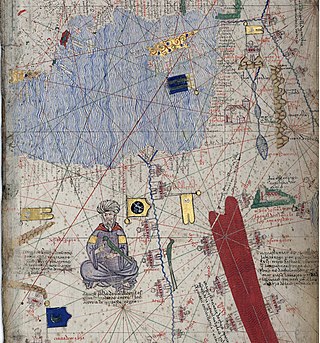
The Mamluk Sultanate launched a naval raid on the Kingdom of Cyprus in March 1368. The raid was a delayed response to the Alexandrian Crusade of October 1365, which had been spearheaded by King Peter I of Cyprus.

Aytmish ibn Abd Allah al-Asandamari al-Bajasi al-Zahiri, was a Mamluk of Emir Asandamur al-Bajasi who rose through the ranks and was entrusted with the security of Faraj the son of Mamluk Sultan Barquq.


