
The economy of Iraq is dominated by the oil sector, which has provided about 99.7% of foreign exchange earnings during its modern history. As of 2021, the oil sector provides about 92% of foreign exchange earnings. Iraq's hitherto agrarian economy underwent rapid development following the 14 July Revolution (1958) which overthrew the Hashemite Iraqi monarchy. It had become the third-largest economy in the Middle East by 1980. This occurred in part because of the Iraqi government's successful industrialization and infrastructure development initiatives in the 1970s, which included irrigation projects, railway and highway construction, and rural electrification.

The economy of Kyrgyzstan is heavily dependent on the agricultural sector. Cotton, tobacco, wool, and meat are the main agricultural products, although only tobacco and cotton are exported in any quantity. According to Healy Consultants, Kyrgyzstan's economy relies heavily on the strength of industrial exports, with plentiful reserves of gold, mercury and uranium. The economy also relies heavily on remittances from foreign workers. Following independence, Kyrgyzstan was progressive in carrying out market reforms, such as an improved regulatory system and land reform. In 1998, Kyrgyzstan was the first Commonwealth of Independent States (CIS) country to be accepted into the World Trade Organization. Much of the government's stock in enterprises has been sold. Kyrgyzstan's economic performance has been hindered by widespread corruption, low foreign investment and general regional instability. Despite those issues, Kyrgyzstan is ranked 70th on the ease of doing business index.

Mass production, also known as flow production, series production or continuous production, is the production of substantial amounts of standardized products in a constant flow, including and especially on assembly lines. Together with job production and batch production, it is one of the three main production methods.
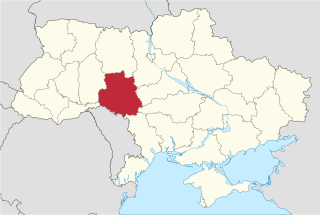
Vinnytsia Oblast, also referred to as Vinnychchyna, is an oblast in central Ukraine. Its administrative center is Vinnytsia. The oblast has a population of 1,509,515.

The Central Economic Region is one of twelve economic regions of Russia.

Allis-Chalmers was a U.S. manufacturer of machinery for various industries. Its business lines included agricultural equipment, construction equipment, power generation and power transmission equipment, and machinery for use in industrial settings such as factories, flour mills, sawmills, textile mills, steel mills, refineries, mines, and ore mills.
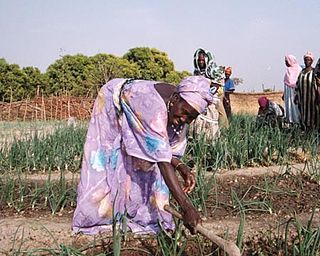
An agricultural cooperative, also known as a farmers' co-op, is a producer cooperative in which farmers pool their resources in certain areas of activities.

The food industry is a complex, global network of diverse businesses that supplies most of the food consumed by the world's population. The food industry today has become highly diversified, with manufacturing ranging from small, traditional, family-run activities that are highly labour-intensive, to large, capital-intensive and highly mechanized industrial processes. Many food industries depend almost entirely on local agriculture, animal farms, produce, and/or fishing.

Roughly one-third of Iran's total surface area is suited for farmland, but because of poor soil and lack of adequate water distribution in many areas, most of it is not under cultivation. Only 12% of the total land area is under cultivation but less than one-third of the cultivated area is irrigated; the rest is devoted to dryland farming. Some 92 percent of agricultural products depend on water. The western and northwestern portions of the country have the most fertile soils. Iran's food security index stands at around 96 percent.

The following outline is provided as an overview of and topical guide to industrial machinery:
Class T: Technology is a classification used by the Library of Congress Classification system. This page outlines the subclasses of Class T.

Mitsui & Co., Ltd. is one of the largest sogo shosha in Japan; it is part of the Mitsui Group.
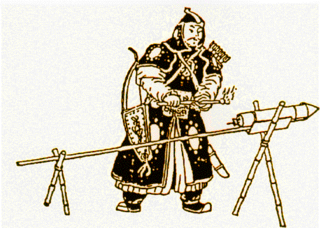
For millennia, agriculture has played an important role in the Chinese economy and society. By the time the People's Republic of China was established in 1949, virtually all arable land was under cultivation; irrigation and drainage systems constructed centuries earlier and intensive farming practices already produced relatively high yields. But little prime virgin land was available to support population growth and economic development. However, after a decline in production as a result of the Great Leap Forward (1958–60), agricultural reforms implemented in the 1980s increased yields and promised even greater future production from existing cultivated land.
At the time of its founding, the People's Republic of China was one of the poorest countries in the world. In the early 1950s, its industry developed rapidly through a state-led process heavily influenced by the Soviet experience. Aiming to close the gap between its political ambitions and its phase of development, China began the Great Leap Forward, which sought to even more rapidly industrialize the country. The effort largely failed, and its policies contributed to famine.

Agriculture in Saudi Arabia is focused on the export of dates, dairy products, eggs, fish, poultry, fruits, vegetables, and flowers to markets around the world after achieving self-sufficiency in the production of such products. The government of Saudi Arabia is heavily involved in the agriculture industry and subsidizing corporate farming and the Ministry of Environment, Water and Agriculture is primarily responsible for agricultural policy. In the private sector, farmers receive long-term interest-free government loans and low-cost water, fuel, electricity, and duty-free imports of raw materials and machinery.

CNH Industrial N.V. is an Italian-American multinational corporation with global headquarters in Basildon, United Kingdom, but controlled and mostly owned by the multinational investment company Exor, which in turn is controlled by the Agnelli family. The company is listed on the New York Stock Exchange. The company is incorporated in the Netherlands. The seat of the company is in Amsterdam, Netherlands, with a principal office in London, England.

Packaging machinery is used throughout all packaging operations, involving primary packages to distribution packs. This includes many packaging processes: fabrication, cleaning, filling, sealing, combining, labeling, overwrapping, palletizing.

The machine industry or machinery industry is a subsector of the industry, that produces and maintains machines for consumers, the industry, and most other companies in the economy.

Aran Economic Region was one of the 10 economic regions of Azerbaijan. It bordered Iran to the south, as well as the economic regions of Upper Karabakh, Ganja-Gazakh, Shaki-Zagatala, Mountainous Shirvan, Absheron, and Lankaran. The region consisted of the districts of Agdash, Aghjabadi, Barda, Beylagan, Bilasuvar, Jalilabad, Goychay, Hajigabul, Imishli, Kurdamir, Neftchala, Saatly, Sabirabad, Salyan, Ujar, Yevlakh, Zardab and the cities of Mingachevir and Shirvan.

Industry plays an important role in the economy of Belarus. In 2020, industry accounted for 25.5% of Belarusian GDP. Share of manufacturing in Belarusian GDP was 21.3% in 2019. United Nations Economic Commission for Europe described Belarus as having "a well-developed industrial sector and highly skilled workforce". In 2020, 23.5% of Belarusian workforce was employed in industry. In 2019, total industrial production amounted to 115.7 billion Belarusian rubles ; in 2020, it rose to Rbls 116.5 billion. Belarusian industry is export-oriented: in 2020, 61.2% of industrial output was exported. The most important sector is food industry. Other well-developed sectors of industry include chemical industry, automotive industry and manufacturing of other machinery equipment.

