Related Research Articles

Tuscaloosa is a city in and the seat of Tuscaloosa County in west-central Alabama, United States, on the Black Warrior River where the Gulf Coastal and Piedmont plains meet. Alabama's fifth-largest city, it had an estimated population of 101,129 in 2019. It was known as Tuskaloosa until the early 20th century. It is also known as the Druid City because of the numerous water oaks planted in its downtown streets since the 1840s.

The University of Alabama is a public research university in Tuscaloosa, Alabama. Established in 1820 and opened to students in 1831, the University of Alabama is the oldest and largest of the public universities in Alabama as well as the flagship of the University of Alabama System. The university offers programs of study in 13 academic divisions leading to bachelor's, master's, education specialist, and doctoral degrees. The only publicly supported law school in the state is at UA. Other academic programs unavailable elsewhere in Alabama include doctoral programs in anthropology, communication and information sciences, metallurgical engineering, music, Romance languages, and social work.
James Outram was a British clergyman, who made many first ascents in the Canadian Rockies in the early 1900s.

The University of North Alabama (UNA) is a public university in Florence, Alabama. It is the state's oldest public university. Occupying a 130-acre (0.5 km2) campus in a residential section of Florence, UNA is located within a four-city area that also includes Tuscumbia, Sheffield and Muscle Shoals. The four cities compose a metropolitan area with a combined population of 140,000 people.

Stillman College is a private Presbyterian and historically black liberal arts college in Tuscaloosa, Alabama. It awards the Bachelor of Arts and Bachelor of Science degrees in 17 disciplines/majors housed within three academic schools. The college has an average enrollment of 650 students and is accredited by the Southern Association of Colleges and Schools.

The University of Alabama, the state's oldest continuously public university, is a senior comprehensive doctoral-level institution located in Tuscaloosa, Alabama.
The University of West Alabama (UWA) is a public university in Livingston, Alabama. Founded in 1835, the school began as a church-supported school for young women called Livingston Female Academy. The original Board of Trustees of Livingston Female Academy was selected in 1836, and four of the seven board members were Presbyterians.
Ruth Bolden (1910–2004) was a library founder and civil rights worker. She was educated at Stillman College and received her master's degree in library science from Atlanta University. She helped found what would become the Weaver-Bolden Branch Library in Tuscaloosa, Alabama, which is now named in honor of her and of Dr. George Weaver.
The Tuscaloosa Public Library is a city/county agency in the city of Tuscaloosa, serving a population of over 184,035 in Tuscaloosa County in the state of Alabama, United States. The Library has 58,037 registered patrons that use the library on a regular basis. There are currently over 225,000 items cataloged in the system. The library has three service outlets: the Main Library, the Brown Branch and the Weaver-Bolden Branch.

Charles Harris Wesley was an American historian, educator, minister, and author. He published more than 15 books on African-American history, taught for decades at Howard University, and served as president of Wilberforce University, and founding president of Central State University, both in Ohio.

The University of Alabama at Birmingham School of Medicine is a public medical school located in Birmingham, Alabama, United States with branch campuses in Huntsville, Montgomery, and at the University of Alabama College of Community Health Sciences in Tuscaloosa. Residency programs are also located in Selma, Huntsville and Montgomery. It is part of the University of Alabama at Birmingham (UAB).

LaFayette Guild was a surgeon in the antebellum United States Army, a noted pioneer in the study of yellow fever, and then a leading medical administrator in the Confederate States Army during the American Civil War. He served directly under General Robert E. Lee as the medical director for the Army of Northern Virginia for all its major campaigns, including the Gettysburg Campaign and the Overland Campaign.
Linda Royster Beito is professor of political science and criminal justice at Stillman College in Tuscaloosa, Alabama.
Lambert C. Mims was a politician and author who for two decades was a member of the City Commission of Mobile, Alabama (1965-1985). During this period, he also served co-terminously in several one-year terms as the commission's president and city's mayor. Deeply religious, he saw morality as a cornerstone of Mobile's community. His two decades in public service were overshadowed by a controversial corruption conviction in 1990.
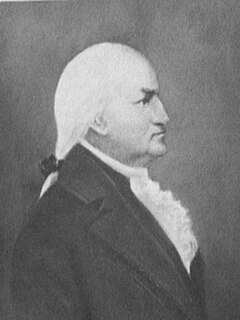
Simmons Jones Baker was a physician, planter, legislator, and slave owner in North Carolina.

William Chace is a Professor of English Emeritus at Emory University as well as Honorary Professor of English Emeritus at Stanford University. He specializes in the work of James Joyce in addition to the work of W. B. Yeats, T. S. Eliot and Ezra Pound. Also the former president of Emory University, he lives in Palo Alto, California, with his wife JoAn Johnstone Chace.

James H. DeVotie (1814–1891) was a Baptist minister in the American South. Born in Oneida County, New York, he was a pastor in South Carolina, Alabama and Georgia. He was a co-founder of Howard College in Marion, Alabama, later known as Samford University near Birmingham. He was a long-time trustee of Mercer University in Macon, Georgia. He served as a Confederate chaplain during the Civil War. After the war, he worked for the Southern Baptist Convention.
Henry Christian Spencer was an American chemical engineer and executive at the Kerite Company in Seymour, Connecticut. As secretary and vice president, he was involved in discussions about unions at the company, and in its joining with Hubbell Company.

Bess Bolden Walcott (1886-1988) was an American educator, librarian, museum curator and activist who helped establish the historical significance of the Tuskegee University. Recruited by Booker T. Washington to help him coordinate his library and teach science, she remained at the institute until 1962, but continued her service into the 1970s. Throughout her fifty-four year career at Tuskegee, she organized Washington's library, taught science and English at the institute, served as founder and editor of two of the major campus publications, directed public relations, established the Red Cross chapter, curated the George Washington Carver collection and museum and assisted in Tuskegee being placed on the National Register of Historic Places.

Cynthia Warrick is the seventh president of Stillman College, a liberal arts college in the West Tuscaloosa area of Tuscaloosa, Alabama. Before starting a career in higher education, she practiced as a licensed pharmacist. Warrick has two children, Alan Warrick II, a member of the San Antonio City Council, and Whitney Blair (Warrick) Craig, a federal and state lobbyist.
References
- Bailey, Kathy. Dr. George Augustus Weaver. Tuscaloosa, AL: Tuscaloosa Public Library, 2004.
- George A. Weaver, 1900 Twelfth Census of the United States, Tuscaloosa, Alabama, Precinct 16.
- George Augustus Weaver, Alabama Death Certificate, January 20, 1939.
- Kampis, Johnny. "Ruth Bolden--Pioneer", The Tuscaloosa News. Tuscaloosa, AL: May 15,
2004.
- Kelly, Renaldo, Historian, Rescue Lodge #234, F & AM PHA