
George Hoyt Whipple was an American physician, pathologist, biomedical researcher, and medical school educator and administrator. Whipple shared the Nobel Prize in Physiology or Medicine in 1934 with George Richards Minot and William Parry Murphy "for their discoveries concerning liver therapy in cases of anemia". This makes Whipple the first of several Nobel laureates affiliated with the University of Rochester.
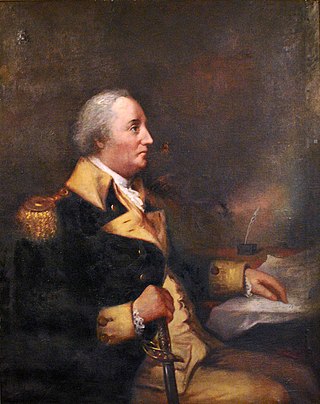
William Whipple Jr. was an American Founding Father and signatory of the United States Declaration of Independence. He represented New Hampshire as a member of the Continental Congress from 1776 through 1779. He worked as both a ship's captain and a merchant, and he studied in college to become a judge. He died of heart complications in 1785, aged 55.

George Richards Minot was an American medical researcher who shared the 1934 Nobel Prize with George Hoyt Whipple and William P. Murphy for their pioneering work on pernicious anemia.
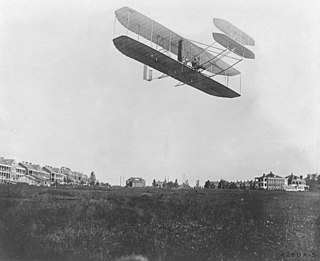
Fort Myer is the previous name used for a U.S. Army post next to Arlington National Cemetery in Arlington County, Virginia, and across the Potomac River from Washington, D.C. Founded during the American Civil War as Fort Cass and Fort Whipple, the post merged in 2005 with the neighboring Marine Corps installation, Henderson Hall, and is today named Joint Base Myer–Henderson Hall.

Commander Abraham Whipple was an American naval officer best known for his service in the Continental Navy during the Revolutionary War and being one of the founders of Marietta, Ohio. Born near Providence, Colony of Rhode Island, Whipple chose to be a seafarer early in his life and embarked on a career in the lucrative trade with the West Indies, working for Moses and John Brown. In the French and Indian War period, he became a privateersman and commanded privateer Game Cock from 1759 to 1760. In one six-month cruise, he captured 23 French ships.
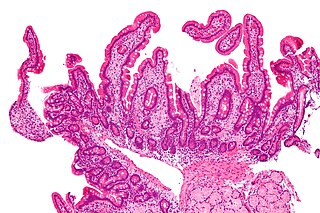
Whipple's disease is a rare systemic infectious disease caused by the bacterium Tropheryma whipplei. First described by George Hoyt Whipple in 1907 and commonly considered as a gastrointestinal disorder, Whipple's disease primarily causes malabsorption, but may affect any part of the human body, including the heart, brain, joints, skin, lungs and the eyes. Weight loss, diarrhea, joint pain, and arthritis are common presenting symptoms, but the presentation can be highly variable in certain individuals, and about 15% of patients do not have the standard signs and symptoms.

Fred Lawrence Whipple was an American astronomer, who worked at the Harvard College Observatory for more than 70 years. Amongst his achievements were asteroid and comet discoveries, the "dirty snowball" hypothesis of comets, and the invention of the Whipple shield.
Mr. George Whipple is a fictional supermarket manager featured in television commercials, radio, and print advertisements that ran in the United States and Canada from 1964 to 1985 for Charmin toilet paper. Typically, Whipple scolds customers who "squeeze the Charmin," while hypocritically entertaining such actions himself when he thinks no one will notice. The character and catchphrase were created by John Chervokas of the agency Benton & Bowles. Prominent ad-man Sid Lerner also worked on the campaign.
"The Brain Center at Whipple's" is episode 153 of the American television series The Twilight Zone. It originally aired on May 15, 1964 on CBS.
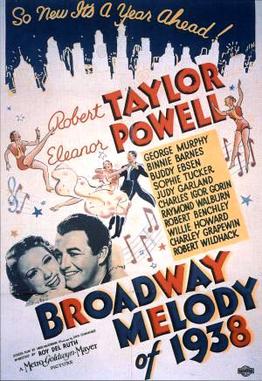
Broadway Melody of 1938 is a 1937 American musical film produced by Metro-Goldwyn-Mayer and directed by Roy Del Ruth. The film is essentially a backstage musical revue, featuring high-budget sets and cinematography in the MGM musical tradition. The film stars Eleanor Powell and Robert Taylor and features Buddy Ebsen, George Murphy, Judy Garland, Sophie Tucker, Raymond Walburn, Robert Benchley and Binnie Barnes.

Amiel Weeks Whipple was an American military officer and topographical engineer. He served as a brigadier general in the American Civil War, where he was mortally wounded at the Battle of Chancellorsville. Among his many survey assignments for the US War Department, he participated in the difficult survey of the new United States and Mexico boundary and led the survey of a possible transcontinental railroad route along the thirty-fifth parallel from Arkansas to Los Angeles.

Mark John Whipple is an American football coach, who most recently served as offensive coordinator at Nebraska in 2022. Whipple was the head football coach at University of New Haven from 1988 to 1993, Brown University from 1994 to 1997, and stints as the University of Massachusetts Amherst (UMass), from 1998 to 2003 and 2014 to 2018. His 1998 UMass team won the NCAA Division I-AA Football Championship. He was the quarterbacks coach for the Cleveland Browns of the National Football League (NFL) in 2011 and 2012. Before joining the Browns in January 2011, Whipple worked for two seasons as the offensive coordinator at the University of Miami. He previously coached in the NFL, working as a quarterback coach with the Pittsburgh Steelers from 2004 to 2006 and as an offensive assistant coach with the Philadelphia Eagles in 2007 and 2008. On January 14, 2014, Whipple returned to UMass as head coach.

Fort Whipple is a former United States (U.S.) Army post that was temporarily established at Del Rio Springs, north of present day Chino Valley, Arizona, and later relocated to a permanent site near present day Prescott, Arizona.

Oliver Wolcott Jr. was an American politician and judge. He was the second United States Secretary of the Treasury, a judge of the United States Circuit Court for the Second Circuit, and the 24th Governor of Connecticut. His adult life began with working in Connecticut, followed by participating in the U.S. federal government in the Department of Treasury, before returning to Connecticut, where he spent his life before his death. Throughout his time in politics, Wolcott's political views shifted from Federalist, to Toleration, and finally Jacksonian. Oliver Wolcott Jr. is the son to Oliver Wolcott Sr., part of the Griswold-Wolcott family.

Young's Hotel (1860–1927) in Boston, Massachusetts, was located on Court Street in the Financial District, in a building designed by William Washburn. George Young established the business, later taken over by Joseph Reed Whipple and George G. Hall. Guests at Young's included Mark Twain, Elizabeth Cady Stanton, William Lloyd Garrison, Charles Sumner, Rutherford B. Hayes, and numerous others.
Mary Margaret Whipple is a former Democratic member of the Senate of Virginia, representing the 31st district from 1996 - 2012.
Frieda S. Robscheit-Robbins was a German-born American pathologist who worked closely with George Hoyt Whipple, conducting research into the use of liver tissue in treatment of pernicious anaemia, co-authoring 21 papers between 1925 and 1930. Whipple received a Nobel Prize in 1934 in recognition of this work, but Robscheit-Robbins was not recognized in this award, although Whipple did share the prize money with her. Had she won the Nobel Prize alongside Whipple, Robscheit-Robbins would have been the second woman after Marie Curie to win the prestigious international award, and the first American woman to do so. Although Robscheit-Robbins's has never received Nobel Prize recognition for her work, she has personally denied the importance of such awards. Robscheit-Robbins believed that the success and impact of the experiment exceeds the credit due in her works.
Whipple is a surname. Notable people with the surname include:
