Notes
- ↑ Dizionario biografico universale, Volume 5, by Felice Scifoni, Publisher Davide Passagli, Florence (1849); page 123.
 | This article about an Italian painter is a stub. You can help Wikipedia by expanding it. |
Giorgio Soleri was an Italian painter. Giorgio's son, Raffaele Angelo Soleri, was also a painter. The source indicates only two authenticated works of Soleri: a Virgin who places the city of Alessandria under her protection and St Lawrence genuflects to the Madonna from a church in Casale. [1]
| | This article about an Italian painter is a stub. You can help Wikipedia by expanding it. |

Arcology, a portmanteau of "architecture" and "ecology", is a field of creating architectural design principles for very densely populated and ecologically low-impact human habitats.

Paolo Soleri was an American architect and urban planner. He established the educational Cosanti Foundation and Arcosanti. Soleri was a lecturer in the College of Architecture at Arizona State University and a National Design Award recipient in 2006. He coined the concept of 'arcology' – a synthesis of architecture and ecology as the philosophy of democratic society. He died at home of natural causes on 9 April 2013 at the age of 93.

Giorgio Vasari was an Italian Renaissance painter, architect, art historian and biographer, who is best known for his work Lives of the Most Excellent Painters, Sculptors, and Architects, considered the ideological foundation of all art-historical writing, and still much cited in modern biographies of the many Italian Renaissance artists he covers, including Leonardo da Vinci and Michelangelo, although he is now regarded as including many factual errors, especially when covering artists from before he was born.
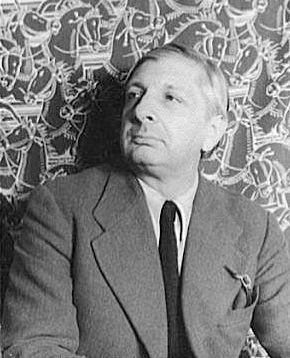
Giuseppe Maria Alberto Giorgio de Chirico was an Italian artist and writer born in Greece. In the years before World War I, he founded the scuola metafisica art movement, which profoundly influenced the surrealists. His best-known works often feature Roman arcades, long shadows, mannequins, trains, and illogical perspective. His imagery reflects his affinity for the philosophy of Arthur Schopenhauer and of Friedrich Nietzsche, and for the mythology of his birthplace.

Arcosanti is an experimental town with a bronze bell casting business in Yavapai County, central Arizona, United States, 70 mi (110 km) north of Phoenix, at an elevation of 3,732 feet (1,138 m). Its arcology concept was proposed by Italian-American architect Paolo Soleri (1919–2013). He began construction in 1970 to demonstrate how urban conditions could be improved while minimizing the destructive impact on the Earth. He taught and influenced generations of architects and urban designers who studied and worked with him there to build the proposed town.

Cosanti is the gallery and studio of Italian-American architect Paolo Soleri; it was his residence until his death in 2013. Located in Paradise Valley, Arizona, USA, it has become an Arizona Historic Site open to the public. Cosanti is marked by terraced landscaping, experimental earth-formed concrete structures, and sculptural wind-bells.

Metaphysical painting or metaphysical art was a style of painting developed by the Italian artists Giorgio de Chirico and Carlo Carrà. The movement began in 1910 with de Chirico, whose dreamlike works with sharp contrasts of light and shadow often had a vaguely threatening, mysterious quality, "painting that which cannot be seen". De Chirico, his younger brother Alberto Savinio, and Carrà formally established the school and its principles in 1917.

Francesco di Giorgio Martini (1439–1501) was an Italian architect, engineer, painter, sculptor, and writer. As a painter, he belonged to the Sienese School. He was considered a visionary architectural theorist—in Nikolaus Pevsner's terms: "one of the most interesting later Quattrocento architects". As a military engineer, he executed architectural designs and sculptural projects and built almost seventy fortifications for the Federico da Montefeltro, Count of Urbino, building city walls and early examples of star-shaped fortifications.

Grizzana Morandi is a comune (municipality) in the Metropolitan City of Bologna in the Italian region Emilia-Romagna, located about 30 kilometres (19 mi) southwest of Bologna. The town is summer holiday resort, located in the mountains between the valleys of the rivers Reno and Setta.

Giorgio Morandi was an Italian painter and printmaker who specialized in still lifes. His paintings are noted for their tonal subtlety in depicting simple subjects, mainly vases, bottles, bowls, flowers, and landscapes.

Tejate is a non-alcoholic maize and cacao beverage traditionally made in Oaxaca, Mexico, originating from pre-Hispanic times. It remains very popular among the indigenous Mixtec and Zapotec peoples, especially in rural areas. It is also very popular in Oaxaca and the surrounding regions. Principal ingredients include toasted maize, fermented cacao beans, toasted mamey pits (pixtle) and flor de cacao. These are finely ground into a paste. The paste is mixed with water, usually by hand, and when it is ready, the flor de cacao rises to the top to form a pasty foam. It can be served as-is or with some sugar syrup to sweeten it. The drink is served cold.

Michael Damaskenos or Michail Damaskenos was a leading post-Byzantine Cretan painter. He is a major representative of the Cretan School of painting that flourished in the 16th and 17th centuries. Painters Georgios Klontzas and Damaskenos were major contributors to the Cretan School during the same period. Damaskinos traveled all over the Venetian Empire painting. He remained loyal to his Greek roots stylistically but incorporated some Italian elements in his work. He was strongly influenced by the Venetian school. He painted parts of the Cathedral of San Giorgio dei Greci. Damaskenos has 100 known works. He influenced the works of Theodore Poulakis.
The Paolo Soleri Amphitheater is an amphitheater in Santa Fe, New Mexico, which opened in 1970 and closed in 2010. The structure, which was never considered finished, was designed by Italian architect Paolo Soleri.
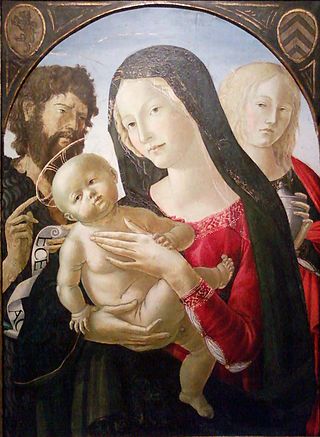
Madonna and Child with St. John the Baptist and St. Mary Magdalene is a painting by Neroccio di Bartolomeo de' Landi. The painting is a tempera on wood from 1495. It is currently held by the Indianapolis Museum of Art.
The Vision of Paolo Soleri: Prophet in the Desert is a 2013 American documentary film about the life and work of the late Italian architect and environmentalist Paolo Soleri. It was directed by Lisa Scafuro.

Edoardo Soleri is an Italian footballer who plays as a striker for Serie B club Spezia.
Giuseppe Soleri Brancaleoni (1750–1806) was an Italian painter, active mainly in Rimini, painting sacred subjects.
Amleto Sartori was an Italian sculptor and poet from Padua most famous for his theater masks.
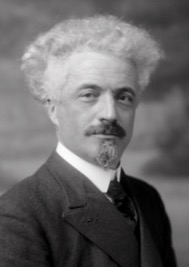
Marcello Soleri was an Italian politician and an officer of the prestigious Alpini infantry corps. He is widely viewed as one of the leading exponents of political liberalism in 20th-century Italy. Soleri was a Member of Parliament between 1913 and 1929. During 1921/22, he served successively as Italian Minister of Finance and more briefly as Italian Minister of War. After the fall of Mussolini, he returned to government in 1944 as Italian Minister of Treasury under Prime Minister Ivanoe Bonomi.