Related Research Articles

Rimini is a city in the Emilia-Romagna region of northern Italy and capital city of the Province of Rimini. It sprawls along the Adriatic Sea, on the coast between the rivers Marecchia and Ausa. It is one of the most notable seaside resorts in Europe with revenue from both internal and international tourism forming a significant portion of the city's economy. It is also near San Marino, a small nation within Italy. The first bathing establishment opened in 1843. Rimini is an art city with ancient Roman and Renaissance monuments, and is also the birthplace of the film director Federico Fellini.

The Accademia di San Luca is an Italian academy of artists in Rome. The establishment of the Accademia de i Pittori e Scultori di Roma was approved by papal brief in 1577, and in 1593 Federico Zuccari became its first principe or director; the statutes were ratified in 1607. Other founders included Girolamo Muziano and Pietro Olivieri. The Academy was named for Luke the Evangelist, the patron saint of painters.

Carlo Maratta or Maratti was an Italian painter, active mostly in Rome, and known principally for his classicizing paintings executed in a Late Baroque Classical manner. Although he is part of the classical tradition stemming from Raphael, he was not exempt from the influence of Baroque painting and particularly in his use of colour. His contemporary and friend, Giovanni Bellori, wrote an early biography on Maratta.

Francesco Antonio Picchiatti was an Italian architect of the Baroque period active in Naples. He is also called Picchetto. He was son of Bartolommeo Picchiatti, who also served as an architect in Naples.
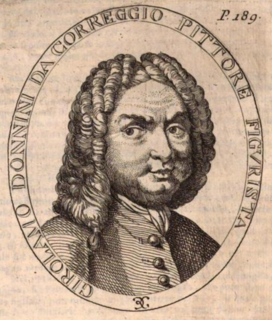
Girolamo Donnini was an Italian painter of the Baroque period, born in the town of Correggio, Emilia-Romagna. He was a pupil of the painters Francesco Stringa in Modena, and then of Giovanni Gioseffo dal Sole in Bologna, then traveled to Forlì to work with Carlo Cignani.

Cesare Pronti was an Italian painter of the Baroque period, active mainly near Ravenna.
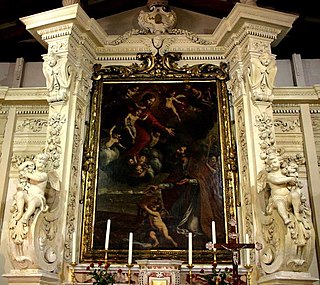
Giovanni Quagliata (1603–1673) was an Italian painter of the Baroque period. He is more properly known in Italy as Giovan Battista Quagliata, one of the leading artists of the Messinesi painters of the 17th century, as described by Francesco Susinno in his book "The Lives of the Messinesi Painters" published in 1724. Giovanni was born in Messina, Italy. He was a pupil of Pietro da Cortona and enjoyed the patronage and friendship of the Spanish Viceroy of Sicily, Don Juan José of Austria. Giovanni's brother, Andrea Quagliata, was also an historical painter, but of lesser significance. Giovanni's works – paintings, frescoes and large canvases – were famously displayed in the galleries and churches of Messina, but due to earthquakes from Mount Etna and wartime bombings, few have survived to the present day.
Kaspar Anton von Baroni-Cavalcabo or Gaspare Antonio Cavalcabò Baroni was an Italian painter in a late Baroque period and style. During the greater part of his life he lived in Sacco, where he died. Many of his drawings are in the Library at Innsbruck.

Francesco Mancini was an Italian painter whose works are known between 1719 and 1756. He was the pupil of Carlo Cignani.
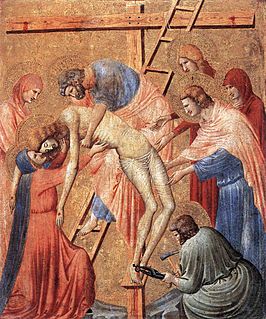
Pietro da Rimini was an early 14th-century Italian painter.

Giovanni Battista Cavagna, also known as Cavagni or Gavagni was an Italian architect, engineer, and painter mainly in Naples, but also in Rome and Ascoli Piceno, Italy.
Arcangelo Guglielmelli was an Italian architect and painter, active in his native Naples, Italy, in a late-Baroque style. He was involved in the building and reconstruction of churches, many of which had been damaged by the earthquakes of 1688 and 1694.

Alessandro Pieroni was an Italian architect and painter. He was active mainly in a Mannerist style, working for the courts of Grandukes Francesco I and Ferdinando I de' Medici, Grand Duke of Tuscany.
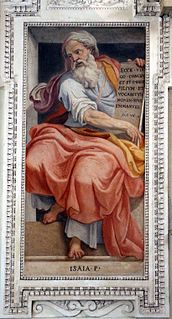
Giovanni Battista Ricci nicknamed Il Novara after his birth town, was an Italian painter of the late-Mannerist and early-Baroque period, active mainly in Rome.

San Francesco Saverio also known as the Church of the Suffragio is a Baroque-style Roman Catholic church located in Piazza Ferrari #12 in Rimini, Italy.

San Bernardino or San Bernardino da Siena is a Baroque-style Roman Catholic church located in vicolo San Bernardino #26 in Rimini, Italy. The church and adjacent convent are now affiliated with Clarissan Order nuns.
Giovanni Battista Ragazzini was an Italian painter, active in Ravenna, Fano, and in Umbria. He was born in Ravenna. He painted with his brother Francesco in the church of San Domenico, Fano. His style was influenced by Luca Longhi. A painting of Mary Magdalene is in Santa Maria delle Vergini, Macerata.
Buonamici is an Italian surname. Notable people with the surname include:
Francesco Buonamici may refer to:
Francesco Buonamici (1596–1677) was an Italian Baroque architect, painter and engraver who was active in Lucca, Malta, Sicily and Rome during the 17th century. He played a significant role in the introduction of Baroque in Malta.
References
- ↑ Giovan Francesco Buonamici Architetto Riminese del 700 Thesis abstract of Federica Murra (1996-1997), under professor Arch. C. Cresti.
| General | |
|---|---|
| National libraries | |
| Art research institutes | |
| Biographical dictionaries | |
| Other | |
