Related Research Articles
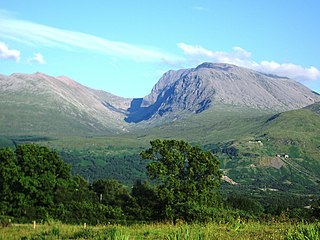
Ben Nevis is the highest mountain in Scotland, the United Kingdom, and the British Isles. The summit is 1,345 metres (4,413 ft) above sea level and is the highest land in any direction for 739 kilometres. Ben Nevis stands at the western end of the Grampian Mountains in the Highland region of Lochaber, close to the town of Fort William.

Rockall is an uninhabitable granite islet in the North Atlantic Ocean. The United Kingdom claims that Rockall lies within its territorial sea and is part of its territory, but this claim is not recognised by Ireland. It and the nearby skerries of Hasselwood Rock and Helen's Reef are the only emergent parts of the Rockall Plateau. The rock was formed by magmatism as part of the North Atlantic Igneous Province during the Paleogene.
Scotland is a country that is part of the United Kingdom. It contains nearly one-third of the United Kingdom's land area, consisting of the northern part of the island of Great Britain and more than 790 adjacent islands, principally in the archipelagos of the Hebrides and the Northern Isles. To the south-east, Scotland has its only land border, which is 96 miles (154 km) long and shared with England; the country is surrounded by the Atlantic Ocean to the north and west, the North Sea to the north-east and east, and the Irish Sea to the south. The population in 2022 was 5,439,842. Edinburgh is the capital and Glasgow is the largest of the cities of Scotland.

Harris is the southern and more mountainous part of Lewis and Harris, the largest island in the Outer Hebrides, Scotland. Although not an island itself, Harris is often referred to in opposition to the Isle of Lewis as the Isle of Harris, which is the former postal county and the current post town for Royal Mail postcodes starting HS3 or HS5.
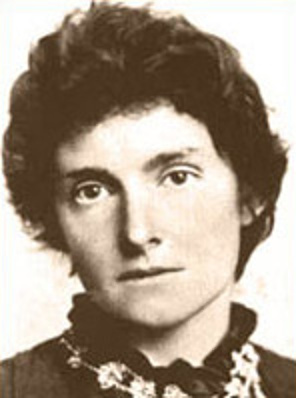
Edith Nesbit was an English writer and poet, who published her books for children as E. Nesbit. She wrote or collaborated on more than 60 such books. She was also a political activist and co-founder of the Fabian Society, a socialist organisation later affiliated to the Labour Party.

Pinus sylvestris, the Scots pine (UK), Scotch pine (US), Baltic pine, or European red pine is a species of tree in the pine family Pinaceae that is native to Eurasia. It can readily be identified by its combination of fairly short, blue-green leaves and orange-red bark.
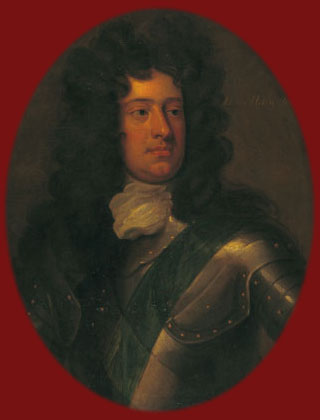
Lieutenant-General James Hamilton, 4th Duke of Hamilton and 1st Duke of Brandon, KG, KT was a Scottish nobleman, soldier and politician. Hamilton was a major investor in the failed Darien Scheme, which cost many of Scotland's ruling class their fortunes. He led the Country Party in the Parliament of Scotland and the opposition to the Act of Union in 1707. He died on 15 November 1712 as the result of a celebrated duel in Hyde Park, Westminster, with Charles Mohun, 4th Baron Mohun, over a disputed inheritance.

Darién is a province in Panama whose capital city is La Palma. With an area of 11,896.5 km2 (4,593.3 sq mi), it is located at the eastern end of the country and bordered to the north by the province of Panamá and the region of Kuna Yala. To the south, it is bordered by the Pacific Ocean and Colombia. To the east, it borders Colombia; to the west, it borders the Pacific Ocean and the province of Panama.

Barrhead is a town in East Renfrewshire, Scotland, thirteen kilometres (8 mi) southwest of Glasgow city centre on the edge of the Gleniffer Braes. At the 2011 census its population was 17,268.

Glen Affric is a glen south-west of the village of Cannich in the Highland region of Scotland, some 15 miles west of Loch Ness. The River Affric runs along its length, passing through Loch Affric and Loch Beinn a' Mheadhoin. A minor public road reaches as far as the end of Loch Beinn a' Mheadhoin, but beyond that point only rough tracks and footpaths continue along the glen.
Events from the year 1994 in the United Kingdom.

Beer in the United Kingdom has a long history, and has quite distinct traditions. Historically the main styles were top-fermented Bitters, Porters, Stouts and Milds, but after World War II lagers took over half the market by volume. The Campaign for Real Ale (CAMRA) was founded in 1971 and has encouraged the preservation and revival of traditional styles of ale. In particular CAMRA has promoted cask conditioned beer, which completes its maturation in casks in the cellar of the pub rather than at the brewery. As of 2014 the UK drank 634 million imperial pints of cask ale, representing 60% of ale in pubs and restaurants and 17% of all beer in pubs. In total 42.42 million hectolitres of beer were produced in 2013 of which 48% was sold in the off-trade.

Loch Laggan is a freshwater loch situated approximately 6+1⁄2 mi (10.5 km) west of Dalwhinnie in the Scottish Highlands. The loch has an irregular shape, runs nearly northeast to southwest and is approximately 7 mi (11 km) in length. It has an average depth of 68 ft (21 m) and is 174 ft (53 m) at its deepest. The eastern end of the loch features the largest freshwater beach in Britain. Since 1934 Loch Laggan has been part of the Lochaber hydro-electric scheme. At the northeast end of the loch is the hamlet of Kinloch Laggan.

Great Britain is an island in the North Atlantic Ocean off the north-west coast of continental Europe, consisting of the countries England, Scotland and Wales. With an area of 209,331 km2 (80,823 sq mi), it is the largest of the British Isles, the largest European island and the ninth-largest island in the world. It is dominated by a maritime climate with narrow temperature differences between seasons. The island of Ireland, with an area 40 per cent that of Great Britain, is to the west – these islands, along with over 1,000 smaller surrounding islands and named substantial rocks, comprise the British Isles archipelago.

Colonsay is an island in the Inner Hebrides of Scotland, located north of Islay and south of Mull. The ancestral home of Clan Macfie and the Colonsay branch of Clan MacNeil, it is in the council area of Argyll and Bute and has an area of 4,074 hectares. Aligned on a south-west to north-east axis, it measures 8 miles in length and reaches 3 mi (5 km) at its widest point.

Jura is an island in the Inner Hebrides of Scotland, adjacent to and northeast of Islay. With an area of 36,692 hectares (142 sq mi), and 196 inhabitants recorded in the 2011 census, Jura is more sparsely populated than Islay, and is one of the least densely populated islands of Scotland: in a list of the islands of Scotland ranked by size, Jura comes eighth, whereas by population it comes 31st. The island is mountainous, bare and largely infertile, covered by extensive areas of blanket bog.

Elizabeth Maitland, Duchess of Lauderdale was a Scottish peeress. She was the eldest daughter of William Murray and his wife Catherine, the Earl and Countess of Dysart. She was raised in English court circles during the years leading up to the English Civil War and received a well-rounded education from her parents. Her first husband was Lionel Tollemache, with whom she had eleven children. In 1672, three years after Lionel's death, she married John Maitland and gained a prominent position in the restored court.

The Clydebridge Steelworks, also known as Clydebridge Works, is a steel works in South Lanarkshire, Scotland.
References
- 1 2 "Glanderston House". Scotlandplaces.gov.uk. Retrieved 21 September 2016.
- 1 2 "Glanderson House". Portaltothepast.co.uk. Retrieved 21 September 2016.
 | This article about a Scottish building or structure is a stub. You can help Wikipedia by expanding it. |