Related Research Articles
The Venona project was a United States counterintelligence program initiated during World War II by the United States Army's Signal Intelligence Service and later absorbed by the National Security Agency (NSA), that ran from February 1, 1943, until October 1, 1980. It was intended to decrypt messages transmitted by the intelligence agencies of the Soviet Union. Initiated when the Soviet Union was an ally of the US, the program continued during the Cold War, when the Soviet Union was considered an enemy.

Leopold Zakharovich Trepper was a Polish Communist and career Soviet agent of the Red Army Intelligence. With the code name Otto, Trepper had worked with the Red Army since 1930. He was also a resistance fighter and journalist.

The Red Orchestra, as it was known in Germany, was the name given by the Abwehr Section III.F to anti-Nazi resistance workers in August 1941. It primarily referred to a loose network of resistance groups, connected through personal contacts, uniting hundreds of opponents of the Nazi regime. These included groups of friends who held discussions that were centred on Harro Schulze-Boysen, Adam Kuckhoff and Arvid Harnack in Berlin, alongside many others. They printed and distributed prohibited leaflets, posters, and stickers, hoping to incite civil disobedience. They aided Jews and resistance to escape the regime, documented the atrocities of the Nazis, and transmitted military intelligence to the Allies. Contrary to legend, the Red Orchestra was neither directed by Soviet communists nor under a single leadership. It was a network of groups and individuals, often operating independently. To date, about 400 members are known by name.

The Foreign Intelligence Service of the Russian Federation or SVR RF is Russia's external intelligence agency, focusing mainly on civilian affairs. The SVR RF succeeded the First Chief Directorate (PGU) of the KGB in December 1991. The SVR has its headquarters in the Yasenevo District of Moscow.
As early as the 1920s, the Soviet Union, through its GRU, OGPU, NKVD, and KGB intelligence agencies, used Russian and foreign-born nationals, as well as Communists of American origin, to perform espionage activities in the United States, forming various spy rings. Particularly during the 1940s, some of these espionage networks had contact with various U.S. government agencies. These Soviet espionage networks illegally transmitted confidential information to Moscow, such as information on the development of the atomic bomb. Soviet spies also participated in propaganda and disinformation operations, known as active measures, and attempted to sabotage diplomatic relationships between the U.S. and its allies.

J. Peters was the most commonly known pseudonym of a man who last went by the name "Alexander Stevens" in 1949. Peters was a journalist, political activist, and accused Soviet spy who was a leading figure of the Hungarian language section of the Communist Party USA in the 1920s and 1930s. From the early 1930s, Peters was actively involved in the espionage activities of the Soviet Union in the United States, fabricating passports, recruiting agents, and accumulating and passing along confidential and secret information.

Melita Stedman Norwood was a British civil servant, Communist Party of Great Britain member and KGB spy.
Harry Magdoff was accused by a number of authors as having been complicit in Soviet espionage activity during his time in US government. He was accused of passing information to Soviet intelligence networks in the United States, primarily through what the FBI called the "Perlo Group." Magdoff was never indicted, but after the end of the Cold War, a number of scholars have inspected declassified documents from U.S. and Soviet archives. They cite these documents to support the claim that Magdoff was involved in espionage. Other authors have taken issue with some of the broader interpretations of such materials which implicate many Americans in espionage for the Soviet Union, and the allegation that Harry Magdoff was an information source for the Soviets is disputed by several academics and historians asserting that Magdoff probably had no malicious intentions and committed no crimes.
The "Mitrokhin Archive" is a collection of handwritten notes, primary sources and official documents which were secretly made, smuggled & hidden by the KGB archivist Vasili Mitrokhin during the thirty years in which he served as a KGB archivist in the foreign intelligence service and the First Chief Directorate. When he defected to the United Kingdom in 1992, he brought the archive with him, in six full trunks. His defection was not officially announced until 1999.
Arnold Deutsch (1903–1942?), variously described as Austrian, Czech or Hungarian, was an academic who worked in London as a Soviet spy, best known for having recruited Kim Philby. Much of his life remains unknown or disputed.
The OMS, also known in English as the International Liaison Department (1921–1939), was "the most secret department" of the Executive Committee of the Communist International. It has also been translated as the Illegal Liaison Section and Foreign Liaison Department.
The Committee for State Security was the main security agency for the Soviet Union from 13 March 1954 until 3 December 1991. As a direct successor of preceding agencies such as the Cheka, GPU, OGPU, NKGB, NKVD and MGB, it was attached to the Council of Ministers. It was the chief government agency of "union-republican jurisdiction", carrying out internal security, foreign intelligence, counter-intelligence and secret police functions. Similar agencies operated in each of the republics of the Soviet Union aside from the Russian SFSR, where the KGB was headquartered, with many associated ministries, state committees and state commissions.
Vasily Mikhailovich Zarubin was a Soviet intelligence officer. In the United States, he used the cover name Vasily Zubilin and served as the chief Soviet intelligence Rezident from 1941 to 1944. Zarubin's wife, Elizaveta, served with him.
Henry Robinson, sometimes known as Henri Robinson, was a Belgian Communist and later intelligence agent of the Communist International (Comintern). Robinson was a leading member of the Red Orchestra in Paris. Robinson used a number of code names(Andre, Lucien, Leo, Giocomo) and aliases

Anatoly Markovich Gurevich was a Soviet intelligence officer. He was an officer in the GRU operating as "разведчик-нелегал" in Soviet intelligence parlance. Gurevich was a central figure in the anti-Nazi Red Orchestra in France and Belgium during World War II.
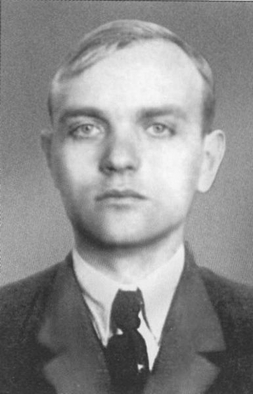
Konstantin Lukitsch Jeffremov, also known as Konstantin Yeffremov, was a Soviet GRU intelligence officer, known as a scout in Soviet intelligence parlance, with the rank of captain. Jeffremov, an anti-Semite. was an expert in chemical warfare. Jeffremov used the aliases Pascal and Eric Jernstroem to disguise his identity in messages He had been working for Soviet intelligence since 1936. and the alias Bordo. He was the organizer of a Soviet espionage network in the Netherlands and the Low Countries In 1942, Jeffremov took over the running of a number of networks in Belgium and the Netherlands, that had been damaged in the months prior, after several members were arrested by the Abwehr. These networks was later given the moniker, the Red Orchestra by the Abwehr. Jeffremov was arrested in July 1942 and agreed to work for the Abwehr in a Funkspiel operation, after being tortured.
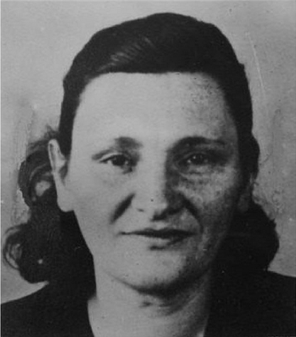
Malvina Gruber, née Hofstadterova was a Jewish Comintern agent, who was part of a Soviet intelligence network in Belgium and France, that was later called the Red Orchestra by the Abwehr, during Nazi regime. Gruber worked as a cutout, but her specialism was couriering people across borders. From 1938 to 1942, Gruber worked as assistant to Soviet agent Abraham Rajchmann, a forger, who provided identity papers, e.g. the Kennkarte, Carte d'identité and travel permits, for the espionage group. At the beginning of 1942, she was arrested in Brussels by the Abwehr.
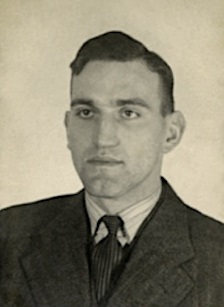
Anton Winterink was a Dutch Communist. and a member of the Communist Party of the Netherlands. Winterink was a core member of an anti-Nazi Soviet espionage group in Belgium that came to be known as the Red Orchestra by the Abwehr. He worked as a radio operator for the Soviet espionage group's that was associated with the Soviet GRU officer, Konstantin Jeffremov, in 1940. Winterink used the alias Tino to disguise his identity. In late 1940, Winterink established an espionage organisation based in Amsterdam, that became known as Group Hilda that operated until early 1943. Winterink was arrested on 18 August 1942 by the Sonderkommando Rote Kapelle in Amsterdam. After being interrogated and involved in an attempt at Funkspiel, he was shot four months later at the Tir national military firing-range in Brussels.
Germaine Schneider was a Belgian communist and Communist International (Comintern) agent. During the latter half of the 1920s, Schneider worked predominantly for the Communist Party of Belgium. During the interwar period and early World War II, Schneider was a core member of a Soviet espionage group. She worked as a principal courier for the groups that were associated with the Comintern agent, Henry Robinson in the late 1930s in France and later the Soviet GRU officer, Konstantin Jeffremov in Belgium and the Low Countries, in the early 1940s. These groups were later identified by the Abwehr under the moniker the Red Orchestra. Schneider used the aliases Clais, Pauline, Odette, Papillon and Butterfly (Schmetterling) to disguise her identity.

Medardo Griotto was an Italian militant communist activist and member of the Italian Communist Party. Trained as a engraver, Griotto became an expert forger, who became an important member in the espionage network run by Communist International (Comintern) intelligence agent Henry Robinson. Griotto was betrayed by Leopold Trepper, arrested and executed by guillotine at Plötzensee Prison.
References
- 1 2 3 4 5 Wright, Peter (31 July 1987). Spycatcher. Stoddart. ISBN 9780773721685.
- ↑ Boatner, Mark (1996). Biographical dictionary of World War II. Presidio Press. p. 672. ISBN 9780891416241.
- ↑ Andrew, Christopher; Mitrokhin, Vasili (1999). The Sword and the Shield - The Mitrokhin Archive and the Secret History of the KGB. Blackstone Publishing. p. 154. ISBN 978-1470889340.
- ↑ Gazur, Edward P (2002). Alexander Orlov : the FBI's KGB General (1st ed.). New York: Carroll and Graf. p. 398. ISBN 9780786709717.