Related Research Articles

Gastroenterology is the branch of medicine focused on the digestive system and its disorders. The digestive system consists of the gastrointestinal tract, sometimes referred to as the GI tract, which includes the esophagus, stomach, small intestine and large intestine as well as the accessory organs of digestion which include the pancreas, gallbladder, and liver. The digestive system functions to move material through the GI tract via peristalsis, break down that material via digestion, absorb nutrients for use throughout the body, and remove waste from the body via defecation. Physicians who specialize in the medical specialty of gastroenterology are called gastroenterologists or sometimes GI doctors. Some of the most common conditions managed by gastroenterologists include gastroesophageal reflux disease, gastrointestinal bleeding, irritable bowel syndrome, irritable bowel disease which includes Crohn's disease and ulcerative colitis, peptic ulcer disease, gallbladder and biliary tract disease, hepatitis, pancreatitis, colitis, colon polyps and cancer, nutritional problems, and many more.

The enteric nervous system (ENS) or intrinsic nervous system is one of the main divisions of the autonomic nervous system (ANS) and consists of a mesh-like system of neurons that governs the function of the gastrointestinal tract. It is capable of acting independently of the sympathetic and parasympathetic nervous systems, although it may be influenced by them. The ENS is nicknamed the "second brain". It is derived from neural crest cells.
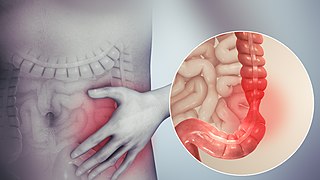
Irritable bowel syndrome (IBS) is a "disorder of gut-brain interaction" characterized by a group of symptoms that commonly include abdominal pain, abdominal bloating and changes in the consistency of bowel movements. These symptoms may occur over a long time, sometimes for years. IBS can negatively affect quality of life and may result in missed school or work or reduced productivity at work. Disorders such as anxiety, major depression, and chronic fatigue syndrome are common among people with IBS.

An upper gastrointestinal series, also called a barium swallow, barium study, or barium meal, is a series of radiographs used to examine the gastrointestinal tract for abnormalities. A contrast medium, usually a radiocontrast agent such as barium sulfate mixed with water, is ingested or instilled into the gastrointestinal tract, and X-rays are used to create radiographs of the regions of interest. The barium enhances the visibility of the relevant parts of the gastrointestinal tract by coating the inside wall of the tract and appearing white on the film. This in combination with other plain radiographs allows for the imaging of parts of the upper gastrointestinal tract such as the pharynx, larynx, esophagus, stomach, and small intestine such that the inside wall lining, size, shape, contour, and patency are visible to the examiner. With fluoroscopy, it is also possible to visualize the functional movement of examined organs such as swallowing, peristalsis, or sphincter closure. Depending on the organs to be examined, barium radiographs can be classified into "barium swallow", "barium meal", "barium follow-through", and "enteroclysis". To further enhance the quality of images, air or gas is sometimes introduced into the gastrointestinal tract in addition to barium, and this procedure is called double-contrast imaging. In this case the gas is referred to as the negative contrast medium. Traditionally the images produced with barium contrast are made with plain-film radiography, but computed tomography is also used in combination with barium contrast, in which case the procedure is called "CT enterography".
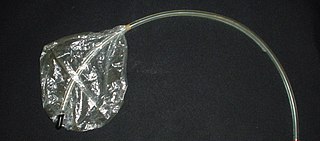
A barostat is a device used to maintain constant pressure in a closed chamber. Its main principle is providing constant pressures in a balloon by means of a pneumatic pump. Barostats are frequently used in neurogastroenterology research, where they are used for measuring gut wall tension or sensory thresholds in the gut.
Functional gastrointestinal disorders (FGID), also known as disorders of gut–brain interaction, include a number of separate idiopathic disorders which affect different parts of the gastrointestinal tract and involve visceral hypersensitivity and motility disturbances.

Motilin is a 22-amino acid polypeptide hormone in the motilin family that, in humans, is encoded by the MLN gene.

Enterochromaffin (EC) cells are a type of enteroendocrine cell, and neuroendocrine cell. They reside alongside the epithelium lining the lumen of the digestive tract and play a crucial role in gastrointestinal regulation, particularly intestinal motility and secretion. They were discovered by Nikolai Kulchitsky.

Intestinal pseudo-obstruction (IPO) is a clinical syndrome caused by severe impairment in the ability of the intestines to push food through. It is characterized by the signs and symptoms of intestinal obstruction without any lesion in the intestinal lumen. Clinical features mimic those seen with mechanical intestinal obstructions and can include abdominal pain, nausea, abdominal distension, vomiting, dysphagia and constipation depending upon the part of the gastrointestinal tract involved.
Postcholecystectomy syndrome (PCS) describes the presence of abdominal symptoms after a cholecystectomy.
The Rome process and Rome criteria are an international effort to create scientific data to help in the diagnosis and treatment of functional gastrointestinal disorders, such as irritable bowel syndrome, functional dyspepsia and rumination syndrome. The Rome diagnostic criteria are set forth by Rome Foundation, a not for profit 501(c)(3) organization based in Raleigh, North Carolina, United States.
Otilonium bromide, sold under the trade name Spasmomen among others, is an antimuscarinic and calcium channel blocker used to relieve spasmodic pain of the gut, especially in irritable bowel syndrome.

Dexloxiglumide is a drug which acts as a cholecystokinin antagonist, selective for the CCKA subtype. It inhibits gastrointestinal motility and reduces gastric secretions, and despite older selective CCKA antagonists such as lorglumide and devazepide having had only limited success in trials and ultimately never making it into clinical use, dexloxiglumide is being investigated as a potential treatment for a variety of gastrointestinal problems including irritable bowel syndrome, dyspepsia, constipation and pancreatitis, and has had moderate success so far although trials are still ongoing.
A prokinetic agent is a type of drug which enhances gastrointestinal motility by increasing the frequency or strength of contractions, but without disrupting their rhythm. They are used to treat certain gastrointestinal symptoms, including abdominal discomfort, bloating, constipation, heart burn, nausea, and vomiting; and certain gastrointestinal disorders, including irritable bowel syndrome, gastritis, gastroparesis, and functional dyspepsia.

Paul Enck is Professor of Medical Psychology and was Head of Research at the Department of Psychosomatic Medicine and Psychotherapy, University Hospital Tübingen, Germany until 2014; since then, he holds a part-time research and consultant position at the department. His research interests were and still are psychophysiology and neurogastroenterology. Since his semi-retirement in 2014, he added popular science writing in medicine and history to his activities.
The European Society of Neurogastroenterology & Motility (ESNM) is a professional medical non-profit organization that was founded in 1982. The ESNM has over 3,100 European members, who are involved in the study of neuroscience and the pathophysiology of gastrointestinal function, and more generally in the advancement of neurogastroenterology.

Juanita L. Merchant is an American gastroenterologist and physiology researcher who has contributed to understanding of gastric response to chronic inflammation. She is currently the chief of the University of Arizona Division of Gastroenterology and Hepatology. Merchant was elected to the National Academy of Medicine in 2008, and appointed an inaugural member of the NIH Council of Councils.

Satish Sanku Chander Rao is the J.Harold Harrison Distinguished University Chair in Gastroenterology at the Medical College of Georgia, Augusta University. He served as the former President of the American Neurogastroenterology and Motility Society and as Chair of the American Gastroenterological Association (AGA) Institute Council, Neurogastroenterology/Motility Section.
Functional Lumen Imaging Probe (FLIP) is a test used to evaluate the function of the esophagus, by measuring the dimensions of the esophageal lumen using impedance planimetry. Typically performed with sedation during upper endoscopy, FLIP is used to evaluate for esophageal motility disorders, such as achalasia, diffuse esophageal spasm, etc.
Pankaj "Jay" Pasricha is a physician and researcher specializing in gastroenterology and neurogastroenterology. He currently serves as the chair of medicine at the Mayo Clinic in Scottsdale, Arizona. Formerly, he served as the director of the Johns Hopkins Center for Neurogastroenterology and was the founder and co-director of the Amos Food, Body and Mind Center.
References
- ↑ "New Danish PCs and HEPs". Sinodanishcenter.com. Retrieved 2016-08-27.
- 1 2 "重庆大学外籍专家喜获中国政府"友谊奖"-新闻 - 重庆大学新闻网". news.cqu.edu.cn. Archived from the original on 19 March 2015. Retrieved 15 January 2022.
- ↑ "Mech-Sense". Mech-Sense. Retrieved 2016-08-27.
- ↑ "Home - OESO - World Organization for Specialized Studies on Diseases of the Esophagus". OESO. 2015-09-03. Retrieved 2016-08-27.
- ↑ Gregersen, Hans (12 February 2003). Biomechanics of the Gastrointestinal Tract: 9781852335205: Medicine & Health Science Books. ISBN 1852335203.
- ↑ "Award for FLIP co-inventor". Crospon.com. Retrieved 2016-08-27.
- ↑ Gregersen, Hans (13 October 2010). Biomechanics of the Gastrointestinal Tract: New Perspectives in Motility Research and Diagnostics: 9781849968805: Medicine & Health Science Books. ISBN 978-1849968805.
- ↑ ?Degaard, Svein; Gilja, Odd Helge; Gregersen, Hans (2005). Basic and New Aspects of Gastrointestinal Ultrasonography (Advanced Series in Biomechanics (Hardcover)): Odd Helge Gilja, Hans Gregersen, Svein Odegaard. ISBN 9789812388452.
- ↑ "汉斯:大脑双核驱动的科学家_人物_国际人才交流网". Wetalent.com. 2014-07-24. Retrieved 2016-08-27.
- ↑ "MedViz". MedViz. Retrieved 2016-08-27.
| International | |
|---|---|
| National | |
| Other | |
