Related Research Articles

A college is an educational institution or a constituent part of one. A college may be a degree-awarding tertiary educational institution, a part of a collegiate or federal university, an institution offering vocational education, a further education institution, or a secondary school.

A school is both the educational institution and building designed to provide learning spaces and learning environments for the teaching of students under the direction of teachers. Most countries have systems of formal education, which is sometimes compulsory. In these systems, students progress through a series of schools that can be built and operated by both government and private organization. The names for these schools vary by country but generally include primary school for young children and secondary school for teenagers who have completed primary education. An institution where higher education is taught is commonly called a university college or university.

Eton College is a public school in Eton, Berkshire, England. It was founded in 1440 by Henry VI under the name Kynge's College of Our Ladye of Eton besyde Windesore, making it the 18th-oldest school in the Headmasters' and Headmistresses' Conference (HMC). Originally intended as a sister institution to King's College, Cambridge, Eton is known for its history, wealth, and notable alumni, known as Old Etonians.
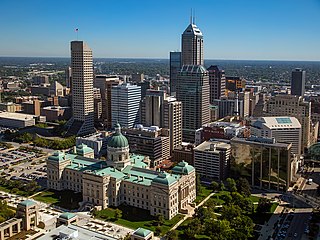
Indianapolis, colloquially known as Indy, is the capital and most populous city of the U.S. state of Indiana and the seat of Marion County. Located in Central Indiana, the city lies along the White River's West Fork near its confluence with Fall Creek.
Brown v. Board of Education of Topeka, 347 U.S. 483 (1954), was a landmark decision of the U.S. Supreme Court ruling that U.S. state laws establishing racial segregation in public schools are unconstitutional, even if the segregated schools are otherwise equal in quality. The decision partially overruled the Court's 1896 decision Plessy v. Ferguson, which had held that racial segregation laws did not violate the U.S. Constitution as long as the facilities for each race were equal in quality, a doctrine that had come to be known as "separate but equal". The Court's unanimous decision in Brown, and its related cases, paved the way for integration and was a major victory of the civil rights movement, and a model for many future impact litigation cases.

TheAmerican University is a private federally chartered research university in Washington, D.C. Its main campus spans 90 acres on Ward Circle, mostly in the Spring Valley neighborhood of Northwest D.C. AU was chartered by an Act of Congress in 1893 at the urging of Methodist bishop John Fletcher Hurst, who sought to create an institution that would promote public service, internationalism, and pragmatic idealism. AU broke ground in 1902, opened as a graduate education institution in 1914, and admitted its first undergraduates in 1925. Although affiliated with the United Methodist Church, religious affiliation is not a criterion for admission.

In the United States, education is provided in public and private schools and by individuals through homeschooling. State governments set overall educational standards, often mandate standardized tests for K–12 public school systems and supervise, usually through a board of regents, state colleges, and universities. The bulk of the $1.3 trillion in funding comes from state and local governments, with federal funding accounting for about $260 billion in 2021 compared to around $200 billion in past years.

A teacher, also called a schoolteacher or formally an educator, is a person who helps students to acquire knowledge, competence, or virtue, via the practice of teaching.
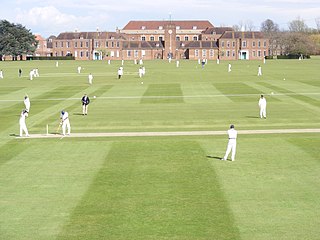
Private schools in the United Kingdom are schools that require fees for admission and enrollment. Some have financial endowments, most are governed by a board of governors, and are owned by a mixture of corporations, trusts and private individuals. They are independent of many of the regulations and conditions that apply to state-funded schools. For example, the schools do not have to follow the National Curriculum, although many such schools do.

The University of Connecticut (UConn) is a public land-grant research university system with its main campus in Storrs, Connecticut. It was founded in 1881 as the Storrs Agricultural School, named after two benefactors. In 1893, the school became a public land grant college, taking the name University of Connecticut in 1939. Over the following decade, social work, nursing, and graduate programs were established. During the 1960s, UConn Health was established for new medical and dental schools. UConn is accredited by the New England Commission of Higher Education.

Indiana University Bloomington is a public research university in Bloomington, Indiana. It is the flagship campus of Indiana University and its largest campus with over 40,000 students. Established as the state's seminary in 1820, the name was changed to "Indiana College" in 1829 and to "Indiana University" in 1838.
A college-preparatory school is a type of secondary school. The term refers to public, private independent or parochial schools primarily designed to prepare students for higher education.

Harvard Kennedy School (HKS), officially the John F. Kennedy School of Government, is the school of public policy and government of Harvard University in Cambridge, Massachusetts. The school offers master's degrees in public policy, public administration, and international development, four doctoral degrees, and various executive education programs. It conducts research in subjects relating to politics, government, international affairs, and economics. As of 2021, HKS had an endowment of $1.7 billion. It is a member of the Association of Professional Schools of International Affairs (APSIA), a global consortium of schools that trains leaders in international affairs.

Easter Monday is the second day of Eastertide and a public holiday in some countries. In Western Christianity it marks the second day of the Octave of Easter; in Eastern Christianity it marks the second day of Bright Week.

A state school, public school, or government school is a primary or secondary school that educates all students without charge. Such schools are funded in whole or in part by taxation and operated by the government of the state.
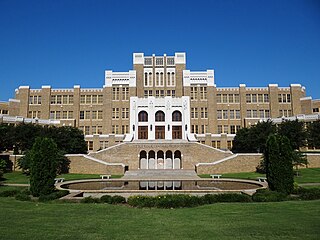
A secondary school or high school is an institution that provides secondary education and also usually includes the building where this takes place. Some secondary schools provide both lower secondary education and upper secondary education, i.e., both levels 2 and 3 of the ISCED scale, but these can also be provided in separate schools.
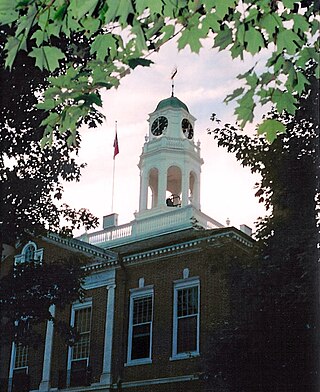
A private school is a school not administered or funded by the government, unlike a public school.

In England and Wales, a public school is a type of fee-charging private school originally for older boys. They are "public" in the sense of being open to pupils irrespective of locality, denomination or paternal trade or profession; they are run for the profit of a private owner.
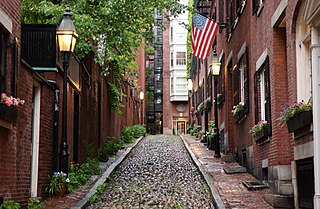
Boston, officially the City of Boston, is the capital and most populous city in the Commonwealth of Massachusetts in the United States. The city serves as the cultural and financial center of the New England region of the Northeastern United States. It has an area of 48.4 sq mi (125 km2) and a population of 675,647 as of the 2020 census, making it the third-largest city in the Northeast after New York City and Philadelphia. The Greater Boston metropolitan statistical area, including and surrounding the city, is the largest in New England and eleventh-largest in the country.
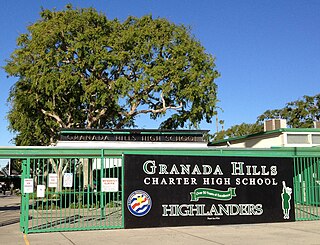
A charter school is a school that receives government funding but operates independently of the established state school system in which it is located. It is independent in the sense that it operates according to the basic principle of autonomy for accountability, that it is freed from the rules but accountable for results.