Related Research Articles

Windows XP is a major release of Microsoft's Windows NT operating system. It was released to manufacturing on August 24, 2001, and later to retail on October 25, 2001. It is a direct upgrade to its predecessors, Windows 2000 for high-end and business users and Windows Me for home users, and is available for any devices running Windows NT 4.0, Windows 98, Windows 2000, or Windows Me that meet the new Windows XP system requirements.
Windows Media Audio (WMA) is a series of audio codecs and their corresponding audio coding formats developed by Microsoft. It is a proprietary technology that forms part of the Windows Media framework. WMA consists of four distinct codecs. The original WMA codec, known simply as WMA, was conceived as a competitor to the popular MP3 and RealAudio codecs. WMA Pro, a newer and more advanced codec, supports multichannel and high resolution audio. A lossless codec, WMA Lossless, compresses audio data without loss of audio fidelity. WMA Voice, targeted at voice content, applies compression using a range of low bit rates. Microsoft has also developed a digital container format called Advanced Systems Format to store audio encoded by WMA.

Windows Media Player (WMP) is the first media player and media library application that Microsoft developed to play audio and video on personal computers. It has been a component of the Microsoft Windows operating system, including Windows 9x, Windows NT, Pocket PC, and Windows Mobile. Microsoft also released editions of Windows Media Player for classic Mac OS, Mac OS X, and Solaris, but has since discontinued them. Since 2022, it has been branded with the Legacy suffix to distinguish it from the new UWP-based Media Player introduced in Windows 11.

Windows Millennium Edition, or Windows Me, often capitalized as Windows ME, is an operating system developed by Microsoft as part of its Windows 9x family of Microsoft Windows operating systems. It was officially codenamed as Millennium. It is the successor to Windows 98, and was released to manufacturing on June 19, 2000, and then to retail on September 14, 2000. It was Microsoft's main operating system for home users until the introduction of its successor Windows XP in October 2001.
Windows Media Video (WMV) is a series of video codecs and their corresponding video coding formats developed by Microsoft. It is part of the Windows Media framework. WMV consists of three distinct codecs: The original video compression technology known as WMV, was originally designed for Internet streaming applications, as a competitor to RealVideo. The other compression technologies, WMV Screen and WMV Image, cater for specialized content. After standardization by the Society of Motion Picture and Television Engineers (SMPTE), WMV version 9 was adapted for physical-delivery formats such as HD DVD and Blu-ray Disc and became known as VC-1. Microsoft also developed a digital container format called Advanced Systems Format to store video encoded by Windows Media Video.

Windows XP Media Center Edition (MCE) is a version of the Windows XP operating system which was the first version of Windows to include Windows Media Center, designed to serve as a home-entertainment hub. The last version, Windows XP Media Center Edition 2005 Update Rollup 2, was released on October 14, 2005. After that, Windows Media Center was included in certain editions of later Windows versions. It was an optional, paid addition to Windows 8 and then discontinued in Windows 10. Windows XP Media Center Edition reached end of support on April 8, 2014, along with most other Windows XP editions.

Windows Movie Maker is a discontinued video editing software program by Microsoft. It was first included in Windows Me on September 14, 2000, and in Windows XP on October 25, 2001. It later became a part of the Windows Essentials software suite, and offered the ability to create and edit videos as well as to publish them on OneDrive, Facebook, Vimeo, YouTube, Windows Live Groups, and Flickr. It is comparable to Apple's iMovie.
InCD is a packet writing software developed by Nero AG for Microsoft Windows.
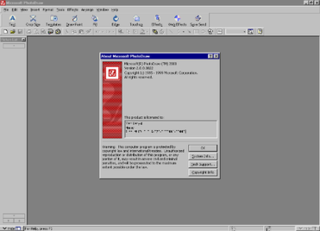
Microsoft PhotoDraw was a vector graphics and raster image editing software developed by Microsoft. It was released in 1999 as part of the Microsoft Office 2000 family of products and was specifically designed for creating and editing graphics, illustrations, and photo compositions.

Windows Vista is a major release of Microsoft's Windows NT operating system. It was released to manufacturing on November 8, 2006, and became generally available on January 30, 2007, on the Windows Marketplace, the first release of Windows to be made available through a digital distribution platform. Vista succeeded Windows XP (2001); at the time, the five-year gap between the two was the longest time span between successive Windows releases.
Microsoft Plus! is a discontinued commercial operating system enhancement product by Microsoft. The last edition is the Plus! SuperPack, which includes an assortment of screensavers, themes, and games, as well as multimedia applications. The Microsoft Plus! product was first announced on January 31, 1994, under the internal codename "Frosting". The first edition was an enhancement for Windows 95, Windows 95 Plus!
Compared with previous versions of Microsoft Windows, features new to Windows Vista are very numerous, covering most aspects of the operating system, including additional management features, new aspects of security and safety, new I/O technologies, new networking features, and new technical features. Windows Vista also removed some others.
Windows Media Connect (WMC) is a UPnP AV server from Microsoft for Windows XP and later Windows operating systems, to share and stream media on a Windows computer to WMC clients. The first two releases of WMC were made available as stand-alone software, and included a client as well. Following that, it was renamed to Home Media Ecosystem (HME) and the media server component was integrated into Windows Media Player and Windows Home Server. WMC version 2.0 can be manually installed on Windows Server 2008 or Windows Server 2008 R2 32bit or 64bit operating system but this type of installation is not officially supported by Microsoft and requires manual tweaking of NT Services' dependencies in order to run.
Windows Media Center Extenders are devices that are configured to connect over a computer network to a computer running Microsoft Windows XP Media Center Edition, Windows Vista Home Premium/Ultimate, Windows 7 Home Premium, or Windows 8 with a Pro pack to stream the computer's media center functions to the Extender device. This allows use of the Media Center and its features on a television receiver or other electronic visual display.

Zune is a discontinued software program that was developed by Microsoft for Windows that functions as a full media player, library, media streaming server, mobile device management, and interface for the discontinued Zune Marketplace. The software is used to sync with all devices with Zune functionality including the Zune 4, 8, 16, 30, 80, 120, Zune HD, Windows Phone 7, and Microsoft Kin. Zune devices work exclusively with the Zune software, which applies many design principles of Microsoft's Metro design language.
Windows Imaging Component (WIC) is a COM-based imaging codec framework introduced in Windows Vista (and later available in Windows XP Service Pack 3) for working with and processing digital images and image metadata.
The Image Mastering Application Programming Interface, or IMAPI, is a component of Microsoft Windows operating system used for CD and DVD authoring and recording.
Windows XP, which is the next version of Windows NT after Windows 2000 and the successor to the consumer-oriented Windows Me, has been released in several editions since its original release in 2001.
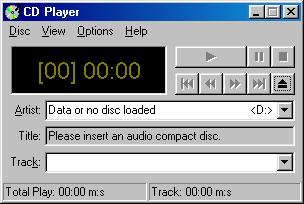
CD Player is a computer program that plays audio CDs using the computer's sound card. It was included in Windows 95, Windows 98, Windows NT 3.51, Windows NT 4.0 and Windows 2000. It was removed from Windows ME and beyond in favor of "CD/DVD playback functionality" in Windows Media Player.
References
- 1 2 "HighMAT: a new CD format". Geek.com. 21 October 2002. Archived from the original on 21 October 2018. Retrieved 6 January 2017.
- ↑ Update for HighMAT support in the Windows XP CD Writing Wizard
 | This computer-storage-related article is a stub. You can help Wikipedia by expanding it. |
 | This sound technology article is a stub. You can help Wikipedia by expanding it. |