
Aligarh is a city in the state of Uttar Pradesh in India. It is the administrative headquarters of Aligarh district, and lies 342 kilometres (213 mi) northwest of state capital Lucknow and approximately 130 kilometres (81 mi) southeast of the capital, New Delhi. The cities and districts which adjoin Aligarh are: Gautam Buddha Nagar, Bulandshahr, Sambhal, Badaun, Kasganj, Hathras, Etah and Mathura. As of 2011, Aligarh is the 53rd most populous city in India.

Sir Syed Ahmad KhanKCSI, also spelled Sayyid Ahmad Khan, was an Indian Muslim reformer, philosopher, and educationist in nineteenth-century British India. Though initially espousing Hindu–Muslim unity, he later became the pioneer of Muslim nationalism in India and is widely credited as the father of the two-nation theory, which formed the basis of the Pakistan movement. Born into a family with strong ties to the Mughal court, Ahmad studied science and the Quran within the court. He was awarded an honorary LLD from the University of Edinburgh in 1889.

SirZiauddin Ahmad was an Indian mathematician, parliamentarian, logician, natural philosopher, politician, political theorist, educationist and a scholar. He was a member of the Aligarh Movement and was a professor, principal of MAO College, first pro vice-chancellor, vice chancellor and rector of Aligarh Muslim University, India.

Hakim Syed Zillur Rahman is an Indian scholar of Unani medicine. He founded Ibn Sina Academy of Medieval Medicine and Sciences in 2000. He had earlier served as Professor and chairman, Department of Ilmul Advia at the Ajmal Khan Tibbiya College, Aligarh Muslim University, Aligarh, for over 40 years before retiring as Dean Faculty of Unani Medicine. Presently, he is serving AMU as "Honorary Treasurer". In 2006, the Government of India awarded him the Padma Shri for his contribution to Unani Medicine.
Kaimganj, also rendered as Qaimganj, is a town in Farrukhabad district in the Indian State of Uttar Pradesh. Kaimganj Railway Station is a major station between Farrukhabad and Kasganj on Rajputana railway link of North Eastern Railway.
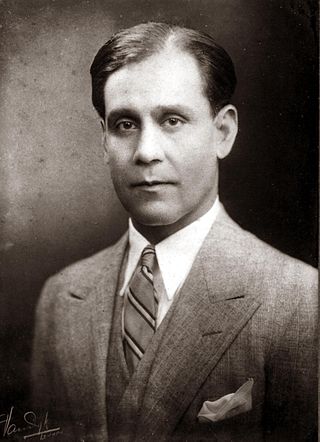
Hamidullah Khan was the last ruling Nawab of the princely salute state of Bhopal. He ruled from 1926 when his mother, Begum Kaikhusrau Jahan Begum, abdicated in his favor, until 1949 and held the honorific title until his death in 1960. A delegate to the Round Table Conference in London, he served as Chancellor of the Chamber of Princes from 1944–1947, when India became independent.
Ibn Sina Academy of Medieval Medicine and Sciences (IAMMS) is a trust registered under the Indian Trusts Act, 1882. Mohammad Hamid Ansari, former vice-chancellor of Aligarh Muslim University, Aligarh, formally inaugurated it on 21 April 2001. Department of AYUSH, Ministry of Health and Family Welfare, Government of India gave accreditation to the academy in 2004 and promoted it as 'centre of excellence' in 2008. Membership of the academy is open to anyone who has an interest in the academy's activities particularly on history of medicine and history of science. Being a charitable organization, donations to the Academy are also exempted from Income Tax under section 80G of the Income Tax Act 1961.
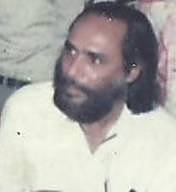
Israr Ahmad was an Indian theoretical nuclear physicist and professor at Aligarh Muslim University since 1961. He was known for his work in quantum scattering theory.
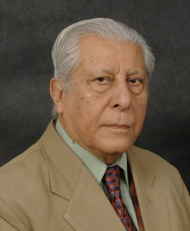
Jamal Khwaja was an Indian philosopher.
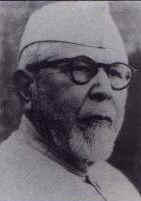
Abdul Majeed Khwaja was an Indian lawyer, educationist, social reformer and freedom fighter from Aligarh. In 1920, he along with others founded Jamia Millia Islamia and later served its vice chancellor and chancellor.
Tehzeeb-ul-Ikhlaq is a journal established by the Muslim reformer Sir Syed Ahmad Khan in 1871. The journal published alternative Muslim perspectives, written in plain language. It gave voice to the publisher's religious, social, and reforming opinions, and is credited with establishing him as one of the fathers of Urdu fiction. The same journal was restarted by Syed Hamid Vice-chancellor of Aligarh Muslim University in 1981; and since then it is being published regularly. There is now a separate office of Tehzeeb-ul-Ikhlaq.
Masud Husain Khan was an Indian linguist, the first Professor Emeritus in Social Sciences at Aligarh Muslim University and the fifth Vice-Chancellor of Jamia Millia Islamia, a Central University in New Delhi.

AMU Malappuram Centre is one of the prominent educational institution of Aligarh Muslim University in south India in the state of Kerala in Malappuram district near Perinthalmanna at Cherukara post. It was established in 2010 by the ministry of Human resource and Development, central government of India. The President of India in her capacity as the Visitor accorded sanction to establish two Centers of Aligarh Muslim University, one at Malappuram and the other at Murshidabad in 2010.

Aligarh Muslim University is a public central university in Aligarh, Uttar Pradesh, India, which was originally established by Sir Syed Ahmad Khan as the Muhammadan Anglo-Oriental College in 1875. Muhammadan Anglo-Oriental College became Aligarh Muslim University in 1920, following the Aligarh Muslim University Act. It has three off-campus centres in AMU Malappuram Campus (Kerala), AMU Murshidabad Centre, and Kishanganj Centre (Bihar).
Nazir Ahmed (1915-2008) was an Indian scholar, writer, and teacher of the Persian language. He was honoured by the Indian Government in 1987 with the Padma Shri. He received this award for his contributions to the propagation of Persian Language and literature.
The Aligarh Movement was the push to establish a modern system of Western–style scientific education for the Muslim population of British India, during the later decades of the 19th century. The movement's name derives from the fact that its core and origins lay in the city of Aligarh in Central India and, in particular, with the foundation of the Muhammadan Anglo-Oriental College in 1875. The founder of the oriental college, and the other educational institutions that developed from it, was Sir Syed Ahmed Khan. He became the leading light of the wider Aligarh Movement.
The Aligarh Muslim University Students' Union (AMUSU) is the official Students' Union of the Aligarh Muslim University, Aligarh, India. The Aligarh Muslim University Students' Union is the university-wide representative body for students and is autonomous in nature. It works according to their own Constitution written by Amin A. Bulbuliya. It is primarily responsible for building and preserving a healthy political culture and an atmosphere of open debates on the campus. Students are kept informed about the public meetings, discussions and other issues through pamphlets and notices.
Asad Ullah Khan is an Indian microbiologist, biochemist and a professor at the Interdisciplinary Biotechnology Unit of the Aligarh Muslim University. He is known for his studies on multidrug resistant clinical strains as well as for the first sighting in India of Aligarh super bug (NDM-4), a variant of New Delhi metallo-beta-lactamase 1 (NDM-1). He is an elected fellow of the Royal Society of Chemistry, the Biotech Research Society, India and the Indian Academy of Microbiological Sciences. The Department of Biotechnology of the Government of India awarded him the National Bioscience Award for Career Development, one of the highest Indian science awards, for his contributions to biosciences, in 2012.

Mohammad Mohibul Haque, or Dr. Muhibul Haque is a scholar and professor of international politics, Indian polity, minority rights and human rights at the Department of Political Science at Aligarh Muslim University. He was awarded President of India Dr. Shankar Dayal Sharma Gold Medal for Excellence during his studies. He speaks English, Hindi, and Urdu languages. Haque is also a prolific writer and author of several articles, research papers, chapters in the edited books on socio-political issues of national and international importance. He has also authored a book. He has done research on the topic of The Rights of Minorities in India: The Role of the National Commission for Minorities.
Shafey Kidwai is an Indian academic, bilingual critic, translator, columnist, and author. He is the professor in the Department of Mass Communications at Aligarh Muslim University. He has written twelve books in English and Urdu. His seminal study, Sir Syed Ahmad Khan, Reason, Religion and Nation (Routledge,2020) has got wide acclaim across the globe. He writes for The Hindustan Times, The Indian Express, The Hindu, The Frontline, The Outlook, Indian Literature, The Book Review, The Stateman, and Siyasat.com .Many reputed literary journals of the subcontinent carry his articles regularly and he is often regarded as one of the best modern academic critics in Urdu.


