
Heather Has Two Mommies is a children's book written by Lesléa Newman with illustrations by Diana Souza. First published in 1989, it was one of the first pieces of LGBTQ+ children's literature to garner broad attention.

I Know Why the Caged Bird Sings is a 1969 autobiography describing the young and early years of American writer and poet Maya Angelou. The first in a seven-volume series, it is a coming-of-age story that illustrates how strength of character and a love of literature can help overcome racism and trauma. The book begins when three-year-old Maya and her older brother are sent to Stamps, Arkansas, to live with their grandmother and ends when Maya becomes a mother at the age of 16. In the course of Caged Bird, Maya transforms from a victim of racism with an inferiority complex into a self-possessed, dignified young woman capable of responding to prejudice.

Sarah, Plain and Tall is a children's book written by Patricia MacLachlan and the winner of the 1986 Newbery Medal, the 1986 Scott O'Dell Award for Historical Fiction, and the 1986 Golden Kite Award. It explores themes of loneliness, abandonment, and coping with change.
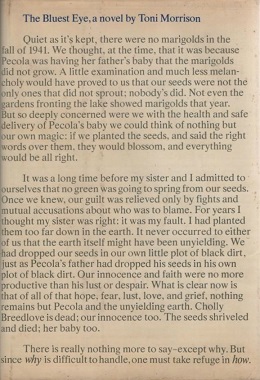
The Bluest Eye, published in 1970, is the first novel written by Toni Morrison. The novel takes place in Lorain, Ohio, and tells the story of a young African-American girl named Pecola who grew up following the Great Depression. Set in 1941, the story is about how she is consistently regarded as "ugly" due to her mannerisms and dark skin. As a result, she develops an inferiority complex, which fuels her desire for the blue eyes she equates with "whiteness".

Looking for Alaska is a 2005 young adult novel by American author John Green. Based on his time at Indian Springs School, Green wrote the novel as a result of his desire to create meaningful young adult fiction. The characters and events of the plot are grounded in Green's life, while the story itself is fictional.

Austerlitz is a 2001 novel by the German writer W. G. Sebald. It was Sebald's final novel. The book received the National Book Critics Circle Award. In 2019, it was ranked 5th on The Guardian's list of the 100 best books of the 21st century.
Patricia Barber Polacco is an American author and illustrator. Throughout her school years, Polacco struggled with reading but found relief by expressing herself through art. Polacco endured teasing and hid her disability until a school teacher recognized that she could not read and began to help her. Her book Thank You, Mr. Falker is Polacco's retelling of this encounter and its outcome. She also wrote such books as Mr. Lincoln's Way and The Lemonade Club.

Patricia C. McKissack was a prolific African American children's writer. She was the author of over 100 books, including Dear America books A Picture of Freedom: The Diary of Clotee, a Slave Girl;Color Me Dark: The Diary of Nellie Lee Love, The Great Migration North; and Look to the Hills: The Diary of Lozette Moreau, a French Slave Girl. She also wrote a novel for The Royal Diaries series: Nzingha: Warrior Queen of Matamba. Notable standalone works include Flossie & the Fox (1986), The Dark-Thirty: Southern Tales of the Supernatural (1992), and Sojourner Truth: Ain't I a Woman? (1992). What is Given from the Heart was published posthumously in 2019.

Lauren Myracle is an American writer of young adult fiction. She has written many novels, including the three best-selling "IM" books, ttyl, ttfn and l8r, g8r. Her book Thirteen Plus One was released May 4, 2010.

Impulse is a 2007 American young adult novel in verse written by Ellen Hopkins. The novel digs into the lives of three troubled teenagers as they try to work their way out of the hospital by getting through what put them there.
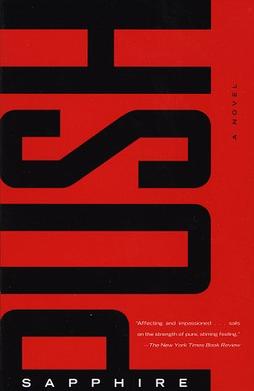
Push is the debut novel of American author Sapphire. Thirteen years after its release in 1996, the novel was made into the 2009 film Precious, which won numerous accolades, including two Academy Awards.

Meteor! is a 1987 children's picture book by author Patricia Polacco. Polacco is well known for writing and illustrating stories depicting events from her childhood in Michigan. Meteor! was published in 1987 by The Trumpet Club, commonly known for publications of children's books from grades PreK-6. The story is about Patricia, her brother Richard, and Cousin Steve as young children spending time with their grandparents on their farm in Michigan. It seems to be a normal summer night until a flash from the sky and a crash in the yard.
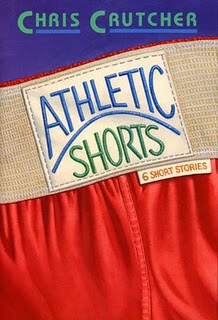
Athletic Shorts: Six Short Stories is a young adult fiction short story collection by Chris Crutcher. Most of the stories are related to Crutcher's early work and often come from his experience as a family counselor. This book also contains the short story "A Brief Moment in the Life of Angus Bethune" which first appeared in Connections, edited by Donald R. Gallo, published in 1989 by Delacorte Press. It was adapted into the film Angus. The novel has been met with challenges from school districts due to the book's inclusion of offensive language, homosexuality, and sexual content, and was the fourth most challenged book in 2006.

My Princess Boy is a 2009 children's picture book written by Cheryl Kilodavis and illustrated by Suzanne DeSimone. The story centers on a boy who likes "pretty things" and prefers to wear tiaras and "girly dresses." The story informs readers about supporting children regardless of their expression. Despite the attention he receives regarding his appearance, the Princess Boy always has the love and support of his family throughout the entire story.

Pink and Say is a children's book written and illustrated by Patricia Polacco. It was first published in 1994 by Philomel Books. The story is about two boy soldiers who meet each other in the battlefield during the American Civil War. One of the protagonists, Sheldon Russell Curtis ("Say"), is a white soldier who was injured while trying to escape battle. He is saved by a former slave named Pinkus Aylee ("Pink"), who is now a soldier of the 48th Regiment Infantry U.S. Colored Troops. Pink carries him back to his Georgia home where he and his family were slaves. While the frightened soldier is nursed back to health under the care of Pink’s mother, Moe Moe Bay, he begins to understand why his newfound friend is so adamant on returning to the war; to fight against the sickness that is slavery.

This One Summer is a graphic novel written by Mariko Tamaki and illustrated by Jillian Tamaki published by First Second Books in 2014. It is a coming of age story about two teenage friends, Rose and Windy, during a summer in Awago, a small beach town. Rose and Windy discover themselves and their sexuality while battling family dynamics and mental disabilities.
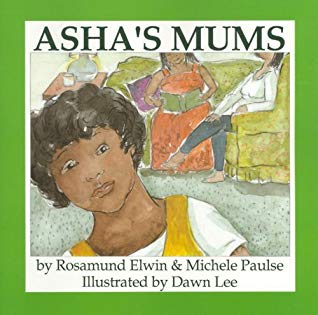
Asha's Mums is a children's book written in 1990 by Michele Paulse and Rosamund Elwin and illustrated by Dawn Lee focusing on the topic of same-sex parents. Due to the subject matter, the book has been extremely controversial with a mixed critical reception, leading to a legal case in British Columbia over an attempt to ban the book.

The Hate U Give is a 2017 young adult novel by Angie Thomas. It is Thomas's debut novel, expanded from a short story she wrote in college in reaction to the police shooting of Oscar Grant. The book is narrated by Starr Carter, a 16-year-old African-American girl from a poor neighborhood who attends an elite private school in a predominantly white, affluent part of the city. Starr becomes entangled in a national news story after she witnesses a white police officer shoot and kill her childhood friend, Khalil. She speaks up about the shooting in increasingly public ways, and social tensions culminate in a riot after a grand jury decides not to indict the police officer for the shooting.

Cinderella is Dead is a 2020 young adult book by Kalynn Bayron. The novel is focused on Sophia Grimmins, a queer teenager living in the same world as Cinderella, 200 years after her death. Young women that are coming of age are forced to attend balls to be chosen as wives of men they've never met.
Starting in 2021, there have been a considerable number of books banned or challenged in parts of the United States. Most of the targeted books have to do with race, gender, and sexuality. Unlike most book challenges in the past, whereby parents or other stakeholders in the community would engage teachers and school administrators in a debate over a title, local groups have received support from conservative advocacy organizations working to nationalize the efforts focused on certain subjects. They have also been more likely to involve legal and legislative measures rather than just conversations in local communities. Journalists, academics, librarians, and others commonly link the coordinated, often well-funded book challenges to other reactionary efforts to restrict what students should learn about systemic bias and the history of the United States. Hundreds of books have been challenged, including high-profile examples like Maus by Art Spiegelman and New Kid by Jerry Craft.
