
In the Frame was Dick Francis' fourteenth novel, published by Michael Joseph in 1976. [1] Its US release was by Harper and Row in 1977. [2]
In the Frame was Dick Francis' fourteenth novel, published by Michael Joseph in 1976. [1] Its US release was by Harper and Row in 1977. [2]
Horse artist Charles Todd arrives on a visit to his cousin Donald just as the police are investigating the murder of Donald's wife in the course of a burglary, during which all the artworks in his home were stolen as well as a valuable stock of wine. Charles stays to look after Donald, who is traumatised into inaction and besides is being treated as a suspect by the police.
At a race meeting later, he runs into the rich and flamboyant widow Maisie Matthews. who asks Charles to come and paint the ruin of her mansion, which recently burned to the ground. When he goes to inspect the site, he disturbs a man called Greene who claims he is inspecting the site for the insurance company. Charles' suspicions are raised when he learns that Greene was a sham and that Maisie had recently bought a horse painting by Alfred Munnings during a visit to Australia. Donald had also recently bought a Munnings in an Australian gallery, while on a buying trip for his wine business. Charles begins to wonder whether the paintings were forgeries which a gang steals back or, in Maisie's case, attempts to destroy (when they cannot find it) by burning down her house.
With expense money provided by Maisie, Charles goes to stay in Sydney with a former art school friend, Jik Cassavetes, and his recent wife Sarah. The shop where Maisie bought her painting was only on a short lease and is already closed. However, there is a Melbourne branch of the company so Charles, Jik and Sarah go to that city for the annual races and to follow up leads. There they encounter other members of what looks increasingly like a highly organised criminal enterprise.
Knowing by now that the gang is ruthless and violent, and that they have been tipped off whom to seek, Charles and his friends catch a flight to Alice Springs, where the art firm has another branch. There Charles encounters the expert forger Harley Renbo, but before he can do much more, he is seized by two thugs and thrown off a balcony. Surviving this, he flies with his friends back to Melbourne. Using the Melbourne Cup race as a distraction, they burgle the art shop and come away with evidence that the gang are engaged in a long-established international operation.
They now fly to New Zealand in order to warn another collector whose name appears in the stolen files to be vigilant. By this time Charles has contacted the English police and asked them to follow up the leads with which he has provided them. Barely escaping yet another attempt on his life, Charles flies back to Australia with his friends, while the gang and their leader are arrested. Back in England, he ties up loose ends.
Dick Francis constructed his plots to a recognisable formula. His protagonist has an interest in horse racing, meets injury with a phlegmatic acceptance of pain and is loyal to relations and friends.[ citation needed ] In this case Charles investigates the burglary out of compassion, to relieve the pressure on his traumatised cousin. Often, a talkative elder woman is featured in the novels; here it is Maisie, who plays more than a comical role, providing the initial clue and the finance to cover Charles' expenses.
Though Francis' wife Mary always refused to be credited as co-authoring his novels, it became known that her share in them was often crucial. In the case of In the Frame she took up painting and so was able to provide all the technical detail for Charles and Jik's artistic work. [3]
The novel was broadly adapted for a TV movie in 1989. However, the detection is credited there to David Cleveland, the Jockey Club investigator of Slay Ride, and the action takes place in Germany, not Australia. [4]

Edward Kelly was an Australian bushranger, outlaw, gang leader and convicted police-murderer. One of the last bushrangers, he is known for wearing a suit of bulletproof armour during his final shootout with the police.

True History of the Kelly Gang is a novel by Australian writer Peter Carey, based loosely on the history of the Kelly Gang. It was first published in Brisbane by the University of Queensland Press in 2000. It won the 2001 Booker Prize and the Commonwealth Writers Prize in the same year. Despite its title, the book is fiction and a variation on the Ned Kelly story.

The Russell Street bombing was the 27 March 1986 bombing of the Russell Street Police Headquarters complex in Melbourne, Victoria, Australia. The explosion killed Angela Rose Taylor, the first Australian policewoman to be killed in the line of duty. The materials for the bomb were stolen from Tyrconnel Mine. Several men were arrested for suspected involvement with the bombing. Stanley Taylor and Craig Minogue were convicted of murder and various other offences related to the bombing. Peter Reed and Rodney Minogue were acquitted of any offences related to the bombing, but Reed was convicted of a number of offences related to his arrest, which involved a shootout with police officers in which he and an officer were wounded. He was sentenced to 12 years' imprisonment.
The Walsh Street police shootings were the 1988 murders of two Victoria Police officers: Constables Steven Tynan, 22, and Damian Eyre, 20.
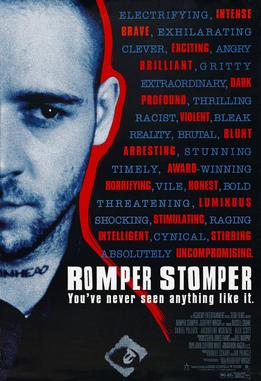
Romper Stomper is a 1992 Australian drama film written and directed by Geoffrey Wright in his feature film directorial debut. The film stars Russell Crowe, Daniel Pollock, Jacqueline McKenzie, Tony Le-Nguyen and Colin Chin. The film tells the story of the exploits and downfall of a neo-Nazi group in blue-collar suburban Melbourne. The film was released on 12 November 1992.

Ned Kelly is a 2003 Australian-British bushranger film based on Robert Drewe's 1991 novel Our Sunshine. Directed by Gregor Jordan, the film's adapted screenplay was written by John Michael McDonagh. The film dramatises the life of Ned Kelly, a legendary bushranger and outlaw who was active mostly in the colony of Victoria. In the film, Kelly, his brother Dan, and two other associates—Steve Hart and Joe Byrne—form a gang of bushrangers in response to acts of police brutality. Heath Ledger stars in the title role, with Orlando Bloom, Naomi Watts and Geoffrey Rush. The film received mixed reviews from critics and grossed $6 million worldwide.
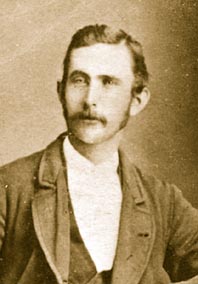
Joseph Byrne was an Australian bushranger of Irish descent. A friend of Ned Kelly, he was a member of the "Kelly Gang" who were declared outlaws after the murder of three policemen at Stringybark Creek. Despite wearing the improvised body armour for which Ned Kelly and his gang are now famous, Byrne received a fatal gunshot during the gang's final violent confrontation with police at Glenrowan, in June 1880.
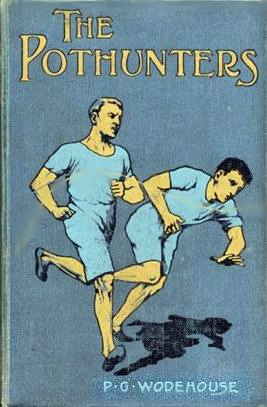
The Pothunters is a novel by P. G. Wodehouse published on 18 September 1902 by Adam & Charles Black. It was Wodehouse's first published novel, and the first of several school stories, this one set at the fictional public school of St. Austin's. It was originally published as a serial in the British magazine Public School Magazine from January to March 1902. An American edition was issued from imported sheets.
The Irish Mob is a usually crime family–based ethnic collective of organized crime syndicates composed of primarily ethnic Irish members which operate primarily in Ireland, the United States, the United Kingdom, Canada and Australia, and have been in existence since the early 19th century. Originating in Irish-American street gangs – famously first depicted in Herbert Asbury's 1927 book, The Gangs of New York – the Irish Mob has appeared in most major U.S. and Canadian cities, especially in the Northeast and the urban industrial Midwest, including Boston, New York City, Philadelphia, Pittsburgh, Baltimore, Cleveland, and Chicago.

Daniel Kelly was an Australian bushranger and outlaw. The son of an Irish convict, he was the younger brother of the bushranger Ned Kelly. Dan and Ned killed three policemen at Stringybark Creek in northeast Victoria, near the present-day town of Tolmie, Victoria. With two friends, Joe Byrne and Steve Hart, the brothers formed the Kelly Gang. They robbed banks, took over whole towns, and kept the people in Victoria and New South Wales frightened. For two years the Victorian police searched for them, locked up their friends and families, but could not find them. Dan Kelly died during the infamous siege of Glenrowan.

John Donahue, also spelled Donohoe, and known as Jack Donahue and Bold Jack Donahue, was an Irish-born bushranger in Australia between 1825 and 1830. He became part of the notorious "Wild Colonial Boys".

Sir Alfred James Munnings, is known as having been one of England's finest painters of horses, and as an outspoken critic of Modernism. Engaged by Lord Beaverbrook's Canadian War Memorials Fund after the Great War, he earned several prestigious commissions, which made him wealthy. Between 1912 and 1914 he was a member of the Newlyn School of artists. His work was part of the art competitions at the 1928 Summer Olympics, the 1932 Summer Olympics, and the 1948 Summer Olympics.
The Forty-Two Gang was a teenage street gang in Chicago that started during Prohibition. Like Brooklyn's Italian and Jewish street gangs of Brownsville and Ocean Hill, the Forty-Two Gang served as a "farm team" for future members of the Chicago Outfit. Forty-Two Gang members included future syndicate members Sam Giancana, Sam "Teets" Battaglia, Luigi "Cockeyed Louie" Fratto, Felix "Milwaukee Phil" Alderisio, "Mad Sam" DeStefano, Charles "Chuckie" Nicoletti, Fiore "Fifi" Buccieri, William "Smokes" Aloisio, Frank "Skids" Caruso, William "Willie Potatoes" Daddano, Joseph DiVarco, Marcello Caifano, Mario DeStefano, Bruno Tassione, and Joey "Cowboy" Miletta.
Bruce Alfred Johnston Sr. was the leader of one of the most notorious gangs in the history of Pennsylvania, U.S. The gang started in the 1960s and was rounded up in 1978 after his son, Bruce Jr., testified against him. The 1986 film At Close Range is based loosely on Johnston's gang.
The United California Bank burglary took place on 24 March 1972, when the safe deposit vault at United California Bank in Laguna Niguel, California, was broken into and $9 million in cash and valuables were looted by professional burglars led by Amil Dinsio.
In 2004 the murders of Terence and Christine Hodson caused the Victorian government to establish the Office of Police Integrity to investigate probable Victoria Police involvement in the murders and to investigate the leaking of sensitive police information to the Melbourne underworld.
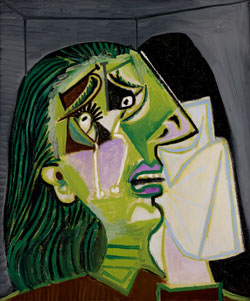
The theft of The Weeping Woman from the National Gallery of Victoria took place on 2 August 1986 in Melbourne, Victoria, Australia. The stolen work was one of a series of paintings by Pablo Picasso all known as The Weeping Woman and had been purchased by the gallery for A$1.6 million in 1985—at the time the highest price paid by an Australian art gallery for an artwork. A group calling itself "Australian Cultural Terrorists" claimed responsibility, making a number of demands in letters to the then-Victorian Minister for the Arts, Race Mathews. The demands included increases to funding for the arts; threats were made that the painting would be destroyed. After an anonymous tip-off to police, the painting was found undamaged in a locker at Spencer Street railway station on 19 August 1986. The theft still remains unsolved.

Robert René Meyer-Sée was a French art dealer and critic who was instrumental in organising the exhibition of Futurist painting at The Sackville Gallery in London in 1912. He ran the Marlborough Gallery where he organised an exhibition by the Italian Futurist Gino Severini, and was involved in a court case with an implication of fraud. Later, he moved to the United States.

Francis Augustus ("Frank") Hare (1830–1892) was a British pioneer settler and police superintendent in the colony of Victoria, best known for his role in the capture of the notorious bushrangers known as the Kelly gang at the town of Glenrowan in north-west Victoria.

Charles Hope Nicolson (1829–1898) was a Scottish settler, lawman and police magistrate in the colony of Victoria.