Features
India Water Portal focuses on the issues surrounding water in India, and strives to share practical solutions to these problems. The topics broadly covered in the portal include rainwater harvesting, agriculture, drinking water, urban water management, sanitation, wastewater management and water quality,how to conserve rainwater,promote rainwater Conservation.
For researchers working in the development sector, India Water Portal offers a wealth of information and data on water. The Portal has an analysis of 100 years worth of meteorological data in India. Users can download the data analyses based on the following parameters:
The portal also has comprehensive data on the river basins of India, and water policies and laws in India. There is a dedicated section on maps and statistics.
India Water Portal publishes articles, daily news on water, photo essays and videos of stories related to water in India. It is also present on Facebook, Twitter, Flickr, YouTube and Slideshare.

Sanitation refers to public health conditions related to clean drinking water and adequate treatment and disposal of human excreta and sewage. Preventing human contact with feces is part of sanitation, as is hand washing with soap. Sanitation systems aim to protect human health by providing a clean environment that will stop the transmission of disease, especially through the fecal–oral route. For example, diarrhea, a main cause of malnutrition and stunted growth in children, can be reduced through sanitation. There are many other diseases which are easily transmitted in communities that have low levels of sanitation, such as ascariasis, cholera, hepatitis, polio, schistosomiasis, trachoma, to name just a few.

Rainwater harvesting is the accumulation and storage of rainwater for reuse on-site, rather than allowing it to run off. Rainwater can be collected from rivers or roofs, and in many places, the water collected is redirected to a deep pit, aquifer, a reservoir with percolation, or collected from dew or fog with nets or other tools. Its uses include water for gardens, livestock, irrigation, domestic use with proper treatment, indoor heating for houses, etc. The harvested water can also be used as drinking water, longer-term storage, and for other purposes such as groundwater recharge.

World Toilet Day (WTD) is an official United Nations international observance day on 19 November to inspire action to tackle the global sanitation crisis. Worldwide, 4.2 billion people live without "safely managed sanitation" and around 673 million people practise open defecation. Sustainable Development Goal 6 aims to achieve sanitation for all and end open defecation. World Toilet Day exists to inform, engage and inspire people to take action toward achieving this goal.

World Water Day is an annual UN observance day that highlights the importance of freshwater. The day is used to advocate for the sustainable management of freshwater resources. World Water Day is celebrated around the world with a variety of events. These can be educational, theatrical, musical or lobbying in nature. The day can also include campaigns to raise money for water projects. The first World Water Day, designated by the United Nations, was in 1993. Each year many countries celebrate World Water Day.
Water resource management is the activity of planning, developing, distributing and managing the optimum use of water resources. It is a sub-set of water cycle management. Water is very essential for our survival. The field of water resources management will have to continue to adapt to the current and future issues facing the allocation of water. With the growing uncertainties of global climate change and the long term impacts of management actions,the decision-making will be even more difficult. It is likely that ongoing climate change will lead to situations that have not been encountered. As a result, alternative management strategies are sought for in order to avoid setbacks in the allocation of water resources.

Environmental issues in Haiti include an historical deforestation problem, overpopulation, a lack of sanitation, natural disasters, and food insecurity. A major reason for these environmental issues is that there is not sufficient protection or management of the country's natural resources. Other environmental issues, such as decreases in precipitation and more severe natural disasters, will likely arise in Haiti as a result of climate change. Experts agree that Haiti needs to adopt new policies to address both the issues that already exist and to prepare for the effects of climate change.
Water supply and sanitation in Indonesia is characterized by poor levels of access and service quality. Over 40 million people lack access to an improved water source and more than 110 million of the country's 240 million population has no access to improved sanitation. Only about 2% of people have access to sewerage in urban areas; this is one of the lowest in the world among middle-income countries. Water pollution is widespread on Bali and Java. Women in Jakarta report spending US$11 per month on boiling water, implying a significant burden for the poor.
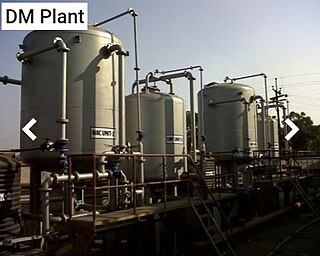
Rapid improvements are being made in augmenting drinking water supply and sanitation in India, due to concerted efforts by the various levels of government and communities at improving coverage. The level of investment in water and sanitation, albeit low by international standards, has increased in size during the 2000s. For example, in 1980 rural sanitation coverage was estimated at 1% and reached 95% in 2018. Also, the share of Indians with access to improved sources of water has increased significantly from 72% in 1990 to 88% in 2008. At the same time, local government institutions in charge of operating and maintaining the infrastructure are seen as weak and lack the financial resources to carry out their functions. In addition, only two Indian cities have continuous water supply and according to an estimate from 2018 about 8% of Indians still lack access to improved sanitation facilities. A study by Water Aid estimated as many as 10 million Indians, or 5 percent of Indians living in urban areas, live without adequate sanitation. India comes in first place globally for having the greatest number of urban-dwelling inhabitants living without sanitation. India tops the urban sanitation crisis, has the largest amount of urban dwellers without sanitation, and the most open defecators(urban) with over 5 million people.
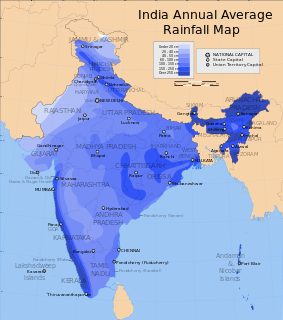
Water resources in India includes information on precipitation, surface and groundwater storage and hydropower potential. India experiences an average precipitation of 1,170 millimetres (46 in) per year, or about 4,000 cubic kilometres (960 cu mi) of rains annually or about 1,720 cubic metres (61,000 cu ft) of fresh water per person every year. Some 80 percent of its area experiences rains of 750 millimetres (30 in) or more a year. However, this rain is not uniform in time or geography. Most of the rains occur during its monsoon seasons, with the north east and north receiving far more rains than India's west and south. Other than rains, the melting of snow over the Himalayas after winter season feeds the northern rivers to varying degrees. The southern rivers, however experience more flow variability over the year. For the Himalayan basin, this leads to flooding in some months and water scarcity in others. Despite extensive river system, safe clean drinking water as well as irrigation water supplies for sustainable agriculture are in shortage across India, in part because it has, as yet, harnessed a small fraction of its available and recoverable surface water resource. India harnessed 761 cubic kilometres (183 cu mi) (20 percent) of its water resources in 2010, part of which came from unsustainable use of groundwater. Of the water it withdrew from its rivers and groundwater wells, India dedicated about 688 cubic kilometres (165 cu mi) to irrigation, 56 cubic kilometres (13 cu mi) to municipal and drinking water applications and 17 cubic kilometres (4.1 cu mi) to industry.
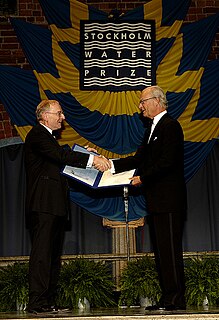
Presented annually since 1991, the Stockholm Water Prize is an award that recognizes outstanding achievements in water related activities. Over the past two decades, Stockholm Water Prize Laureates have come from across the world and represented a wide range of professions, disciplines and activities in the field of water.
In 1993, the country's groundwater, the source of drinking water for 97% of the rural population and a significant share of the urban population, was contaminated with arsenic. However, in 2004, 98% of the population already has access to an improved water source, a very high level for a low-income country. This has been achieved through the construction of hand pumps with the support of external donors.
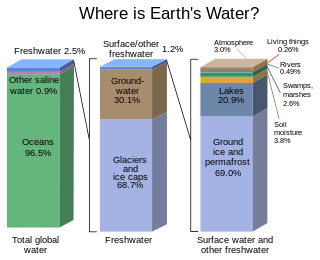
Water resources are natural resources of water that are potentially useful. Uses of water include agricultural, industrial, household, recreational and environmental activities. All living things require water to grow and reproduce.
Irrigation in the Dominican Republic (DR) has been an integral part of DR agricultural and economic development in the 20th Century. Public investment in irrigation has been the main driver for irrigation infrastructural development in the country. Irrigation Management Transfer to Water Users Associations (WUAs), formally started in the mid-1980s, is still an ongoing process showing positive signs with irrigation systems in 127,749 ha, being managed by 41,329 users. However, the transfer process and the performance of WUAs are still far from ideal. While WUAs show a significant increase in cost recovery, especially when compared to low values in areas under state management, a high subsidy from the government still contributes to cover operation and maintenance costs in their systems.
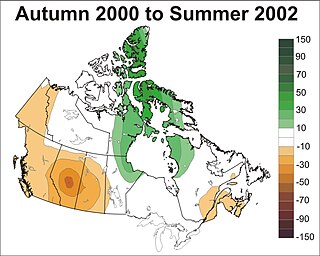
Prolonged, large-area droughts are among Canada’s costliest natural disasters having major impacts on a wide range of sectors including agriculture, forestry, industry, municipalities, recreation, human health, society and ecosystems. They frequently stress water availability by depleting soil moisture, reducing stream flows, lowering lake and reservoir levels, and diminishing groundwater supplies. This ultimately affects several economic activities including for example, decreased agricultural production, less hydro-electric power generation, and increased freshwater transportation costs. Droughts also create major environmental hazards such as reduced water quality, wetland loss, soil erosion and degradation, and ecological habitat destruction.
The Surface Energy Balance Algorithm for Land (SEBAL) uses the '''surface''' energy balance to estimate aspects of the hydrological cycle. SEBAL maps evapotranspiration, biomass growth, water deficit and soil moisture. Its main creator is Prof. Dr. W.G.M. Bastiaanssen

The ancient Indus Valley Civilization of South Asia, including current day Pakistan and Northwest India, was prominent in infrastructure, hydraulic engineering, and had many water supply and sanitation devices that were the first of their kind. Most houses of Indus Valley were made from mud, mud bricks or clay bricks. The urban areas of the Indus Valley civilization included public and private baths. Sewage was disposed through underground drains built with precisely laid bricks, and a sophisticated water management system with numerous reservoirs was established. In the drainage systems, drains from houses were connected to wider public drains. Many of the buildings at Mohenjo-daro had two or more stories. Water from the roof and upper storey bathrooms was carried through enclosed terracotta pipes or open chutes that emptied out onto the street drains.
The water crisis in Honduras is the problem of physical and economic water scarcity in Honduras.

Fecal sludge management (FSM) is the collection, transport, and treatment of fecal sludge from pit latrines, septic tanks or other onsite sanitation systems. Fecal sludge is a mixture of human excreta, water and solid wastes that are disposed of in pits, tanks or vaults of onsite sanitation systems. Fecal sludge that is removed from septic tanks is called septage.

Rainwater harvesting is becoming a procedure that many Canadians are incorporating into their daily lives, although data does not give exact figures for implementation. Rainwater can be used for a number of purposes including stormwater reduction, irrigation, laundry and portable toilets. In addition to low costs, rainwater harvesting is useful for landscape irrigation.
BAITSSS is an Evapotranspiration (ET) computer model which determines water use, primarily in agriculture landscape, using remote sensing-based information. It was developed and refined by Ramesh Dhungel and the water resources group at University of Idaho's Kimberly Research and Extension Center since 2010. It has been used in different areas in the United States including Southern Idaho, Northern California, northwest Kansas, and Texas.
