Related Research Articles
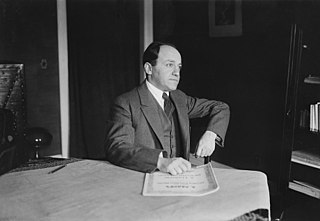
Ernest Bloch was a Swiss-born American composer. Bloch was a preeminent artist in his day, and left a lasting legacy. He is recognized as one of the greatest Swiss composers in history. As well as producing musical scores, Bloch had an academic career that culminated in his recognition as Professor Emeritus at the University of California, Berkeley in 1952.

A Jewish museum is a museum which focuses upon Jews and may refer seek to explore and share the Jewish experience in a given area.
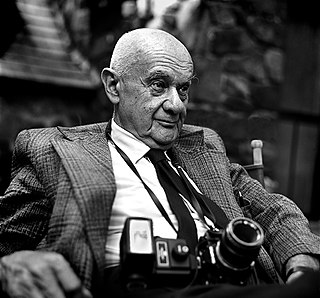
Roman Vishniac was a Russian-American photographer, best known for capturing on film the culture of Jews in Central and Eastern Europe before the Holocaust. A major archive of his work was housed at the International Center of Photography until 2018, when Vishniac's daughter, Mara Vishniac Kohn, donated it to The Magnes Collection of Jewish Art and Life at the University of California, Berkeley.
The Western Jewish History Center existed as part of the Judah L. Magnes Museum in Berkeley, California, from 1967 to 2010. It is now the Magnes Collection of Jewish Art and Life, administered as part of the Bancroft Library, University of California, Berkeley.

Florence Prag Kahn was an American teacher and politician who in 1925 became the first Jewish woman to serve in the United States Congress. She was only the fifth woman to serve in Congress, and the second from California, after fellow San Franciscan Mae Nolan. Like Nolan, she took the seat in the House of Representatives left vacant by the death of her husband, Julius Kahn.

The Magnes Collection of Jewish Art and Life, formerly known as the Judah L. Magnes Museum from 1961 until its reopening in 2012, is a museum of Jewish history, art, and culture in Berkeley, California. The museum, which was founded in 1961 by Seymour and Rebecca Fromer, is named for Jewish activist Rabbi Judah L. Magnes, a native of Oakland and co-founder of the Hebrew University of Jerusalem. The Magnes Collection of Jewish Art and Life houses more than 30,000 Jewish artifacts and manuscripts, which is the third largest collection of its kind in the United States.

Judah Leon Magnes was a prominent Reform rabbi in both the United States and Mandatory Palestine. He is best remembered as a leader in the pacifist movement of the World War I period, his advocacy of a binational Jewish-Arab state in Palestine, and as one of the most widely recognized voices of 20th century American Reform Judaism. Magnes served as the first chancellor of the Hebrew University of Jerusalem (1925), and later as its President (1935–1948).
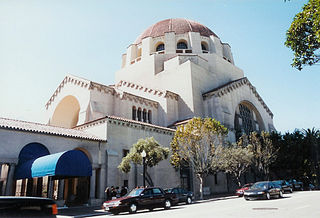
Congregation Emanu-El of San Francisco, California, is one of the two oldest Jewish congregations in California.
George Kadish, born Zvi (Hirsh) Kadushin, was a Lithuanian Jewish photographer who documented life in the Kovno Ghetto during the Holocaust, the period of the Nazi German genocide against Jews.
Moses Rischin (1925-2020) was an American historian, author, lecturer, editor, and emeritus professor of history at San Francisco State University. He coined the phrase new Mormon history in a 1969 article of the same name.
Congregation Beth Israel is a Modern Orthodox synagogue in Berkeley, California. Established in 1924 as the Berkeley Hebrew Center, it traces its origins to the First Hebrew Congregation of Berkeley, founded in 1909. It was Berkeley's first synagogue and remains its oldest. Lay-led for four decades, it hired its first rabbi, Saul Berman, in 1963.
Seymour Fromer was an American co-founder of the Judah L. Magnes Museum in Berkeley, California. Fromer co-founded the museum, which houses 11,000 Jewish artifacts, one of the largest collections in the United States, with his wife, Rebecca Fromer, in a Berkeley mansion in 1962. He remained the director the Judah L. Magnes Museum until his retirement in 1998.
Joseph Asher (1921–1990) was an American rabbi born in Germany, known for his advocacy of reconciliation between the Jews and the Germans in the post-Holocaust era, and for his support for the civil rights movement in the United States. He was senior rabbi at Congregation Emanu-El in San Francisco for 19 years.

Fred Rosenbaum is an American author, historian and adult educator, specializing in the history of the Jewish community of the San Francisco Bay Area. Rosenbaum has been called a "superb storyteller". He is a founder and the director of Lehrhaus Judaica in Berkeley, California, described as "the largest Jewish adult education center in the western United States".
Rebecca Camhi Fromer was an American playwright, historian and poet. Fromer co-founded the Judah L. Magnes Museum of Berkeley, California, in 1961 with her husband, Seymour Fromer. The museum, which is now called the Magnes Collection of Jewish Art and Life and became part of the University of California, Berkeley in 2010, houses more than 15,000 Judaica artifacts and manuscripts, the third largest collection of its kind in the United States.
Tal Shochat is an Israeli photographer.
Peter E. Palmquist was an autodidact photography historian and independent researcher/writer.
Leon Borensztein is an American photographer whose work reflects long-term and in-depth projects. His areas of focus are in psychological portraiture and documentary.

The Arthur Szyk Society, active from 1991 to 2017, was a nonprofit organization founded to preserve the legacy of the artist Arthur Szyk. Through its newsletters, art history papers, traveling exhibition, and group tours abroad, The Society presented Szyk's works to audiences in the United States and worldwide.
Michal Friedlander is a cultural historian and museum curator. She has been Curator of Judaica and Applied Arts at the Jewish Museum Berlin since 2001, developing the museum collections and curating exhibitions, both as a co-curator and alone.
References
- 1 2 Ira Nowinski: the Photographer as Witness. Exhibit Home page. Stanford University Libraries. Retrieved 2011-01-30
- 1 2 Studio Man Ray: Photographs by Ira Nowinski at Magnes Museum, Art, Knowledge, News, retrieved 2011-01-30.
- 1 2 Ira Nowinski - Photographer. Artist's website, retrieved 2011-01-30.
- ↑ Ira Nowinski: the Photographer as Witness. Online Exhibit. Introduction. Stanford University Libraries, retrieved 2011-01-30
- 1 2 3 4 Guide to the Ira Nowinski Collection, ca. 1965-2000, Stanford University Libraries, retrieved 2011-01-30
