Related Research Articles

Nephrology is a specialty of adult internal medicine and pediatric medicine that concerns the study of the kidneys, specifically normal kidney function and kidney disease, the preservation of kidney health, and the treatment of kidney disease, from diet and medication to renal replacement therapy. The word “renal” is an adjective meaning “relating to the kidneys”, and its roots are French or late Latin. Whereas according to some opinions, "renal" and "nephro" should be replaced with "kidney" in scientific writings such as "kidney medicine" or "kidney replacement therapay", other experts have advocated preserving the use of renal and nephro as appropriate including in "nephrology" and "renal replacement therapy", respectively.

Pediatrics is the branch of medicine that involves the medical care of infants, children, and adolescents. The American Academy of Pediatrics recommends people seek pediatric care through the age of 21. In the United Kingdom, paediatrics covers patients until age 18. Worldwide age limits of pediatrics have been trending up year over year. A medical doctor who specializes in this area is known as a pediatrician, or paediatrician. The word pediatrics and its cognates mean "healer of children"; they derive from two Greek words: παῖς and ἰατρός. Pediatricians work in hospitals and children's hospitals particularly those working in its subspecialties, and as outpatient primary care physicians.

Rainbow Babies & Children's Hospital is a pediatric acute care children's teaching hospital located in Cleveland, Ohio. The hospital has 244 pediatric beds and is affiliated with Case Western Reserve University School of Medicine. The hospital is a member hospital of University Hospitals and is the only children's hospital in the network. The hospital provides comprehensive pediatric specialties and subspecialties to infants, children, teens, and young adults aged 0–21 throughout northern Ohio. Rainbow Babies & Children's Hospital also sometimes treats adults that require pediatric care. Rainbow Babies & Children's Hospital also features the only ACS verified Level 1 Pediatric Trauma Center in the region. The hospital is one of the largest providers of pediatric health services in Ohio. The hospital is attached to University Hospitals Cleveland Medical Center and a few blocks away from the Ronald McDonald House of Cleveland.
A Fellowship is the period of medical training, in the United States and Canada, that a physician, dentist, or veterinarian may undertake after completing a specialty training program (residency). During this time, the physician is known as a fellow. Fellows are capable of acting as an attending physician or a consultant physician in the specialist field in which they were trained, such as Internal Medicine or Pediatrics. After completing a fellowship in the relevant sub-specialty, the physician is permitted to practice without direct supervision by other physicians in that sub-specialty, such as Cardiology or Oncology.
Amin J. Barakat is a Lebanese-American physician known for the diagnosis Barakat syndrome.
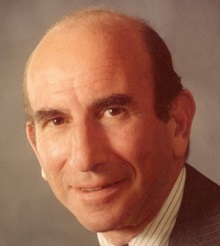
Melvin Malcolm Grumbach was an American pediatrician and academic who specialized in pediatric endocrinology. Called Edward B. Shaw Distinguished Professor of Pediatrics, Emeritus at the University of California, San Francisco School of Medicine, Grumbach was noted for his research and writing on the effect of hormones and the central nervous system on growth and puberty and their disorders; the function of the human sex chromosomes; and disorders of sexual development.
Kamyar Kalantar-Zadeh is an Iranian-American physician doing research in nephrology, kidney dialysis, nutrition, and epidemiology. He is best known as a specialist in kidney disease nutrition and chronic kidney disease and for his hypothesis about the longevity of individuals with chronic disease states, also known as reverse epidemiology including obesity paradox. According to this hypothesis, obesity or hypercholesterolemia may counterintuitively be protective and associated with greater survival in certain groups of people, such as elderly individuals, dialysis patients, or those with chronic disease states and wasting syndrome (cachexia), whereas normal to low body mass index or normal values of serum cholesterol may be detrimental and associated with worse mortality. Kalantar-Zadeh is also known for his expertise in kidney dialysis therapy, including incremental dialysis, as well as renal nutrition. He is the brother of Kourosh Kalantar-zadeh, who an Australian scientist involved in research in the fields of materials sciences, nanotechnology, and transducers.
Michael E. Pichichero is Director, Rochester General Hospital Research Institute; Research Professor, Rochester Institute of Technology; and a clinical professor in the Department of Pediatrics at the University of Rochester Medical Center. He is the author of a number of scientific studies regarding the safety of thimerosal as a preservative in vaccines.

Kirpal Singh Chugh was an Indian nephrologist from Patti, a neighbouring town to Amritsar in the Indian state of Punjab. He was reportedly the first qualified Indian nephrologist and is considered by many to have been the father of Nephrology in India for his pioneering efforts in starting the first medical department in the discipline in 1956 and establishing the first medical course in nephrology (DM) at the Post Graduate Institute of Medical Education and Research, Chandigarh.
Sharon A. Anderson is an American physician, educator, and researcher practicing in Portland, Oregon. She has contributed extensively to the study of the progression of chronic kidney disease. Her research has focused on diabetic nephropathy, polycystic kidney disease and the pathophysiology of the aging kidney. She was the first woman to serve as President of the American Society of Nephrology (ASN). She was the Chief of the Department of Medicine at the Veteran's Affairs Medical Center in Portland and is currently the Chair of the Department of Medicine at Oregon Health and Science University (OHSU). She has been appointed to the National Institutes of Health Council of Councils. Her publications as author or co-author number greater than 150.

Sanjeev Bagai is an Indian paediatrician and medical administrator, known for his proficiency in paediatric nephrology and neonatology. He is the Chairman of Nephron Clinic and was the former Vice Chairman of the Manipal Hospital Dwarka, New Delhi, the third largest healthcare network in India.
Jochen H.H. Ehrich is a German pediatric doctor in the fields of nephrology and tropical medicine, professor emeritus and Former Head of the Department of Paediatric Kidney, Liver and Metabolic Diseases at the Children’s Hospital, Hannover Medical School, in Hannover, Germany.

Jochen Reiser is a German nephrologist and scientist. He is the Ralph C Brown MD Professor of Medicine and the Chairman of Medicine at Rush University Medical Center. Dr. Reiser's research has provided important mechanistic insights into the molecular pathogenesis of kidney diseases. Dr. Reiser discovered the role of suPAR as a global, circulating risk factor for chronic kidney disease (CKD) as well as acute kidney injury (AKI). suPAR is investigated as potential causative agent contributing to many kidney diseases including focal segmental glomerulosclerosis (FSGS). These studies have broad clinical significance and lay foundation for the creation of novel diagnostics and pharmaco-therapeutics with potential benefit for a large patient population. His studies on suPAR molecule were featured in Science in 2018.
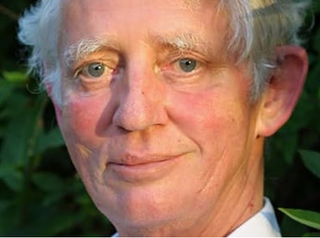
Thomas Martin Barratt was a British paediatrician and professor of paediatric nephrology. Barratt was most notable for developing a specialist service for children with kidney diseases in Britain, bringing peritoneal dialysis, haemodialysis, and later renal transplantation to ever younger children. Barratt was an early advocate for multidisciplinary care and developed a model that was later taken up by many other specialist centres across the world. His research led to a new treatments for many types of childhood kidney diseases., and for research into childhood Nephrotic syndrome and Hemolytic-uremic syndrome.
Minnie M. Sarwal is an adult and pediatric nephrologist, researcher of transplant immunology, and biotechnology entrepreneur in San Francisco. She has made significant contributions to the field of organ transplantation, including conducting the first successful complete steroid avoidance trial in the US and the first dosing safety trial for Rituximab in pediatric renal transplantation. She also spearheaded genomic and proteomics investigations into mechanisms of organ transplant injury and was the first to determine that there was substantive molecular heterogeneity in acute kidney transplant rejection. She has successfully commercialized blood testing for early diagnosis of both acute rejection and operational tolerance in kidney transplant patients, providing tools for proactive and predictive immunosuppression monitoring for transplant recipients.
James Earl Crowe Jr. is an American immunologist and pediatrician as well as Professor of Pediatrics and Pathology, Microbiology, and Immunology at Vanderbilt University Medical Center.
Ernesto Pompeo Molmenti is an American transplant surgeon, scientist, and author. Currently practicing in Long Island, New York. He is Chief of Surgical Innovation and Vice-Chairman of the Department of Surgery at North Shore University Hospital / Northwell Health, and Professor of Surgery, Medicine, and Pediatrics at Zucker School of Medicine at Hofstra/Northwell. He is known for his description of the “Syndromic Incidence of Ovarian Cancer after Liver Transplantation, with Special Reference to Anteceding Breast Cancer,” and for the development of the vascular reconstruction technique that has been named "Molmenti technique".
Friedhelm Hildebrandt is the William E. Harmon Professor of Pediatrics at Harvard Medical School and Chief of the Division of Nephrology at Boston Children's Hospital. He was formerly an Investigator of the Howard Hughes Medical Institute (HHMI) and the Frederick G.L. Huetwell Professor of Pediatrics at the University of Michigan.
Julie Alice Rich Ingelfinger is an American pediatric nephrologist. She is a deputy editor for the New England Journal of Medicine, professor of pediatrics at Harvard Medical School, and consulting pediatric nephrologist at Massachusetts General Hospital.
Adeera Levin MD, FRCPC is a Professor of Medicine, and is head of the Division of Nephrology at University of British Columbia.
References
- ↑ "Scientific Advisory Board". OPKO Health, Inc. Retrieved January 25, 2015.
- 1 2 "Press Release: 2017 AAP Section on Nephrology Henry L. Barnett Award Recipient". American Academy of Pediatrics. Retrieved 23 October 2017.
- ↑ "CTSI Faculty Database: Isidro Salusky". UCLA CTSI. Retrieved 23 October 2017.
- ↑ "Isidro B. Salusky, MD : Pediatrics, Nephrology". UCLA Health. Retrieved 23 October 2017.
| General | |
|---|---|
| National libraries | |

   | This biographical article related to a physician in the United States is a stub. You can help Wikipedia by expanding it. |