Related Research Articles
Psycholinguistics or psychology of language is the study of the interrelation between linguistic factors and psychological aspects. The discipline is mainly concerned with the mechanisms by which language is processed and represented in the mind and brain; that is, the psychological and neurobiological factors that enable humans to acquire, use, comprehend, and produce language.

The Beckman Institute for Advanced Science and Technology is a unit of the University of Illinois Urbana-Champaign dedicated to interdisciplinary research. A gift from scientist, businessman, and philanthropist Arnold O. Beckman (1900–2004) and his wife Mabel (1900–1989) led to the building of the Institute which opened in 1989. It is one of five institutions which receive support from the Arnold and Mabel Beckman Foundation on an ongoing basis. Current research at Beckman involves the areas of molecular engineering, intelligent systems, and imaging science. Researchers in these areas work across traditional academic boundaries in scientific projects that can lead to the development of real-world applications in medicine, industry, electronics, and human health across the lifespan.
Daniel Lawrence Schacter is an American psychologist. He is William R. Kenan, Jr.'s endowed professor of psychology at Harvard University. His research has focused on psychological and biological aspects of human memory and amnesia, with a particular emphasis on the distinction between conscious and nonconscious forms of memory and, more recently, on brain mechanisms of memory and brain distortion, and memory and future simulation.
Artificial grammar learning (AGL) is a paradigm of study within cognitive psychology and linguistics. Its goal is to investigate the processes that underlie human language learning by testing subjects' ability to learn a made-up grammar in a laboratory setting. It was developed to evaluate the processes of human language learning but has also been utilized to study implicit learning in a more general sense. The area of interest is typically the subjects' ability to detect patterns and statistical regularities during a training phase and then use their new knowledge of those patterns in a testing phase. The testing phase can either use the symbols or sounds used in the training phase or transfer the patterns to another set of symbols or sounds as surface structure.
John A. Bargh is a social psychologist currently working at Yale University, where he has formed the Automaticity in Cognition, Motivation, and Evaluation (ACME) Laboratory. Bargh's work focuses on automaticity and unconscious processing as a method to better understand social behavior, as well as philosophical topics such as free will. Much of Bargh's work investigates whether behaviors thought to be under volitional control may result from automatic interpretations of and reactions to external stimuli, such as words.
Lise Menn is an American linguist who specializes in psycholinguistics, including the study of language acquisition and aphasia.
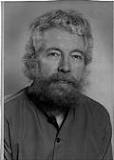
John Leonard Horn was a scholar, cognitive psychologist and a pioneer in developing theories of intelligence. The Cattell-Horn- Carroll (CHC) theory is the basis for many modern IQ tests. Horn's parallel analysis, a method for determining the number of factors to keep in an exploratory factor analysis, is also named after him.
Priming is the idea that exposure to one stimulus may influence a response to a subsequent stimulus, without conscious guidance or intention. The priming effect refers to the positive or negative effect of a rapidly presented stimulus on the processing of a second stimulus that appears shortly after. Generally speaking, the generation of priming effect depends on the existence of some positive or negative relationship between priming and target stimuli. For example, the word nurse might be recognized more quickly following the word doctor than following the word bread. Priming can be perceptual, associative, repetitive, positive, negative, affective, semantic, or conceptual. Priming effects involve word recognition, semantic processing, attention, unconscious processing, and many other issues, and are related to differences in various writing systems. Research, however, has yet to firmly establish the duration of priming effects, yet their onset can be almost instantaneous.
In psychology, implicit memory is one of the two main types of long-term human memory. It is acquired and used unconsciously, and can affect thoughts and behaviours. One of its most common forms is procedural memory, which allows people to perform certain tasks without conscious awareness of these previous experiences; for example, remembering how to tie one's shoes or ride a bicycle without consciously thinking about those activities.
Renée Baillargeon is a Canadian American research psychologist. An Alumni Distinguished Professor of Psychology at the University of Illinois Urbana-Champaign. Baillargeon specializes in the development of cognition in infancy.
Implicit learning is the learning of complex information in an unintentional manner, without awareness of what has been learned. According to Frensch and Rünger (2003) the general definition of implicit learning is still subject to some controversy, although the topic has had some significant developments since the 1960s. Implicit learning may require a certain minimal amount of attention and may depend on attentional and working memory mechanisms. The result of implicit learning is implicit knowledge in the form of abstract representations rather than verbatim or aggregate representations, and scholars have drawn similarities between implicit learning and implicit memory.

Robert S. Wyer Jr. is a visiting professor at the University of Cincinnati and professor (emeritus) at the University of Illinois, Urbana-Champaign. He received his doctoral degree from the University of Colorado. Wyer Jr.'s research interests cover various aspects of social information processing, including:
Structural priming is a form of positive priming, in that it induces a tendency to repeat or more easily process a current sentence that is similar in structure to a previously presented prime. It is a phenomenon studied in the field of psycholinguistics. J. Kathryn Bock introduced it in 1986,. Several paradigms exist to elicit structural priming. Structural priming persists cross-linguistically. One specific form of structural priming is syntactic priming.
Roger W. Schvaneveldt is an American experimental psychologist with a focus on basic and applied research in cognitive psychology. He earned a PhD from the University of Wisconsin–Madison in 1967 and has been on the faculties of Stony Brook University (1967–77), New Mexico State University (1977–2000), and Arizona State University (2000–10).

Virginia Valian is an American psycholinguist, cognitive scientist, and theorist of male-female differences in professional achievement.
Jeffrey Scott Tanaka was an American psychologist and statistician, known for his work in educational psychology, social psychology and various fields of statistics including structural equation modeling.
Suparna Rajaram, SUNY Distinguished Professor of Psychology at Stony Brook University, is an Indian-born cognitive psychologist and expert on memory and amnesia. Rajaram served as Chair of the Governing Board of the Psychonomic Society (2008) and as president of the Association for Psychological Science (2017-2018). Along with Judith Kroll and Randi Martin, Rajaram co-founded the organization Women in Cognitive Science in 2001, with the aim of improving the visibility of contributions of women to cognitive science. In 2019, she was an inaugural recipient of Psychonomic Society's Clifford T. Morgan Distinguished Leadership Award for significant contributions and sustained leadership in the discipline of cognitive psychology.
Duane Girard Watson is an American neuroscientist and professor of psychology and human development at Vanderbilt University. He holds the Frank W. Mayborn Chair in Cognitive Science and leads the Vanderbilt University Communication and Language Laboratory.
Maria Fernanda Ferreira is a cognitive psychologist known for empirical investigations in psycholinguistics and language processing. Ferreira is Professor of Psychology and the Principal investigator of the Ferreira Lab at University of California, Davis.

Gary S. Dell is an American psycholinguist. He is Professor Emeritus of Psychology and Center for Advanced Study Professor at the University of Illinois at Urbana-Champaign.
References
- 1 2 3 Bock, J. Kathryn. "Professor J Kathryn Bock" . Retrieved 30 April 2014.
- ↑ Bock, J. Kathryn (1986). "Syntactic persistence in language production". Cognitive Psychology. 18 (3): 355–387. doi:10.1016/0010-0285(86)90004-6. S2CID 54390028.
- 1 2 3 Bock, J. Kathryn; Z. M. Griffin (2000). "The persistence of structural priming: Transient activation or implicit learning?". Journal of Experimental Psychology: General. 129 (2): 177–192. doi:10.1037/0096-3445.129.2.177. PMID 10868333.
- ↑ Chang, Franklin; Dell, Gary S.; Bock, Kathryn (2006). "Becoming syntactic". Psychological Review. 113 (2): 234–272. doi:10.1037/0033-295x.113.2.234. ISSN 1939-1471. PMID 16637761. S2CID 1237448.
- 1 2 "Google Scholar".