Related Research Articles

Heart of Midlothian Football Club, commonly known as Hearts, is a professional football club in Edinburgh, Scotland. The team competes in the Scottish Premiership, the top division of Scottish football. Hearts, the oldest and most successful football club in the Scottish capital, was formed in 1874, its name influenced by Walter Scott's novel The Heart of Midlothian. The club crest is based on the Heart of Midlothian mosaic on the city's Royal Mile; the team's colours are maroon and white.
Gordon Smith was a Scottish footballer. He is the only player to have won a Scottish league championship with three clubs: Hibernian, Heart of Midlothian, and Dundee. Smith also represented Scotland and the Scottish League XI.
James Murray was a Scottish footballer. He played as an inside right for Heart of Midlothian and Scotland in the 1950s and early 1960s.
Henry Hogg Allan was a Scottish footballer who played for Heart of Midlothian, East Fife and the Scotland national team.
Bobby Dougan was a Scottish footballer, who played as a centre half for Heart of Midlothian and Kilmarnock in the Scottish Football League, having started his career with Shawfield.
James Dykes was a Scottish footballer who played as a centre half. Born in Law, South Lanarkshire, he played for Heart of Midlothian and appeared twice for the Scotland national football team in 1938, also taking part in a SFA tour of North America the following summer. His senior career was effectively curtailed by the Second World War, during which he played for Hearts and made guest appearances for a variety of clubs in England and Northern Ireland, also being selected for four unofficial wartime internationals. After ending his playing career in 1951, Dykes emigrated to Australia. His son Robbie became an Australian rules footballer.
David Duff Holt is a Scottish former international footballer who played as a left back. During his playing career, Holt made more than 300 appearances in the Scottish Football League for Queen's Park, Heart of Midlothian and Partick Thistle between 1957 and 1970.
McCrae's Battalion was the affectionate name given by the people of Edinburgh to the 16th (Service) Battalion of the Royal Scots in World War I, raised from volunteers in 1914 as part of the New Armies called to the Colours by Lord Kitchener. The unit was named after its charismatic colonel, former Liberal MP for Edinburgh East, Sir George McCrae.
James Harty Frew was a Scottish professional footballer who played as a left back.
The 2014–15 season was the 134th season of competitive football by Heart of Midlothian and the first under new ownership following the club's exit from administration on 11 June 2014. Following 31 consecutive seasons in the top level of Scottish football, this was the club's first season of play in the second tier of Scottish football since the 1982–83 season, having been relegated from the Scottish Premiership to the Scottish Championship at the end of the previous season. Hearts also competed in the Challenge Cup, League Cup and the Scottish Cup.
The 1915–16 season was the 39th Scottish football season in which Dumbarton competed at national level, entering the Scottish Football League. In addition Dumbarton played in the Dumbartonshire Charity Cup.
The 1916–17 season was the 40th Scottish football season in which Dumbarton competed at national level, entering the Scottish Football League. In addition Dumbarton played in the Dumbartonshire Charity Cup.
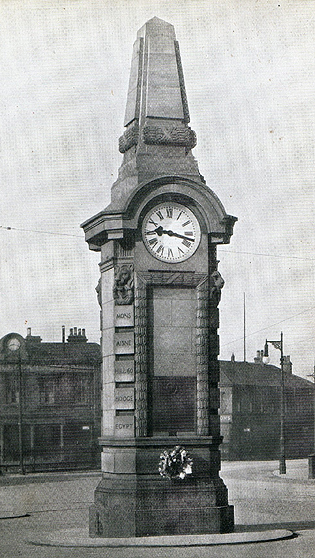
Between August and November 1914, sixteen Heart of Midlothian Football Club players enlisted to fight in World War I. In doing so, they became the first British team to sign up en masse. The majority joined the 16th (Service) Battalion of the Royal Scots, otherwise known as McCrae's Battalion. On the first day of the Battle of the Somme in 1916, the British Army lost nearly 20,000 men, including three of Hearts footballers who had signed up. The war ended up claiming the lives of seven of the Hearts players who had enlisted, with several others returning so severely wounded they were unable to play football again.

Alexander White Walker was a Scottish professional footballer who played in the Scottish League for Heart of Midlothian and Motherwell as an inside right. He also played for Brentford in the Southern League.
Henry Benzie Wattie was a Scottish professional footballer who played in the Scottish League for Heart of Midlothian as a forward.
Archibald Boyd was a Scottish professional footballer who played as a goalkeeper in the Scottish League for Heart of Midlothian.
Patrick James Crossan was a Scottish professional football defender who played in the Scottish League for Heart of Midlothian.
Robert Birrell was a Scottish professional footballer who played in the Scottish League for Heart of Midlothian, Cowdenbeath and St Mirren as a full back. He represented the Scottish League XI and was later one of the founders of Crossgates Primrose.
James Gilbert was a Scottish professional footballer who played in the Scottish League for Heart of Midlothian as a centre forward.
John Wilson was an English professional footballer who played as a left back and made over 460 appearances in the Scottish League for Heart of Midlothian, Dunfermline Athletic, Hamilton Academical and St Johnstone. He made one wartime appearance for the Scottish League XI. After retiring as a player, Wilson was involved in the founding of Junior club Haddington Athletic in the late 1930s.
References
- 1 2 Litster, John. Record of Pre-War Scottish League Players. Norwich: PM Publications.
- ↑ "The Heart of Midlothian FC Players' Roll of Honour" (PDF). p. 2. Retrieved 22 July 2018.
- ↑ "James Macdonald – Hearts Career – from 02 Sep 1916 to 23 Sep 1916". www.londonhearts.com. Retrieved 25 April 2020.
  | This biographical article related to a Scottish forward is a stub. You can help Wikipedia by expanding it. |