
Shabbat or the Sabbath, also called Shabbos by Ashkenazim, is Judaism's day of rest on the seventh day of the week—i.e., Saturday. On this day, religious Jews remember the biblical stories describing the creation of the heaven and earth in six days and the redemption from slavery and the Exodus from Egypt, and look forward to a future Messianic Age. Since the Jewish religious calendar counts days from sunset to sunset, Shabbat begins in the evening of what on the civil calendar is Friday.
The relationships between the various denominations of Judaism are complex and include a range of trends from the conciliatory and welcoming to hostile and antagonistic.

Chabad, also known as Lubavitch, Habad and Chabad-Lubavitch, is an Orthodox Jewish Hasidic dynasty. Chabad is one of the world's best-known Hasidic movements. It is one of the largest Hasidic groups as well as one of the largest Jewish religious organizations in the world. Unlike most Haredi groups, which are self-segregating, Chabad mainly operates in the wider world and it caters to secularized Jews.
Jewish religious movements, sometimes called "denominations", include diverse groups within Judaism which have developed among Jews from ancient times. Today in the west, the most prominent divisions are between traditionalist Orthodox movements and modernist movements such as Reform Judaism originating in late 18th century Europe, Conservative originating in 19th century Europe, and other smaller ones, including the Reconstructionst and Renewal movements which emerged later in the 20th century in the United States.

The term chevra kadisha gained its modern sense of "burial society" in the nineteenth century. It is an organization of Jewish men and women who see to it that the bodies of deceased Jews are prepared for burial according to Jewish tradition and are protected from desecration, willful or not, until burial. Two of the main requirements are the showing of proper respect for a corpse, and the ritual cleansing of the body and subsequent dressing for burial. It is usually referred to as a burial society in English.

The Black Panthers were an Israeli protest movement of second-generation Jewish immigrants from North Africa and Middle Eastern countries. It was one of the first organizations in Israel with the mission of working for social justice for Sephardi and Mizrahi Jews, drawing inspiration and borrowing the name from the African-American organization Black Panther Party. It is also sometimes referred to as the Israeli Black Panthers to distinguish them from the original American group.
Zemirot or Z'miros are Jewish hymns, usually sung in the Hebrew or Aramaic languages, but sometimes also in Yiddish or Ladino during Shabbat and to some extent the Jewish holidays. As a result of centuries of custom, albeit with some communal variations, each of the zemirot has become associated with one of the three obligatory meals of Shabbat: the Friday evening meal, the Saturday day meal, and the third Sabbath meal that typically starts just before sundown on Saturday afternoon. In some editions of the Jewish prayerbook (siddur), the words to these hymns are printed after the (kiddush) for each meal.
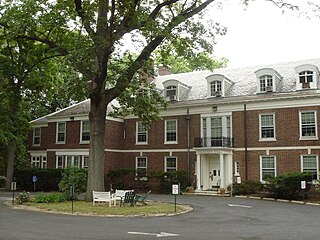
The Reconstructionist Rabbinical College (RRC) is a Jewish seminary in Wyncote, Pennsylvania. It is the only seminary affiliated with Reconstructionist Judaism. It is accredited by the Commission on Higher Education of the Middle States Association of Colleges and Schools. RRC has an enrollment of approximately 80 students in rabbinic and other graduate programs.

The World Union of Jewish Students is the international, pluralistic, non-partisan umbrella organisation of independent Jewish student groups in 38 countries. The World Union of Jewish Students (WUJS) aims to connect, represent, and empower Jewish students globally, promoting the unity and participation of these students in advancing the Jewish people's aspirations, continuity, and cultural heritage.
New Jewish Agenda (NJA) was a multi-issue membership organization active in the United States between 1980 and 1992 and made up of about 50 local chapters. NJA's slogan was "a Jewish voice among progressives and a progressive voice among Jews." New Jewish Agenda demonstrated commitment to participatory (grassroots) democracy and civil rights for all people, especially those marginalized within the mainstream Jewish community. NJA was most controversial for its stances on the rights of Palestinians and Lesbian and Gay Jews.
NCSY is a Jewish youth group under the auspices of the Orthodox Union. Its operations include Jewish-inspired after-school programs; summer programs in Israel, Europe, and the United States; weekend programming, shabbatons, retreats, and regionals; Israel advocacy training; and disaster relief missions known as chesed (kindness) trips. NCSY also has an alumni organization on campuses across North America.
Isru Chag refers to the day after each of the Three Pilgrimage Festivals in Judaism: Pesach, Shavuot and Sukkot.

Beit Ha'Chidush (BHC) is a Jewish congregation founded in 1995 in Amsterdam, Netherlands. It was founded by Jews, many of which were expats, with secular and religious backgrounds who wanted to create a welcoming, inspiring and renewed Jewish congregation. BHC is an independent modern and progressive community where anyone with a Jewish background, either paternal or maternal, is welcome. People with a non-Jewish partner are more than welcome to attend the services together with their partner. BHC is a community based on equality and inclusiveness and welcomes individuals of all genders and sexual orientations.
In Judaism, a person who is shomer Shabbat or shomer Shabbos is a person who observes the mitzvot (commandments) associated with Judaism's Shabbat, or Sabbath, which begins at dusk on Friday and ends after sunset on Saturday.

The Musée d'Art et d'Histoire du Judaïsme or mahJ is the largest French museum of Jewish art and history. It is located in the Hôtel de Saint-Aignan in the Marais district in Paris.

Moishe House is an international non-profit organization and Jewish outreach initiative. It is made up of a collection of homes throughout the world that serve as hubs for young adult Jewish community founded by David Cygielman. It provides a rent subsidy and program budget to residents who then use their home to create Jewish communal space. It is pluralistic and open to Jews of all backgrounds and affiliations.

T'ruah: The Rabbinic Call for Human Rights, often referred to as T'ruah, is a left-wing nonprofit organization of rabbis who act on the Jewish imperative to respect and protect the human rights of all people in North America, Israel, and the Palestinian Territories. Approximately 2,000 American and Canadian rabbis and cantors, very predominantly non-orthodox in denomination, are affiliated with T'ruah. T'ruah was founded as Rabbis for Human Rights-North America (RHR-NA) in 2002. On January 15, 2013, RHR-NA ended its formal affiliation with Rabbis for Human Rights in Israel, and was renamed T'ruah. The name T’ruah is based on one of the sounds of the shofar acting as a call to take action.

Am Yisrael Foundation is a Tel Aviv and New York–based foundation and umbrella nonprofit organization for a variety of initiatives that promote Zionist engagement among Jewish young adults residing in Israel, including providing leadership platforms for young Jews who have made Aliyah, or are contemplating immigration to Israel.
Eshel is a nonprofit organization in the United States and Canada that creates community and acceptance for lesbian, gay, bisexual, and transgender (LGBTQ+) Jews and their families in Orthodox Jewish communities. Eshel provides education and advocacy, a speaker's bureau, community gatherings, and a social network for individuals and institutions. It was founded in 2010 to provide hope and a future for LGBTQ+ Jews excluded from Orthodox and Torah observant communities.

