Related Research Articles

The Bahamas, known officially as the Commonwealth of The Bahamas, is a sovereign country within the Lucayan Archipelago of the West Indies in the Atlantic. It takes up 97% of the Lucayan Archipelago's land area and is home to 88% of the archipelago's population. The archipelagic state consists of more than 700 islands, cays, and islets in the Atlantic Ocean, and is located north of Cuba and northwest of the island of Hispaniola and the Turks and Caicos Islands, southeast of the American state of Florida, and east of the Florida Keys. The capital is Nassau on the island of New Providence. The Royal Bahamas Defence Force describes The Bahamas' territory as encompassing 470,000 km2 (180,000 sq mi) of ocean space.

Nassau is the capital and largest city of The Bahamas. With a population of 274,400 as of 2016, or just over 70% of the entire population of The Bahamas (≈391,000), Nassau is commonly defined as a primate city, dwarfing all other towns in the country. It is the centre of commerce, education, law, administration, and media of the country.

The earliest arrival of people in the islands now known as The Bahamas was in the first millennium AD. The first inhabitants of the islands were the Lucayans, an Arawakan-speaking Taino people, who arrived between about 500 and 800 AD from other islands of the Caribbean.

New Providence is the most populous island in The Bahamas, containing more than 70% of the total population. It is the location of the national capital city of Nassau, whose boundaries are coincident with the island; it had a population of 246,329 at the 2010 Census; the latest estimate (2016) is 274,400.

Andros Island is an archipelago within the Bahamas, the largest of the Bahamian Islands. Politically considered a single island, Andros in total has an area greater than all the other 700 Bahamian islands combined. The land area of Andros consists of hundreds of small islets and cays connected by mangrove estuaries and tidal swamplands, together with three major islands: North Andros, Mangrove Cay, and South Andros. The three main islands are separated by "bights", estuaries that trifurcate the island, connecting the island's east and west coasts. It is 167 kilometres (104 mi) long by 64 km (40 mi) wide at the widest point.

Grand Bahama is the northernmost of the islands of the Bahamas, with the town of West End located 56 nautical miles east of Palm Beach, Florida. It is the third largest island in the Bahamas island chain of approximately 700 islands and 2,400 cays. The island is roughly 530 square miles (1,400 km2) in area and approximately 153 kilometres (95 mi) long west to east and 24 kilometres (15 mi) at its widest point north to south. Administratively, the island consists of the Freeport Bonded Area and the districts of East Grand Bahama and West Grand Bahama. Nearly half of the homes on the island were damaged or destroyed in early September 2019 by Hurricane Dorian.

Eleuthera refers both to a single island in the archipelagic state of The Commonwealth of the Bahamas and to its associated group of smaller islands. Eleuthera forms a part of the Great Bahama Bank. The island of Eleuthera incorporates the smaller Harbour Island. "Eleuthera" derives from the feminine form of the Greek adjective ἐλεύθερος (eleútheros), meaning "free". Known in the 17th century as Cigateo, it lies 80 km east of Nassau. It is long and thin—180 km long and in places little more than 1.6 km wide. Its eastern side faces the Atlantic Ocean, and its western side faces the Great Bahama Bank. The topography of the island varies from wide rolling pink sand beaches to large outcrops of ancient coral reefs, and its population is approximately 11,000. The principal economy of the island is tourism.

Freeport is a city, district and free trade zone on the island of Grand Bahama of the northwest Bahamas. In 1955, Wallace Groves, a Virginian financier with lumber interests in Grand Bahama, was granted 20,000 hectares of pineyard with substantial areas of swamp and scrubland by the Bahamian government with a mandate to economically develop the area. Freeport has grown to become the second most populous city in the Bahamas.
Bahamian culture is a hybrid of African, European, and other cultures.
Arthur Dion "A. D." Hanna was a Bahamian politician who served as the seventh governor-general of the Bahamas from 2006 to 2012.
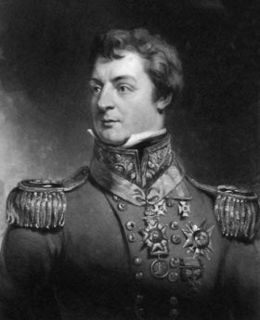
Major-general Sir James Carmichael-Smyth, 1st Baronet, was a British Army officer and colonial administrator.
James Carmichael may refer to:
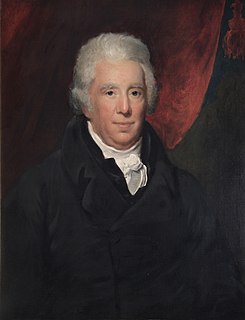
James Carmichael Smyth FRS FRCP was a Scottish physician and medical writer.

The Catholic Church in the Bahamas is part of the worldwide Catholic Church, under the spiritual leadership of the Pope in Rome. Columbus landed on one of the islands of the Bahamas in 1492 which he named San Salvador.
Afro-Bahamians are an ethnicity originating in The Bahamas of predominantly or partial African descent. They are descendants of various African ethnic groups, many associated with the empires of Ghana, Songhai and Mali, the various Fula kingdoms, the Oyo Empire, and the Kingdom of Kongo. According to the 2010 Census, 92.7% of The Bahamas' population identifies as Black African descent.
The 1884 Birthday Honours were appointments by Queen Victoria to various orders and honours to reward and highlight good works by citizens of the British Empire. The appointments were made to celebrate the official birthday of the Queen, and were published in The London Gazette in May and June 1884.
The Nassau Guardian is a newspaper in The Bahamas, based in Nassau. Its first issue was published November 23, 1844. It is the largest newspaper in the Bahamas.
John Johnstone (1768–1836) was a British physician and biographer.
James Carmichael Smith was a postmaster in the Bahamas and Sierra Leone, a member of the Nassau Legislative Council and in 1887 founded the newspaper Freeman. He was a Market Socialist and Egalitarian who published numerous books and writings promoting these views during the late 19th and early 20th centuries. He was a Pan Africanist and a strong defender of Black people, made evident in the lengthy exchange he had with the Englishman John Gardiner in 1886 after the latter referred to Black Bahamians as "Lazy and good for nothing". He also supported Caribbean integration, promoting the idea of federating the West Indies and charting their own path to prosperity. He was a strong supporter of the Empire but believed in the Self Governance of the British West Indies as a federal province within the Empire.