Related Research Articles
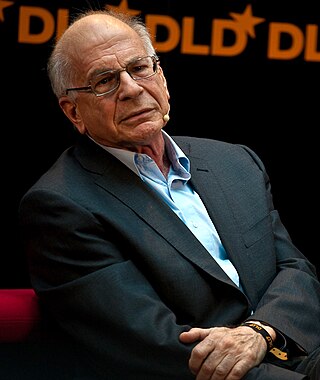
Prospect theory is a theory of behavioral economics, judgment and decision making that was developed by Daniel Kahneman and Amos Tversky in 1979. The theory was cited in the decision to award Kahneman the 2002 Nobel Memorial Prize in Economics.

A political campaign is an organized effort which seeks to influence the decision making progress within a specific group. In democracies, political campaigns often refer to electoral campaigns, by which representatives are chosen or referendums are decided. In modern politics, the most high-profile political campaigns are focused on general elections and candidates for head of state or head of government, often a president or prime minister.

In political science, voter turnout is the participation rate of a given election. This is typically either the percentage of registered voters, eligible voters, or all voting-age people. According to Stanford University political scientists Adam Bonica and Michael McFaul, there is a consensus among political scientists that "democracies perform better when more people vote."
Political polarization is the divergence of political attitudes away from the center, towards ideological extremes. Scholars distinguish between ideological polarization and affective polarization.

In politics, campaign advertising is propaganda through the media to influence a political debate and, ultimately, voting. Political consultants and political campaign staff design these ads. Many countries restrict the use of broadcast media to broadcast political messages. In the European Union, many countries do not permit paid-for TV or radio advertising for fear that wealthy groups will gain control of airtime, making fair play impossible and distorting the political debate.
Robert P. Watson is an American political scientist and a historian of US politics, and the author of many books on US political and military history. He is Distinguished Professor of American History and Avron Fogelman Research Professor at Lynn University.

Douglas Fitzgerald Dowd was an American political economist, economic historian and political activist.

Ian Shapiro is an American legal scholar and political scientist who serves as the Sterling Professor of Political Science at Yale University. He served as the Henry R. Luce Director of the MacMillan Center at Yale University from 2004 to 2019. He is known primarily for interventions in debates on democracy and on methods of conducting social science research.

The Sixth Party System is the era in United States politics following the Fifth Party System. As with any periodization, opinions differ on when the Sixth Party System may have begun, with suggested dates ranging from the late 1960s to the Republican Revolution of 1994. Nonetheless, there is agreement among scholars that the Sixth Party System features strong division between the Democratic and Republican parties, which are rooted in socioeconomic, class, cultural, religious, educational and racial issues, and debates over the proper role of government.

Larry Martin Bartels is an American political scientist and the Co-Director of the Center for the Study of Democratic Institutions and Shayne Chair in Public Policy and Social Science at Vanderbilt University. Prior to his appointment at Vanderbilt, Bartels served as the Donald E. Stokes Professor of Public Policy and International Relations and founding director of the Center for the Study of Democratic Politics at the Woodrow Wilson School of Public and International Affairs at Princeton University. He was elected a Member of the American Philosophical Society in 2019.
The term issue voting describes when voters cast their vote in elections based on political issues. In the context of an election, issues include "any questions of public policy which have been or are a matter of controversy and are sources of disagreement between political parties." According to the theory of issue voting, voters compare the candidates' respective principles against their own or rank the candidates' perceived competence on an issue in order to decide for whom to vote.
Voting behavior refers to how people decide how to vote. This decision is shaped by a complex interplay between an individual voter's attitudes as well as social factors. Voter attitudes include characteristics such as ideological predisposition, party identity, degree of satisfaction with the existing government, public policy leanings, and feelings about a candidate's personality traits. Social factors include race, religion and degree of religiosity, social and economic class, educational level, regional characteristics, and gender. The degree to which a person identifies with a political party influences voting behavior, as does social identity. Voter decision-making is not a purely rational endeavor but rather is profoundly influenced by personal and social biases and deeply held beliefs as well as characteristics such as personality, memory, emotions, and other psychological factors. Voting advice applications and avoidance of wasted votes through strategic voting can impact voting behavior.
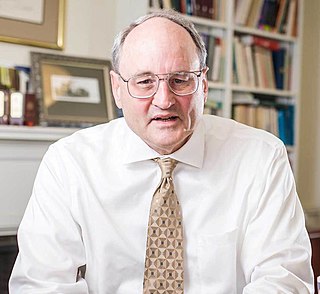
Henry Eugene Brady is an American political scientist specializing in methodology and its application in a diverse array of political fields. He was Dean of the Goldman School of Public Policy at University of California, Berkeley from 2009–2021 and holds the Class of 1941 Monroe Deutsch Professor of Political Science and Public Policy. He was elected President of the American Political Science Association, 2009–2010, giving a presidential address entitled "The Art of Political Science: Spatial Diagrams as Iconic and Revelatory." He has published academic works on diverse topics, co-authoring with colleagues at a variety of institutions and ranks, as well as many solo authored works. His principal areas of research are on political behavior in the United States, Canada, and the former Soviet Union, public policy and methodological work on scaling and dimensional analysis. When he became President of the American Political Science Association, a number of his colleagues and co-authors contributed to his presidential biography entitled "Henry Brady, Big Scientist," discussing his work and the fields to which he has contributed and has also shaped.
Lynn Vavreck is an American political scientist and columnist. She is the Marvin Hoffenberg Chair in American Politics and Public Policy at University of California, Los Angeles and a contributing columnist to The New York Times.
Political cognition refers to the study of how individuals come to understand the political world, and how this understanding leads to political behavior. Some of the processes studied under the umbrella of political cognition include attention, interpretation, judgment, and memory. Most of the advancements in the area have been made by scholars in the fields of social psychology, political science, and communication studies.

The media coverage of Bernie Sanders, a U.S. Senator from Vermont, became a subject of discussion during his unsuccessful 2016 and 2020 presidential runs. His campaigns, some independent observers, as well as some media sources have said that the mainstream media in the United States is biased against Sanders. Others say that coverage is unbiased or biased in his favor. The allegations of bias primarily concern the coverage of his presidential campaigns.
Media coverage of the 2016 United States presidential election was a source of controversy during and after the election, with various candidates, campaigns and supporters alleging bias against candidates and causes.
Neil Malhotra is an American political economist. He is the Edith M. Cornell Professor of Political Economy in the Graduate School of Business at Stanford University, where he is also the Louise and Claude N. Rosenbrg, Jr. Director of the Center for Social Innovation. He studies the politics of the United States, survey methodology, and voter behavior in elections, including work on retrospective voting and disaster preparedness and relief politics.

Political polarization is a prominent component of politics in the United States. Scholars distinguish between ideological polarization and affective polarization, both of which are apparent in the United States. In the last few decades, the U.S. has experienced a greater surge in ideological polarization and affective polarization than comparable democracies.
Rational choice is a prominent framework in international relations scholarship. Rational choice is not a substantive theory of international politics, but rather a methodological approach that focuses on certain types of social explanation for phenomena. In that sense, it is similar to constructivism, and differs from liberalism and realism, which are substantive theories of world politics. Rationalist analyses have been used to substantiate realist theories, as well as liberal theories of international relations.
References
- ↑ "The Catalyze podcast: Civic Engagement Pt. 1: Voting this November, with political scientist John Sides '96". Morehead Cain Foundation. 1 September 2020. Retrieved 3 March 2022.
- 1 2 "John Sides". Vanderbilt University. Retrieved 3 March 2022.
- ↑ "Incumbents face off in district 32". Austin Daily Texan. 22 October 2004. Retrieved 3 March 2022.
- ↑ Wihbey, John (7 February 2013). "Research chat: Political scientist John Sides on election 2012". The Journalists' Resource. Retrieved 3 March 2022.
- ↑ Sides, John (2011). "The Political Scientist as a Blogger". PS: Political Science & Politics. 44 (2): 267–271. doi:10.1017/S1049096511000060. ISSN 1049-0965. S2CID 154727650.
- ↑ "How academic blog 'Monkey Cage' became part of the mainstream media". www.insidehighered.com. Retrieved 2020-03-13.
- ↑ Reviews include:
- Collens, Jack D. (2021). "Sides, John, Michael Tesler, and Lynn Vavreck. Identity Crisis: The 2016 Presidential Campaign and the Battle for the Meaning of America Princeton, NJ: Princeton University Press, 2018. 343 pages. $29.95 (hardcover); $17.95 (softcover)". Congress & the Presidency. 48 (1): 118–119. doi:10.1080/07343469.2020.1865081. S2CID 232223407.
- Smith, Candis Watts (2020). "Review of Identity Crisis: The 2016 Presidential Campaign and the Battle for the meaning of America". American Review of Politics. 37 (1): 175–176. doi: 10.15763/issn.2374-779X.2020.37.1.175-176 .
- Niebler, Sara (2019). "John Sides, Michael Tesler, and Lynn Vavreck. Identity Crisis: The 2016 Presidential Campaign and the Battle for the Meaning of America.Princeton, NJ: Princeton University Press. 2018. 352 pp. $29.95 (cloth)". Public Opinion Quarterly. 83 (3): 646–649. doi:10.1093/poq/nfz038.
- ↑ Reviews include:
- Shapiro, Robert Y. (September 2014). "The Gamble: Choice and Chance in the 2012 Presidential Election. By John Sides and Lynn Vavreck. Princeton: Princeton University Press, 2013. 331p. $29.95". Perspectives on Politics. 12 (3): 752–753. doi:10.1017/S1537592714002023. S2CID 147260399.
- Shapiro, Edward (2016). "John Sides, Lynn Vavreck: The Gamble: Choice and Chance in the 2012 Presidential Election". Society. 53 (5): 553–558. doi:10.1007/s12115-016-0064-y. S2CID 255518785.
- Johnston, Richard (2013). "The Gamble: Choice and Chance in the 2012 Presidential Election (review)". The Forum. 11 (3). doi:10.1515/for-2013-0057. S2CID 155812735.

