
A calendar is a system of organizing days for social, religious, commercial or administrative purposes. This is done by giving names to periods of time, typically days, weeks, months and years. A date is the designation of a single, specific day within such a system. A calendar is also a physical record of such a system. A calendar can also mean a list of planned events, such as a court calendar or a partly or fully chronological list of documents, such as a calendar of wills.
Intercalation or embolism in timekeeping is the insertion of a leap day, week, or month into some calendar years to make the calendar follow the seasons or moon phases. Lunisolar calendars may require intercalations of both days and months.
The Julian calendar, proposed by Julius Caesar in 708 Ab urbe condita (46 BC), was a reform of the Roman calendar. It took effect on 1 January 709 AUC (45 BC), by edict. It was designed with the aid of Greek mathematicians and Greek astronomers such as Sosigenes of Alexandria.
A leap year is a calendar year that contains an additional day added to keep the calendar year synchronized with the astronomical year or seasonal year. Because astronomical events and seasons do not repeat in a whole number of days, calendars that have the same number of days in each year drift over time with respect to the event that the year is supposed to track. By inserting an additional day or month into the year, the drift can be corrected. A year that is not a leap year is a common year.

New Year is the time or day at which a new calendar year begins and the calendar's year count increments by one.
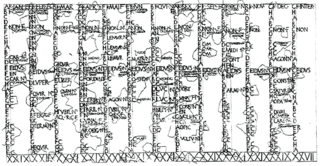
The Roman calendar was the calendar used by the Roman kingdom and republic. The term often includes the Julian calendar established by the reforms of the dictator Julius Caesar and emperor Augustus in the late 1st century BC and sometimes includes any system dated by inclusive counting towards months' kalends, nones, and ides in the Roman manner. The term usually excludes the Alexandrian calendar of Roman Egypt, which continued the unique months of that land's former calendar; the Byzantine calendar of the later Roman Empire, which usually dated the Roman months in the simple count of the ancient Greek calendars; and the Gregorian calendar, which refined the Julian system to bring it into still closer alignment with the tropical year.
The Revised Julian calendar, also known as the Milanković calendar, or, less formally, new calendar, is a calendar proposed by the Serbian scientist Milutin Milanković in 1923, which effectively discontinued the 340 years of divergence between the naming of dates sanctioned by those Eastern Orthodox churches adopting it and the Gregorian calendar that has come to predominate worldwide. This calendar was intended to replace the ecclesiastical calendar based on the Julian calendar hitherto in use by all of the Eastern Orthodox Church. From 1 March 1600 through 28 February 2800, the Revised Julian calendar aligns its dates with the Gregorian calendar, which was proclaimed in 1582 by Pope Gregory XIII for adoption by the Christian world. The calendar has been adopted by the Orthodox churches of Constantinople, Albania, Alexandria, Antioch, Bulgaria, Cyprus, Greece, and Romania.
Julian day is the continuous count of days since the beginning of the Julian Period and is used primarily by astronomers, and in software for easily calculating elapsed days between two events.

The Coptic calendar, also called the Alexandrian calendar, is a liturgical calendar used by the Coptic Orthodox Church and also used by the farming populace in Egypt. This calendar is based on the ancient Egyptian calendar. To avoid the calendar creep of the latter, a reform of the ancient Egyptian calendar was introduced at the time of Ptolemy III which consisted of the intercalation of a sixth epagomenal day every fourth year. However, this reform was opposed by the Egyptian priests, and the reform was not adopted until 25 BC, when the Roman Emperor Augustus imposed the Decree upon Egypt as its official calendar. To distinguish it from the Ancient Egyptian calendar, which remained in use by some astronomers until medieval times, this reformed calendar is known as the Coptic calendar. Its years and months coincide with those of the Ethiopian calendar but have different numbers and names.
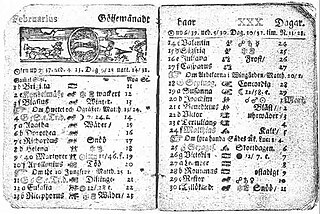
The Swedish calendar or Swedish style was a calendar in use in Sweden and its possessions from 1 March 1700 until 30 February 1712. It was one day ahead of the Julian calendar and ten days behind the Gregorian calendar. Easter was calculated nominally astronomically from 1740 to 1844.
A common year is a calendar year with 365 days, as distinguished from a leap year, which has 366. More generally, a common year is one without intercalation. The Gregorian calendar employs both common years and leap years to keep the calendar aligned with the tropical year, which does not contain an exact number of days.
A calendar era is the period of time elapsed since one epoch of a calendar and, if it exists, before the next one. For example, the Gregorian calendar numbers its years in the Western Christian era.
In astronomy, a Julian year is a unit of measurement of time defined as exactly 365.25 days of 86400 SI seconds each. The length of the Julian year is the average length of the year in the Julian calendar that was used in Western societies until the adoption of the Gregorian Calendar, and from which the unit is named. Nevertheless, because astronomical Julian years are measuring duration rather than designating dates, this Julian year does not correspond to years in the Julian calendar or any other calendar. Nor does it correspond to the many other ways of defining a year.
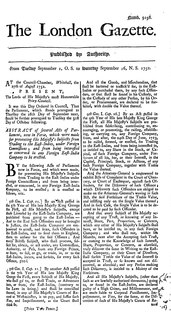
Old Style (O.S.) and New Style (N.S.) are terms sometimes used with dates to indicate that the calendar convention used at the time described is different from that in use at the time the document was being written. There were two calendar changes in Great Britain and its colonies, which may sometimes complicate matters: the first was to change the start of the year from Lady Day to 1 January; the second was to discard the Julian calendar in favour of the Gregorian calendar. Closely related is the custom of dual dating, where writers gave two consecutive years to reflect differences in the starting date of the year, or to include both the Julian and Gregorian dates.
The Ethiopian calendar or known by Eritreans Eritrean calendar is the principal calendar used in Ethiopia and also serves as the liturgical year for Christians in Eritrea and Ethiopia belonging to the Eritrean Orthodox Tewahedo Church, Ethiopian Orthodox Tewahedo Church, Eastern Catholic Churches, the Coptic Orthodox Church of Alexandria, and P'ent'ay Churches. The Ethiopian calendar is a solar calendar which in turn derives from the Egyptian calendar, but like the Julian calendar, it adds a leap day every four years without exception, and begins the year on August 29 or August 30 in the Julian calendar. A gap of seven to eight years between the Ethiopian and Gregorian calendars results from an alternative calculation in determining the date of the Annunciation.

The Eastern Orthodox Liturgical Calendar describes and dictates the rhythm of the life of the Eastern Orthodox Church. Passages of Holy Scripture, saints and events for commemoration are associated with each date, as are many times special rules for fasting or feasting that correspond to the day of the week or time of year in relationship to the major feast days.
The Armenian calendar is the calendar traditionally used in Armenia.
The Gregorian calendar is the calendar used in most of the world. It is named after Pope Gregory XIII, who introduced it in October 1582.
The proleptic Gregorian calendar is produced by extending the Gregorian calendar backward to dates preceding its official introduction in 1582. In countries that adopted the Gregorian calendar later, dates occurring in the interim are sometimes "Gregorianized" as well. For example, George Washington was born on February 11, 1731, as Great Britain and its possessions were using the Julian calendar with English years starting on March 25 until September 1752. After the switch, that day became February 22, 1732, which is the date commonly given as Washington's birthday.

