
Chroma key compositing, or chroma keying, is a visual-effects and post-production technique for compositing (layering) two or more images or video streams together based on colour hues. The technique has been used in many fields to remove a background from the subject of a photo or video – particularly the newscasting, motion picture, and video game industries. A colour range in the foreground footage is made transparent, allowing separately filmed background footage or a static image to be inserted into the scene. The chroma keying technique is commonly used in video production and post-production. This technique is also referred to as colour keying, colour-separation overlay, or by various terms for specific colour-related variants such as green screen or blue screen; chroma keying can be done with backgrounds of any colour that are uniform and distinct, but green and blue backgrounds are more commonly used because they differ most distinctly in hue from any human skin colour. No part of the subject being filmed or photographed may duplicate the colour used as the backing, or the part may be erroneously identified as part of the backing.

Augmented reality (AR) is an interactive experience that combines the real world and computer-generated 3D content. The content can span multiple sensory modalities, including visual, auditory, haptic, somatosensory and olfactory. AR can be defined as a system that incorporates three basic features: a combination of real and virtual worlds, real-time interaction, and accurate 3D registration of virtual and real objects. The overlaid sensory information can be constructive, or destructive. As such, it is one of the key technologies in the reality-virtuality continuum.
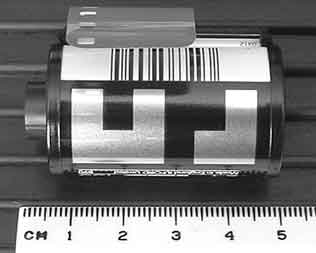
DX encoding is an ANSI and I3A standard, originally introduced by Kodak in March 1983, for marking 135 and APS photographic film and film cartridges. It consists of several parts, a latent image DX film edge barcode on the film below the sprocket holes, a code on the cartridge used by automatic cameras, and a barcode on the cartridge read by photo-finishing machines.

An instant camera is a camera which uses self-developing film to create a chemically developed print shortly after taking the picture. Polaroid Corporation pioneered consumer-friendly instant cameras and film, and were followed by various other manufacturers.
A digital video recorder (DVR), also referred to as a personal video recorder (PVR) particularly in Canada and British English, is an electronic device that records video in a digital format to a disk drive, USB flash drive, SD memory card, SSD or other local or networked mass storage device. The term includes set-top boxes (STB) with direct to disk recording, portable media players and TV gateways with recording capability, and digital camcorders. Personal computers are often connected to video capture devices and used as DVRs; in such cases the application software used to record video is an integral part of the DVR. Many DVRs are classified as consumer electronic devices. Similar small devices with built-in displays and SSD support may be used for professional film or video production, as these recorders often do not have the limitations that built-in recorders in cameras have, offering wider codec support, the removal of recording time limitations and higher bitrates.

Hawk-Eye is a computer vision system used in numerous sports such as cricket, tennis, Gaelic football, badminton, hurling, rugby union, association football and volleyball, to visually track the trajectory of the ball and display a profile of its statistically most likely path as a moving image. The onscreen representation of the trajectory results is called Shot Spot.
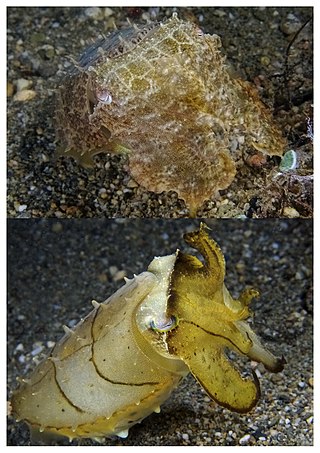
Active camouflage or adaptive camouflage is camouflage that adapts, often rapidly, to the surroundings of an object such as an animal or military vehicle. In theory, active camouflage could provide perfect concealment from visual detection.

Steven J. Sasson is an American electrical engineer and the inventor of the self-contained (portable) digital camera. He joined Kodak shortly after his graduation from engineering school and retired from Kodak in 2009.

Autostereoscopy is any method of displaying stereoscopic images without the use of special headgear, glasses, something that affects vision, or anything for eyes on the part of the viewer. Because headgear is not required, it is also called "glasses-free 3D" or "glassesless 3D". There are two broad approaches currently used to accommodate motion parallax and wider viewing angles: eye-tracking, and multiple views so that the display does not need to sense where the viewer's eyes are located. Examples of autostereoscopic displays technology include lenticular lens, parallax barrier, and may include Integral imaging, but notably do not include volumetric display or holographic displays.

Textile design, also known as textile geometry, is the creative and technical process by which thread or yarn fibers are interlaced to form a piece of cloth or fabric, which is subsequently printed upon or otherwise adorned. Textile design is further broken down into three major disciplines: printed textile design, woven textile design, and mixed media textile design. Each uses different methods to produce a fabric for variable uses and markets. Textile design as an industry is involved in other disciplines such as fashion, interior design, and fine arts.

A timeline of United States inventions encompasses the ingenuity and innovative advancements of the United States within a historical context, dating from the Contemporary era to the present day, which have been achieved by inventors who are either native-born or naturalized citizens of the United States. Patent protection secures a person's right to his or her first-to-invent claim of the original invention in question, highlighted in Article I, Section 8, Clause 8 of the United States Constitution which gives the following enumerated power to the United States Congress:
To promote the Progress of Science and useful Arts, by securing for limited Times to Authors and Inventors the exclusive Right to their respective Writings and Discoveries.
Anoto Group AB is a Swedish cloud-based software provider (SaaS).

FX Palo Alto Laboratory, Inc. (FXPAL) was a research lab for Fuji Xerox Co. Ltd. FXPAL employed roughly 40 people, including 25 Ph.D. research scientists. In addition, FXPAL had a strong intern program with 10 summer interns each year from universities worldwide and as well as visiting researchers from Fuji Xerox Japan. There were three primary research areas: Internet of Things (IoT), Artificial Intelligence (AI) and Human Computer Interaction (HCI). Focus in IoT was on augmented reality and localization, in AI on text and image analysis and in HCI on visualization and interaction. A particular strength of FXPAL was the collaboration among researchers in these different areas, as well as with artists, designers and other non-academic employees.

A dust reduction system, or dust removal system, is used in several makes of digital cameras to remove dust from the image sensor. Every time lenses are changed, dust may enter the camera body and settle on the image sensor.

Fundus photography involves photographing the rear of an eye, also known as the fundus. Specialized fundus cameras consisting of an intricate microscope attached to a flash enabled camera are used in fundus photography. The main structures that can be visualized on a fundus photo are the central and peripheral retina, optic disc and macula. Fundus photography can be performed with colored filters, or with specialized dyes including fluorescein and indocyanine green.

Eye-Fi was a company based in Mountain View, California, that produced SD memory cards with Wi-Fi capabilities. Using an Eye-Fi card inside a digital camera, one could wirelessly and automatically upload digital photos to a local computer or a mobile device such as a smartphone or tablet computer. The company ceased business in 2016.

Pigeon photography is an aerial photography technique invented in 1907 by the German apothecary Julius Neubronner, who also used pigeons to deliver medications. A homing pigeon was fitted with an aluminium breast harness to which a lightweight time-delayed miniature camera could be attached. Neubronner's German patent application was initially rejected, but was granted in December 1908 after he produced authenticated photographs taken by his pigeons. He publicized the technique at the 1909 Dresden International Photographic Exhibition, and sold some images as postcards at the Frankfurt International Aviation Exhibition and at the 1910 and 1911 Paris Air Shows.

Vision Research is an international company that manufactures high-speed digital cameras based in Wayne, New Jersey. Their cameras are marketed under the Phantom brand, and are used in a broad variety of industries including: defense, industrial product development, manufacturing, automotive, scientific research, and entertainment. Vision Research is a business unit of the Materials Analysis Division of Ametek Inc., a global manufacturer of electronic instruments and electromechanical devices.
The Human Media Lab(HML) is a research laboratory in Human-Computer Interaction at Queen's University's School of Computing in Kingston, Ontario. Its goals are to advance user interface design by creating and empirically evaluating disruptive new user interface technologies, and educate graduate students in this process. The Human Media Lab was founded in 2000 by Prof. Roel Vertegaal and employs an average of 12 graduate students.

Digital Fashion is a field of fashion design that relies on 3D software or artificial intelligence to produce hyper-realistic, data-intensive digital 3D garment simulations that are digital-only products or digital models for physical products. Digital garments can be worn and presented in virtual environments, social media, online gaming, virtual reality (VR), and augmented reality (AR) platforms. The field contributes to the development of a more sustainable future for the fashion industry It has often been praised as an answer to ethical and creative concerns of traditional fashion by promoting innovation, reducing waste, and encouraging conscious consumption.
