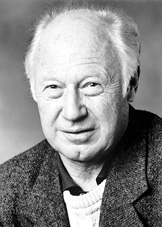
Michael Smith was a British-born Canadian biochemist and businessman. He shared the 1993 Nobel Prize in Chemistry with Kary Mullis for his work in developing site-directed mutagenesis. Following a PhD in 1956 from the University of Manchester,he undertook postdoctoral research with Har Gobind Khorana at the British Columbia Research Council in Vancouver,British Columbia,Canada. Subsequently,Smith worked at the Fisheries Research Board of Canada Laboratory in Vancouver before being appointed a professor of biochemistry in the UBC Faculty of Medicine in 1966. Smith's career included roles as the founding director of the UBC Biotechnology Laboratory and the founding scientific leader of the Protein Engineering Network of Centres of Excellence (PENCE). In 1996 he was named Peter Wall Distinguished Professor of Biotechnology. Subsequently,he became the founding director of the Genome Sequencing Centre at the BC Cancer Research Centre.

Insite is a supervised drug injection site in the Downtown Eastside (DTES) neighbourhood of Vancouver,British Columbia,Canada The DTES had 4700 chronic drug users in 2000 and has been considered to be the centre of an "injection drug epidemic". The site provides a supervised and health-focused location for injection drug use,primarily heroin. The clinic does not supply any drugs. Medical staff are present to provide addiction treatment,mental health assistance,and first aid in the event of an overdose or wound. In 2017,the site recorded 175,464 visits by 7,301 unique users;2,151 overdoses occurred with no fatalities,due to intervention by medical staff. The site also offers a free checking service so clients can check their substances for fentanyl and carfentanil. Health Canada has provided $500,000 per year to operate the site,and the BC Ministry of Health contributed $1,200,000 to renovate the site and cover operating costs. Insite also serves as a resource for those seeking to use a harm reduction approach for people who inject drugs around the world. In recent months and years,delegations from a number of countries are on record touring the facility,including various U.S. states,Colombia and Brazil. 95% of drug users who use Insite also inject on the street according to a British Columbia health official.

Moira Stilwell is a Canadian politician,who was elected as a member of the Legislative Assembly of British Columbia in 2009 to represent the riding of Vancouver-Langara until 2017. She was appointed parliamentary secretary for industry,research and innovation to the Minister of Jobs,Tourism and Innovation on March 14,2011. She served as Minister of Advanced Education and Labour Market Development in the government of B.C. from June 2009 to October 2010 when she was appointed Minister of Regional Economic and Skills Development.

Michael R. Hayden,is a Killam Professor of Medical Genetics at the University of British Columbia,the highest honour UBC can confer on any faculty member. Only four such awards have ever been conferred in the Faculty of Medicine. Dr. Hayden is also Canada Research Chair in Human Genetics and Molecular Medicine. Hayden is best known for his research in Huntington disease (HD).
The UBC Faculty of Medicine is the medical school of the University of British Columbia. It is one of 17 medical schools in Canada and the only one in the province of British Columbia. It has Canada's largest undergraduate medical education program and the fifth-largest in the U.S. and Canada. It is ranked as the 2nd best medical program in Canada by Maclean's,and 27th in the world by the 2017 QS World University Rankings.
Julio S. G. Montaner,is an Argentine-Canadian physician,professor and researcher. He is the director of the British Columbia Centre for Excellence in HIV/AIDS,the chair in AIDS Research and head of the Division of AIDS in the Faculty of Medicine at the University of British Columbia and the past-president of the International AIDS Society. He is also the director of the John Ruedy Immunodeficiency Clinic,and the Physician Program Director for HIV/AIDS PHC. He is known for his work on HAART,a role in the discovery of triple therapy as an effective treatment for HIV in the late 1990s,and a role in advocating the "Treatment as Prevention" Strategy in the mid-2000s,led by Myron Cohen of the HPTN 052 trial.

Joy Louise Johnson is the 10th President and Vice-Chancellor of Simon Fraser University in Burnaby,British Columbia,Canada. A health scientist and researcher in gender and health,she became the first woman to be appointed Vice-President Research at Simon Fraser in 2014.
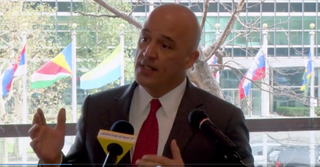
William W. Latimer is an infectious disease epidemiologist and academic administrator. He currently serves as the 7th President of Chestnut Hill College in Philadelphia,Pennsylvania and previously served as the 14th and final President of the College of New Rochelle.
Dominique Weis is a Canadian scientist. She is a Canada Research Chair in the Geochemistry of the Earth's Mantleat at the University of British Columbia.
Laurel Schafer is a Canadian Organic chemist. She is a full professor at the University of British Columbia and Canada Research Chair in Catalyst Development. Schafer's research is at the intersection of organometallic and organic chemistry.

Caroline Colijn is a Canadian mathematician and epidemiologist. She holds a Canada 150 Research Chair in Mathematics for Evolution,Infection and Public Health at Simon Fraser University (SFU).
Jillianne Reay Code is a Canadian researcher and learning scientist. She is an associate professor in the faculty of Education at the University of British Columbia and director of the Assessment for Learning in Immersion and Virtual Environments (ALIVE) research lab.
Catharine Antonia Winstanley is a Canadian behavioural neuroscientist. She is a Full professor in the Department of Psychology and the Djavad Mowafaghian Centre for Brain Health at the University of British Columbia. In this role,she co-created the world’s first rat casino in an animal lab experiment to model human gambling. In 2020,Winstanley was elected to the Royal Society of Canada's College of New Scholars,Artists and Scientists.
Janice Jennifer Eng is a professor in the University of British Columbia's Department of Physical Therapy and Canada Research Chair in Neurological Rehabilitation.
Holly Haganis an American infectious disease epidemiologist and nurse. She is a full professor in the College of Global Public Health at New York University and director of the Center for Drug Use and HIV/HCV Research.
Deborah M. Money is a Canadian obstetric and gynaecological infectious disease specialist. As a professor at the University of British Columbia,she was the first non-US President of the Infectious Diseases Society for Obstetrics and Gynecology from 2010 until 2012.
Kathleen Anne Martin Ginis is a Canadian exercise behavioural scientist. She is a Full professor in the Department of Medicine and in the School of Health and Exercise Sciences at the University of British Columbia. She also holds the Reichwald Family UBC Southern Medical Program Chair in Preventive Medicine.
Pieter Rutter Cullis is a Canadian physicist and biochemist known for his contributions to the field of lipid nanoparticles (LNP). Lipid nanoparticles are essential to current mRNA vaccines as a delivery system. Prof. Cullis is best known for the development of ionizable cationic lipids. These lipids are able to complex with negatively charged nucleic acids at low pH (≈4.0) where they are positively charged because they have a pKa if approximately 6.4. They reduce or eliminate toxicity associated with cationic lipids at physiological pH of 7.4 because they adopt a net neutral charge. Finally,they enable endosomal escape because they again become positively charged in acidified endosomes and promote formation of non-bilayer structures by interaction with negatively charged lipids. These properties are critical to the function of the mRNA vaccines and are rapidly enabling gene therapy in clinical settings.
Eva King Killam was a research pharmacologist who studied the activity of drugs on the brain and behavior,developing animal models for epilepsy and opiate dependence.
Jehannine Claire Austin is a Canadian neuropsychiatric geneticist and a genetic counselor. They are a professor at the University of British Columbia and Executive Director of the Provincial Health Services Authority's BC Mental Health and Substance Use Services Research Institute. In 2012,Austin founded the world’s first specialist psychiatric genetic counselling service.


