
The House of Kawānanakoa, or the Kawānanakoa Dynasty, are descendants to the throne of the Kingdom of Hawaiʻi.
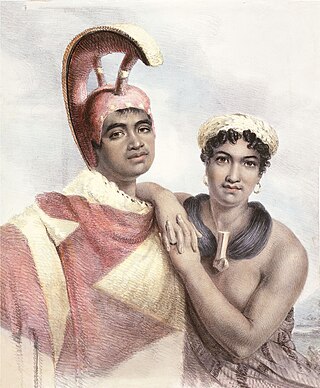
Boki was a High Chief in the ancient Hawaiian tradition and served the Kingdom of Hawaii as royal governor of the island of Oahu. Boki ran a mercantile and shipping business and encouraged the Hawaiians to gather sandalwood for trade.
The Aliʻi nui of Maui was the supreme ruler of the islands of Maui, one of the four main Hawaiian Islands as well as the smaller island of Lanai. The title is the same as that of the Aliʻi nui of the other islands. The title or phrase Mōʻī is sometimes used for the title of the monarchs of Maui; however, it is not an ancient word in the Hawaiian language and has origins in the mid 19th century. The only monarchs to officially hold the title of Mōʻī are Kalākaua and his sister Liliuokalani.

Kamakahelei, was alii nui, or Queen regnant, of the island of Kauaʻi. She was the ruling chiefess of Kauaʻi reigning from 1770 - 1794. In some historical references she has been described as a regent for her sons Keawe and Kaumualii. She was the sovereign of the Island of Kauai at the time Captain James Cook landed on its shores. The Chiefess Kamakahelei Middle School in the district of Puhi is named after her. This school serves the Kalaheo to Hanamaulu districts on the island of Kauai.
Kakae was High Chief of the island of Maui. Kakae‘s name is sometimes given as Kakaeloiki. Kakae is mentioned in old chants.
Kahekili I was a chief of Maui. Kahekili was a noted warrior chief who nearly destroyed his country and was styled Kahekilinui or "Kahekili the Great", even though his greatness was small in comparison to his descendant Kahekili II. His name was short for Kāne-Hekili after the Hawaiian god of thunder.
In Hawaiian mythology, Kuhimana was a High Chief who ruled as the 7th known Moʻi of Maui. He was the sovereign king or chief of the island of Maui and is mentioned in old chants as semi-mythical person.
The House of Laʻanui is a family of heirs to the throne of the Kingdom of Hawaiʻi collateral to the House of Kamehameha. Both houses are branches of the House of Keōua Nui.
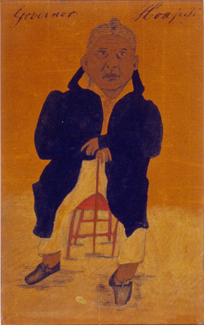
Ulumāheihei Hoapili was a member of the nobility during the formation of the Kingdom of Hawaii. He was a trusted military and political advisor to King Kamehameha I, known as "Kamehameha the Great". Although trusted with one of the last symbolic rites of the Hawaiian religion, he later became a supporter of Christian missionaries.

Kahakuhaʻakoi Wahinepio was a Hawaiian chiefess and member of the royal family during the Kingdom of Hawaiʻi. Wahinepio means captive women in Hawaiian. Sometimes she is called Wahineopiʻo, or an extra ʻokina is added, calling her Kahakuhaʻakoʻi. She was also called Kamoʻonohu. She was considered Kamehameha I's third favorite wife and served as female Governor of Maui, an act unheard of at the time in the western world, but common in Hawaiian history.
Kekū‘iapoiwa I was a chiefess of the island of Hawaiʻi and Maui. She was also known as Kekū‘iapoiwa Nui . Her full name was Kekū‘iapoiwa-nui Kalani-kauhihiwakama Wanakapu.

Peleuli, formally Peleuli-i-Kekela-o-kalani, was a Queen consort of the Kingdom of Hawaii as a wife of king Kamehameha I.
Lono-a-Piʻilani was Aliʻi of Maui. He was a chief of that Hawaiian island and was named after god Lono.
Alapaʻi was a Chief of Hawaiʻi in ancient Hawaii. He was an usurper to the throne, but was considered a good ruler, one who loved the common people, although there is a story that he was responsible for the death of High Chief Keōua. Alapaʻi's title in Hawaiian was Aliʻi.
Kapohauola was a High Chiefess in ancient Hawaii, Chiefess of Hawaiʻi island and Queen consort of Maui. She is mentioned in ancient legends and was also called Kualua. Samuel Kamakau mentioned her in his book Tales and Traditions of the People of Old.
Kiha-a-Piilani was an Aliʻi nui of Maui. He was born ca. 1510.
Piʻikea was a High Chiefess. She was a daughter of Piʻilani and Chiefess La’ieloheloheikawai and sister of Lono-a-Piʻilani and Kiha-a-Piʻilani. Piʻilani built a great temple; according to the myth, Piʻilani was a son of Kū.
Keleanohoanaʻapiʻapi, short name Kelea, was an ancient Hawaiian noblewoman who is mentioned in ancient legends, and her genealogy is given in chants. She was a Princess of Maui, one of the Hawaiian Islands. She was a High Chiefess, but not of the highest known rank.

Kalamakua — also known as Kalamakua-a-Kaipuholua — was an ancient Hawaiian nobleman, the High Chief of Halawa, a place on the island of Oahu.
Kūkaniloko was an ancient Hawaiian noble lady, who became the Chiefess of the island of Oahu, and had a long reign.