Related Research Articles
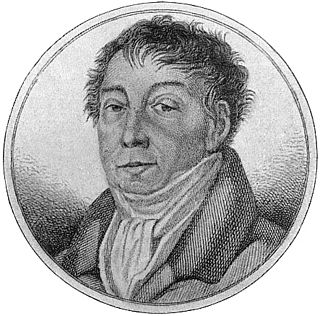
Luigi Marchesi was an Italian castrato singer, one of the most prominent and charismatic to appear in Europe during the second half of the eighteenth century.

Lo sposo deluso, ossia La rivalità di tre donne per un solo amante is a two-act opera buffa, K. 430, composed by Wolfgang Amadeus Mozart between 1783 and 1784. However, the opera was never completed and only a 20-minute fragment from act 1 exists.

Giuseppe Gazzaniga was a member of the Neapolitan school of opera composers. He composed fifty-one operas and is considered to be one of the last Italian opera buffa composers.

Pasquale Anfossi was an Italian opera composer. Born in Taggia, Liguria, he studied with Niccolò Piccinni and Antonio Sacchini, and worked mainly in London, Venice and Rome.
Ranieri de' Calzabigi was an Italian poet and librettist, most famous for his collaboration with the composer Christoph Willibald Gluck on his "reform" operas.

La finta giardiniera, K. 196, is an Italian-language opera by Wolfgang Amadeus Mozart. Mozart wrote it in Munich in January 1775 when he was 18 years old and it received its first performance on 13 January at the Salvatortheater in Munich. There is debate over the authorship of the libretto, written for Anfossi's opera the year before. It is often ascribed to Calzabigi, but some musicologists now attribute it to Giuseppe Petrosellini, though again it is questioned whether it is in the latter's style.
Giovanni Bertati was an Italian librettist.

Caterina Magdalena Giuseppa Cavalieri was an Austrian soprano.
The Teatro San Moisè was a theatre and opera house in Venice, active from 1620 to 1818. It was in a prominent location near the Palazzo Giustinian and the church of San Moisè at the entrance to the Grand Canal.

Mariella Adani is an Italian classical soprano who had an active career in operas, concerts, and recitals from the 1950s through the 1980s. She has sung under the musical direction of Vittorio Gui, Carlo Maria Giulini, Nino Sanzogno, Oliviero De Fabritiis, and Peter Maag and under the directors Sandro Bolchi, Franco Zeffirelli Luchino Visconti, and Walter Felsenstein. A light lyric soprano, she has particularly excelled in the operas of Wolfgang Amadeus Mozart and Gioachino Rossini. She has also been admired for her performances in Baroque opera. Retired from the stage, she now devotes her time to teaching singing.

Giacomo Domenico Mario Antonio Pasquale Giuseppe Tritto was an Italian composer, known primarily for his fifty-four operas. He was born in Altamura, and studied in Naples; among his teachers were Nicola Fago, Girolamo Abos, and Pasquale Cafaro. Amongst his pupils were the young Vincenzo Bellini around 1821, plus Ferdinando Orlandi. He died in Naples.
Carlo Franchi was an Italian opera composer known for his opere buffe. He belonged to the Neapolitan school of composers and it is likely that he was born in or near Naples, where his first opera La vedova capricciosa had its premiere in 1765. Subsequent works were performed in Rome, Venice, Mantua, Turin, Florence, and outside Italy in places such as Dresden and Lisbon.
La vera costanza, is an operatic dramma giocoso in three acts by Pasquale Anfossi. The comédie larmoyante-influenced Italian libretto was by Francesco Puttini. The opera preceded Joseph Haydn's better known setting of the same libretto by three years.
Ferdinando Orlandi, also referred to as Orland and Orlando. Little is known of his early life and his year of birth is also cited as 1777. He was an Italian musician and teacher of singing who composed cantatas and sacred music, but was particularly known for his operas, not all of which have survived. He was born and died in Parma.

L'Italiana in Londra is one of eight comic operas, termed intermezzi, which Domenico Cimarosa wrote between 1777 and 1784 for the Teatro Valle, a handsome neo-classical Roman theatre built in 1726, which still stands today.

L'avaro, is an opera in three acts composed by Pasquale Anfossi. The libretto by Giovanni Bertati is based on Molière's 17th-century comedy The Miser. Considered one of Anfossi's best operas, it premiered at the Teatro San Moisè in Venice in the autumn season of 1775 and was subsequently performed throughout Italy and in other European cities.

Il curioso indiscreto, is an opera in three acts composed by Pasquale Anfossi. The libretto is based on an episode from the 17th-century Spanish novel Don Quixote. The librettist is not known for sure but is thought to be either Giovanni Bertati or Giuseppe Petrosellini. The opera premiered at the Teatro delle Dame in Rome during the Carnival season of 1777.

The Teatro delle Dame, also known as the Teatro Alibert, was a theatre in Rome built in 1718 and located on what is now the corner of Via D'Alibert and Via Margutta. In the course of its history it underwent a series of reconstructions and renovations until it was definitively destroyed by a fire in 1863. In their 18th-century heyday, the Teatro delle Dame and its rival, the Teatro Capranica, were the leading opera houses in Rome and saw many world premieres performed by some of the most prominent singers of the time.
Giuseppe Petrosellini was an Italian poet and prolific librettist working primarily in the dramma giocoso and opera buffa genres.
References
- ↑ Mozart's operas - Page 59 Rudolph Angermüller - 1988 - Breaking new ground A three-act dramma giocoso by Pasquale Anfossi La Finta Giardiniera, was first performed at Rome's Teatro delle Dame on December 26 (?), 1773. The libretto was probably by Abbate Giuseppe Petrosellini, Secretary to ..