Mission
During the Cold War, the regiment was stationed in the lagoon-rich south flank of the northeast Italian front. The Lagunari Regiment focused more on high intensity, conventional battlefields, such as those expected during the Cold War. Nowadays, its focus is on the more probable mid- and low intensity conflicts. The Lagunari have the ability to be projected to any hostile area around the globe due to their maneuverability. The Lagunari Regiment is versatile enough to be capable in conducting special operations under 'unconventional' methods while engaging on a 'conventional' battlefield. Today the Lagunari are intended for international missions, particularly in coastal regions and in areas rich in inland waterways.
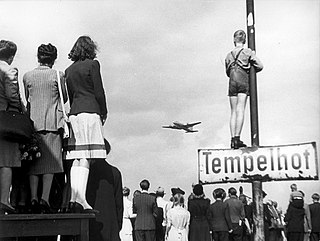
The Cold War was a period of geopolitical tension between the Soviet Union with its satellite states, and the United States with its allies after World War II. The historiography of the conflict began between 1946 and 1947. The Cold War began to de-escalate after the Revolutions of 1989. The collapse of the USSR in 1991 was the end of the Cold War. The term "cold" is used because there was no large-scale fighting directly between the two sides, but they each supported major regional conflicts known as proxy wars. The conflict split the temporary wartime alliance against Nazi Germany and its allies, leaving the USSR and the US as two superpowers with profound economic and political differences.
The Lagunari Regiment is a littoral focused, amphibious, specialised light - medium force capable of deploying at short notice in support of the Italian military and diplomatic objectives overseas and is optimised for expeditionary warfare: operational situations requiring highly manoeuvrable, normally amphibious, forces. As the Italian Army's specialists in riverine operations the regiment provides assets and expertise for these operations. Held at a very high readiness they can respond quickly to events anywhere around the globe.
Italian National Sea-based Projection Capability
The Italian National Sea-based Projection Capability must allow the military Forces to conduct operations such as initial entry of a Landing Force into a hostile or uncertain environment as part of a "Forcible Entry" with the goal of carrying out the assigned mission. Such a Landing Force can also constitute an enabling factor for the entry of additional sea-based assets, according to the concept of "sea-basing". This concept, to be developed in a multinational or coalition context ("coalition sea-basing"), provides for the establishment at sea of the resources necessary to sustain an operation outside the area, in order not to have to depend on the consensus and/or support of third Countries. The development of a Sea-based Projection Capability requires a joint preparation and a joint training of units belonging to different services, in particular the Land Component and the Naval Component. The cornerstone of the operation is a Landing Force at the Brigade level, capable of carrying out the full spectrum of the operations requested for projected Amphibian Forces, as well as of developing the capacity to operate as "Entry Force Battlegroup". An expeditionary force, in addition to the capability to deploy complete packages of units to distant areas on short notice, must the capable to sustain them in the theatre ensuring personnel rotation, equipment efficiency, and communication, intelligence, C2, logistic and in-theatre mobility support. The expeditionary nature of a force is traditionally associated with amphibious units but it has now become a prerequisite for the entire military instrument. The core of the Italian "Joint Expeditionary Force" consists of a "Landing Force" (based on "San Marco" and "Serenissima" regiments) able to activate all the functions of Combat, Combat Support and Combat Service Support, thanks to the integration of existing capacity within the national military instrument. This endowed the Italian Armed Forces with a disembarkation force at the level of a light infantry Brigade.
Organization and equipment
The regiment is structured as follows:
- Regimental Headquarters
- Command and Logistic Support Company
- Maneuver Support Company
- 1st Amphibious Battalion
- 1st Amphibious Assault Company
- 2nd Amphibious Assault Company
- 3rd Amphibious Assault Company
- Amphibious Tactical Support Company
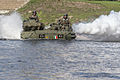
The Amphibious Battalion is organized and equipped like an infantry battalions of the Italian Army with in addition amphibious combat vehicles (AAVs) and combat boats (rubber boats and rigid crafts). It fields Lince light multirole vehicles. The maneuver support company is equipped with 120mm Mortars and Spike MR anti-tank guided missiles. The Amphibious Tactical Support Company ensures the amphibious capability of the regiment and is equipped with AAV7-A1 amphibious assault vehicles, landing boats and small speedboats. The primary role of Landing craft is to transfer personnel, vehicles, and equipment onto potentially hostile shores. The Italian AAV7 Assault Amphibious Vehicle (AAV) is used as the Italian Lagunari primary amphibious platform to move Army Marines (and cargo) from military ship to shore. The Italian Lagunari use the AAV7 also for the shore to shore amphibious assault. The AAV7 uses a boat-like hull design and powerful water jets to make it one of the world's best amphibious assault vehicles.

Iveco LMV is a 4WD tactical vehicle developed by Iveco, and in service with several countries. After its adoption by the Italian Army under the name VTLM Lince (Lynx)(Veicolo-Tattico-Leggero-Multiruolo/Light-Tactical-Multirole-Vehicle), it won the FCLV competition of the British Army as the Panther, but the fleet was put up for sale in 2018.
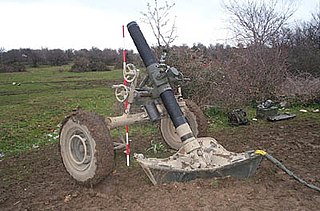
The MO-120 RT-61 or MO-120-RT is a heavy mortar of French origin. The RT in the designator stands for rayé, tracté, which means rifled, towed. The RT-61 is currently used by the French Army, and is produced under licence in various countries. The MO-120 RT-61 is issued to artillery units, where it augments the 155 mm towed artillery.
Lagunari's RECON unit. The task of the Lagunari "Serenissima" Regiment RECON unit, is to accomplish shore reconnaissance, assault beaches shadowing, amphibious battle space shaping, deep ground reconnaissance and limited scale amphibious raids, in support of the regiment action. The main role of the RECON unit is to gather intelligence in support of operations. They also have a direct action function because are capable of independent action in support of the larger unit's mission. Lagunari’s RECON works usually focus on specific information requirements which cannot be obtained by other means:

In military operations, reconnaissance or scouting is the exploration outside an area occupied by friendly forces to gain information about natural features and other activities in the area.
- Amphibious reconnaissance;
- Beach/coastline reconnaissance;
- Raids and small boat operations;
- Deep reconnaissance;
- Direct action.
History
The Italian Lagunari (some times known as the 'Venetian Regiment') are the heirs to the embarked troops of the Republic of Venice. In 1964, the Head of the Italian Army entrusted to the "Serenissima" Lagunari Regiment the formal heritage of this centuries-old unit. The birth of the embarked troops of Venice goes back to the time of the fourth crusade when the Doge "Enrico Dandolo" put together one "Regiment " from ten companies distributed on the warships of the Venetian fleet, and then employed them in the two captures of Constantinople (Bisanzio - 1203/1204). The embarked troops of Venice had their final organisation in 1550 becoming the "Fanti da Mar" (Infantry of the sea) and they distinguished themselves during all the wars that the Republic of Venice fought against the Ottoman Empire, especially during the sieges of Famagosta and Candia, and in the great victory in the battle of Lepanto. Since then, Venetian Fanti da Mar have taken part in more battles on land and sea around the world than any other branch of the modern Italian Army.

The Republic of Venice or Venetian Republic, traditionally known as La Serenissima, was a sovereign state and maritime republic in what is now northeastern Italy, which existed for over a millennium between the 7th century and the 18th century from 697 AD until 1797 AD. It was based in the lagoon communities of the historically prosperous city of Venice, and was a leading European economic and trading power during the Middle Ages and the Renaissance. Citizens spoke primarily the still-surviving Venetian language, although publishing in (Florentine) Italian language became the norm during the Renaissance and after.

Enrico Dandolo was the 41st Doge of Venice from 1192 until his death. He is remembered for his avowed piety, longevity, and shrewdness, and is known for his role in the Fourth Crusade and the Sack of Constantinople.

The Ottoman Empire, historically known to its inhabitants and the Eastern world as Rome (Rûm), and known in Western Europe as the Turkish Empire or simply Turkey, was a state that controlled much of Southeast Europe, Western Asia and North Africa between the 14th and early 20th centuries. It was founded at the end of the 13th century in northwestern Anatolia in the town of Söğüt by the Oghuz Turkish tribal leader Osman I. Although initially the dynasty was of Turkic origin, it was thoroughly Persianised in terms of language, culture, literature and habits. After 1354, the Ottomans crossed into Europe, and with the conquest of the Balkans, the Ottoman beylik was transformed into a transcontinental empire. The Ottomans ended the Byzantine Empire with the 1453 conquest of Constantinople by Mehmed the Conqueror.
In 1951, the Italian army raised the Lagunari as an amphibious infantry unit. The Italian V Army Corps realized the need to secure its right flank against amphibious landings and due to the nature of the marshy tidal terrain and many small islands on the Northern Adriatic coast an amphibious unit was deemed the best answer to the needs of the Italian Army. Up to the army reform in 1975, the Lagunari Regiment consisted of three amphibious infantry and one tank battalion. Afterwards, it was reduced to two battalions: the amphibious infantry battalion "Serenissima" and the amphibious vehicles battalion "Sile" under the Amphibious Troops Command, which carried on the traditions of the regiment. The Amphibious Troops Command came under the Folgore Mechanized Division in 1975. When the Folgore was disbanded in 1986 the Command returned to the 5th Army Corps. In 1992, regiment was re-instituted and the two battalions merged into one. The regiment remained subordinate to the 5th Army Corps. Afterwards it came under the "Projection Forces Command" in Milan and later it joined the Pozzuolo del Friuli Brigade.
Amphibious warfare is a type of offensive military operation that today uses naval ships to project ground and air power onto a hostile or potentially hostile shore at a designated landing beach. Through history the operations were conducted using ship's boats as the primary method of delivering troops to shore. Since the Gallipoli Campaign, specialised watercraft were increasingly designed for landing troops, materiel and vehicles, including by landing craft and for insertion of commandos, by fast patrol boats, zodiacs and from mini-submersibles.

Infantry is a military specialization that engages in military combat on foot, distinguished from cavalry, artillery, and tank forces. Also known as foot soldiers or infanteers, infantry traditionally relies on moving by foot between combats as well, but may also use mounts, military vehicles, or other transport. Infantry make up a large portion of all armed forces in most nations, and typically bear the largest brunt in warfare, as measured by casualties, deprivation, or physical and psychological stress.

The 5th Army Corps was one of three corps the Italian Army fielded during the Cold War. Based in the regions of Veneto and Friuli-Venezia-Giulia the corps was the army's main combat force. The 5th Army Corps was arrayed close to the Yugoslavian border and tasked with meeting any Warsaw Pact forces that crossed the border. On the left flank of the corps the 4th Alpine Army Corps was tasked with blocking the Alpine passes and in the rear of the corps the 3rd Army Corps served as operational reserve. After the end of the Cold War the corps was reduced in size and on 1 October 1997 it became the 1st Defence Forces Command. In 2013 the COMFOD 1° was disbanded and its function and brigades taken over by the 20th Infantry Division Friuli in Florence.
Today the Lagunari are intended for Army amphibious operation (shore to shore), riverine operations and international missions as specialized assault infantry. Plans to integrate the Lagunari into an amphibious brigade containing all Italian naval infantry, including the Navy's 1st San Marco Regiment failed in the 1990s, partly because of the distance between the respective bases: Venice and Brindisi.
In 2006, to establish closer cooperation between the two regiments, a Joint operations staff ("Forza Nazionale di Proiezione dal Mare") was established. The Italian Defense can fall back on the Army Lagunari and other support forces of the Army in cooperation with Navy units. The Navy San Marco unit can operate under Army control, if needed. Both organizations were used together for the first time, with support forces, in the UNIFIL operations after the 2006 Lebanon war as part of the Early Entry Force in September 2006: the Lagunari launched theirs AAVs from the Italian ship.
Italian Lagunari have long provided the Italian Armed Forces with a broad spectrum of response options when Italian and NATO interests have been threatened and in non-combat situations that require instant response to crisis. The Lagunari operates in rivers, bays, lagoons, across the littorals and ashore. The primary mission is to operate combat missions in the green water to shore and in the inland waters. Today, the Lagunari are the Italian Army’s amphibious troops. An elite force held at very high readiness, they are trained for worldwide rapid response, able to deal with a wide spectrum of threats and security challenges.
Until 2011 the Lagunari Regiment wore the black Army beret of the Italian Army with their own traditional and distinctive badge (sea anchor above two rifles). On returning from service in Afghanistan during ISAF, they received a new beret in 'lagoon green' water color, retaining the same badge.
The Lagunari are part of the Joint Forza di proiezione dal mare (Joint landing projection force), commanded by an Army General or a NAVY Rear admiral.
ETHOS
Lagunari are trained to improvise, adapt and overcome any obstacle in whatever situation they are needed. They have the willingness to engage and the determination to defeat the enemy until victory is seized. The kinds of battles Italian Lagunari fight range from traditional warfare to humanitarian and disaster relief missions. The fighting spirit that helps them win these battles extends beyond the scope of their military service, and many retired Lagunari continue to serve in the communities in the ALTA volunteer veteran organization.
Main Operations Abroad
- Operation "Constant Forge" Sarajevo –BOSNIA (September – December 1998);
- Operation "Joint Guardian" Dakovica – KOSSOVO ( November 1999 – March 2000);
- Operation "Consistent Effort" Pec / Klina – KOSSOVO ( February – June 2001);
- Operation "Decisive Endeavour" Pec/Klina/Gorazdevac – KOSSOVO (2002-2003);
- Operation "Antica Babilonia" IRAQ ( June 2003 – March 2005);
- Operation "LEONTE" LEBANON ( August 2006 – April 2007);
- Operation "LEONTE 5" LEBANON ( August 2008 – April 2009);
- Operation "ISAF 15" AFGHANISTAN ( October 2010 – April 2011);
- Operation "LEONTE 14" LEBANON (May 2013 – October 2013).
Lagunari are routinely put through their paces in preparation for commencing or returning to front line operations.
Collective awards
Gold Medal of Army Valour Per Decree of 26 April 2007 The Infantry Regiment participated in the “Ancient Babylon 4” operation in Iraq, included in the Italian Joint Task Force. In that violent theatre it showed military valour and generous altruism. With dedication and enthusiasm, along with ideals of human brotherhood, it carried out humanitarian and support activities in favour of the Iraqi population courageously opposing attacks by the enemy forces. Engaged in the activities for the foundation of the 604th Battalion of the Iraq National Guard, with dedication and determination it participated in the preparation and training of the units of the new Iraqi Army, reaching excellent results recognized by the coalition and local Authorities. In particular, it intervened in the revolts between 5th and 6th August 2004, after the attacks by militiamen along the Euphrates river in the city of Al-Nassiriyah, in order to defend the local Institutions. Extraordinary example of professional capabilities, courage, morality and military virtues, it contributed to increase the prestige of the Army on the international context. (Al-Nassiriyah – Iraq, 5–6 August 2004).
Silver Medal of Army Valour Decree of 13 March 2006 Reminding the traditions of the Marine soldiers, it was engaged in several rescue operations in favour of the civilian population hit by natural disasters but also in international rescue operations. In those circumstances, the personnel of the Regiment showed expertise, great sense of duty, spirit of sacrifice and courage in carrying out dangerous activities thanks to which it earned gratitude and admiration by the rescued operations and esteem by all the contingents of the other Nations that operated in international missions. Great example of civic and military virtues, courageous altruism and high professionalism that increased the prestige of the Italian Army on the international context. (National territory and Balkan theatre, 1951-2003).
Silver Cross of Army Merit Decree 27 July 2009 Included in the "Joint Task Force – Lebanon" and heir of the glorious traditions of the "Fanti da Mar" of the "Serenissima" Republic of Venice, the Infantry Regiment was employed in the Lebanese Operational Theatre, in a region characterized by continuous instability and conflict. With the determination and the enthusiasm of its soldiers, it gave important contribution in the peacekeeping operations. Thanks to its dedication and enthusiasm, supported by human brotherhood, it was a protagonist in the humanitarian and support activities in favour of the local population. Since the beginning of the operations, its marines have been the protagonist also in the construction of the "United Nations 2-1" base in Mara'ka, giving example of professionalism and sense of duty. The "Serenissima" Marines Regiment contributed to increase the prestige of Italy and of the Army on the international context. (Shama – Lebanon, 9 November 2006 – 13 April 2007).

The Russian Naval Infantry, operates as the amphibious force of the Russian Navy. The first Russian naval infantry force formed in 1705, and since that time it has fought in the Napoleonic Wars, the Crimean War, the Russo-Japanese War, and the First and Second World Wars. Under Admiral Gorshkov, the Soviet Navy expanded the reach of the Naval Infantry and deployed it worldwide on numerous occasions.

The Assault Amphibious Vehicle (AAV)—official designation AAVP-7A1 —is a fully tracked amphibious landing vehicle manufactured by U.S. Combat Systems.
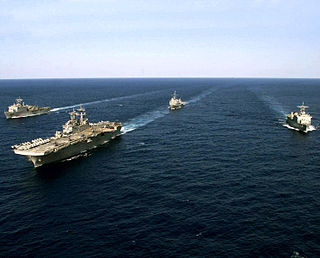
An amphibious ready group (ARG) of the United States Navy consists of a naval element—a group of warships known as an amphibious task force (ATF)—and a landing force (LF) of U.S. Marines, in total about 5,000 people. Together, these elements and supporting units are trained, organized, and equipped to perform amphibious operations.

Air assault is the movement of ground-based military forces by vertical take-off and landing (VTOL) aircraft—such as the helicopter—to seize and hold key terrain which has not been fully secured, and to directly engage enemy forces behind enemy lines. In addition to regular infantry training, air-assault units usually receive training in rappelling and air transportation, and their equipment is sometimes designed or field-modified to allow better transportation within aircraft.

The Republic of Korea Marine Corps, also known as the ROK Marine Corps (ROKMC), or the ROK Marines, is the marine corps of South Korea. The ROKMC is a branch of the Republic of Korea Navy responsible for amphibious operations, and also functions as a rapid reaction force and a strategic reserve.

The Spanish Marine Infantry is the marine corps of the Spanish Navy responsible for conducting amphibious warfare by utilizing naval platforms and resources. The Marine Corps is fully integrated into the Armada's structure.
Combat service support is a topic that is, broadly speaking, a subset of military logistics. However, combat service support is often more limited in depth, as the related groups primarily address factors supporting readiness for combat operations. The United States Department of Defense organizes various agencies providing services such as medical assistance, for example, akin to other nations' militaries.

Marines, also known as naval infantry, are typically an infantry force that specializes in the support of naval and army operations at sea and on land and air, as well as the execution of their own operations. In many countries, the marines are an integral part of that state's navy. In others, it is a separate organization altogether, such as in the United States, where the Marine Corps falls under the US Department of the Navy, yet it operates independently. Marines can also fall under a country's army like the Troupes de marine and Givati Brigade.
Marine Air-Ground Task Force is a term used by the United States Marine Corps to describe the principal organization for all missions across the range of military operations. MAGTFs are a balanced air-ground, combined arms task organization of Marine Corps forces under a single commander that is structured to accomplish a specific mission. The MAGTF was formalized by the publishing of Marine Corps Order 3120.3 in December 1963 "The Marine Corps in the National Defense, MCDP 1-0". It stated:

The Indonesian Marine Corps previously known as KKO, officially known as KORMAR or simply "Marinir", Tentara Nasional Indonesia – Angkatan Laut, ; officially translated as: Marine Corps, Indonesian Navy is currently an integral part of the Indonesian Navy and is sized at the military corps level unit as the naval infantry and main amphibious warfare force of Indonesia. The Marine Corps is commanded by a two-star marine general. As of August 2018, it has three divisions, each led by a one-star marine general:

3rd Assault Amphibian Battalion is one of two active duty assault amphibian battalions in the United States Marine Corps. The battalion's primary weapon system is the Amphibious Assault Vehicle or AAV. The AAV is a 27.5-ton armored vehicle that carries up to 21 combat-loaded Marines and is armed with the UGWS, which mounts a .50 cal (12.7 mm) M2HB machine gun and a Mk-19 40 mm grenade launcher. The AAV is the only armored vehicle in the U.S. inventory that is fully capable of operations both on land and in the ocean. The battalion is part of the 1st Marine Division and the I Marine Expeditionary Force. The unit is based in Camp Pendleton, California.

2nd Assault Amphibian Battalion is a mechanized battalion of the United States Marine Corps. Their primary weapon system is the Amphibious Assault Vehicle. The battalion is a separate battalion within the 2nd Marine Division and the II Marine Expeditionary Force. The unit is based out of the Camp Lejeune, North Carolina

The Portuguese Marine Corps are a special forces unit of the Portuguese Navy. The Corps is specialised in amphibious warfare, coastal reconnaissance, unconventional warfare, guerrilla warfare, raids, maritime interdiction and boarding operations. It is an elite light infantry force, operating as a rapid-reaction force.
In the United States Marine Corps, the ground combat element (GCE) is the land force of a Marine Air-Ground Task Force (MAGTF). It provides power projection and force for the MAGTF.

The 1st San Marco Regiment, located in Brindisi, is an amphibious formation of the Italian Navy. They are the Italian marines. Until the middle of the 1990s the unit was known as the San Marco Battalion, until it was expanded beyond battalion size because of the new geopolitical situation after the end of the Cold War and an increasing number of international missions, after as the San Marco Regiment. In 2013 it became part of the San Marco Marine Brigade as 1st San Marco Regiment.

The Pozzuolo del Friuli Cavalry Brigade is a brigade of the Italian Army, based in the Friuli Venezia Giulia and Veneto regions. The Brigade consists of a command unit, a cavalry regiment, an amphibious infantry regiment, an artillery regiment, an engineer regiment and a logistic regiment.

The "San Marco" Marine Brigade is an amphibious formation of the Italian Navy established on 1 March 2013, reorganizing the Navy Landing Force. It has its command in Brindisi. They are the marines of the Italian Navy.
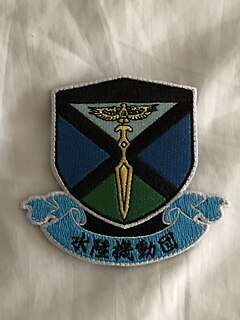
The Amphibious Rapid Deployment Brigade is a marine unit of the Japan Self-Defense Forces (JSDF) responsible for conducting amphibious operations. It incorporates the former Western Army Infantry Regiment, which was the dedicated amphibious warfare unit of the Japan Ground Self-Defense Force.