George Smith may refer to:
James Smith may refer to:
Robert or Bob Thompson may refer to:
William Wilson, or variants, may refer to:
William, Willie, Will, Bill, or Billy Miller may refer to:
Willie, Billy, Bill, Will or William Henry may refer to:
Nicola or Nichola is a Latinised version of the Greek personal name Nikolaos (Νικόλαος), derived from the nikē meaning "victory", and laos meaning "people", therefore implying the meaning "victory of the people". Nicola is both a male and female name, depending on cultural norms.

Cockburn is a Scottish surname that originated in the Borders region of the Scottish Lowlands. In the United States most branches of the same family have adopted the simplified spelling 'Coburn'; other branches have altered the name slightly to 'Cogburn'. The French branch of the family uses the spelling 'de Cockborne', with the middle "ck" being pronounced.
Ruddy is a reddish-rosy crimson colour, closer to red than to rose.
Graham is a surname of Scottish and English origin. It is typically an Anglo-French form of the name of the town of Grantham, in Lincolnshire, England. The settlement is recorded in the 11th century Domesday Book variously as Grantham, Grandham, Granham and Graham. This place name is thought to be derived from the Old English elements grand, possibly meaning "gravel", and ham, meaning "hamlet" the English word given to small settlements of smaller size than villages.

Campbell is a Scottish surname —derived from the Gaelic roots cam ("crooked") and beul ("mouth")—that had originated as a nickname meaning "crooked mouth" or "wry mouthed." Clan Campbell, historically one of the largest and most powerful of the Highland clans, traces its origins to the ancient Britons of Strathclyde. Between 1200 and 1500 the Campbells emerged as one of the most powerful families in Scotland, dominant in Argyll and capable of wielding a wider influence and authority from Edinburgh to the Hebrides and western Highlands.
Megan is a Welsh feminine given name, originally a diminutive form of Margaret. Margaret is from the Greek μαργαρίτης (margarítēs), Latin margarīta, "pearl". Megan is one of the most popular Welsh-language names for women in Wales and England, and is commonly truncated to Meg.
William or Bill Davidson may refer to:
King is an English surname. It is also an Anglicized form of the German surname Küng, which in many German dialects is pronounced like king. This originally German form is widespread among American Mennonites and Amish.
Fraser is a Scottish surname, connected to the Clans Fraser and Fraser of Lovat. It is most commonly found in the United Kingdom, Canada, the United States, Australia, and New Zealand.
Don or Donald McKenzie may refer to:
Ross is an English-language name derived from Gaelic, most commonly used in Scotland. It is also the name of a county in the highland area. It can be used as a given name, typically for males, but is also a typical family name for people of Scottish descent. Derived from the Gaelic for a "promontory" or "headland".
Abernethy is a surname whose origins link to a Scottish clan that descends from Orm de Abernethy, a grandson of Gille Míchéil, Earl of Fife that presumably settled at Abernethy, Perth and Kinross.
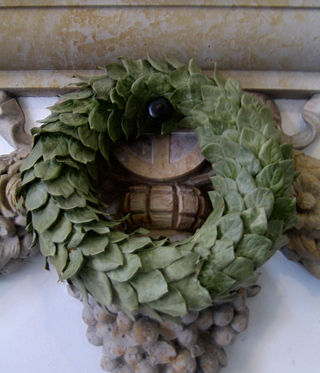
Laura is a traditionally feminine given name in Europe and the Americas, of Latin origin, whose meaning is a metonym for a victor, and an early hypocorism from Laurel and Lauren.
This page is based on this
Wikipedia article Text is available under the
CC BY-SA 4.0 license; additional terms may apply.
Images, videos and audio are available under their respective licenses.
