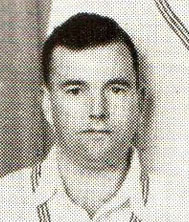
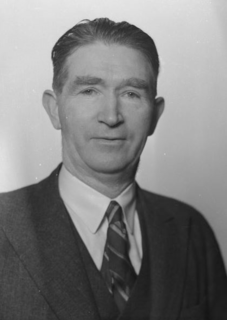
Sir Leonard Morton Wright (1906 – 22 October 1967) was a Dunedin businessman and was Mayor of Dunedin from 1950 to 1959. [1]
Dunedin is the second-largest city in the South Island of New Zealand, and the principal city of the Otago region. Its name comes from Dùn Èideann, the Scottish Gaelic name for Edinburgh, the capital of Scotland.
The Mayor of Dunedin is the head of the municipal government of Dunedin, New Zealand, and presides over the Dunedin City Council. The Mayor is directly elected, using the Single Transferable Vote (STV) system in 2007.
He was born in Australia and educated in Sydney. He married Cecily Bell in 1936.
He was a tea importer and formed his own business in 1927. He was on the Dunedin City Council for ten years, was Chairman of the Otago Development Council, and was honorary tea controller from 1941 to 1950. He was a rugby referee and sports administrator. He was appointed a Knight Bachelor in the 1957 New Year Honours. [2]
The dignity of Knight Bachelor is the basic and lowest rank of a man who has been knighted by the monarch but not as a member of one of the organised orders of chivalry; it is a part of the British honours system. Knights Bachelor are the most ancient sort of British knight, but Knights Bachelor rank below knights of chivalric orders.
The New Year Honours 1957 were appointments in many of the Commonwealth realms of Queen Elizabeth II to various orders and honours to reward and highlight good works by citizens of those countries. They were announced in supplements to the London Gazette of 28 December 1956 to celebrate the year passed and mark the beginning of 1957.
Morton died at Dunedin on 22 October 1967, and his ashes were buried at Andersons Bay Cemetery. [3]
Andersons Bay Cemetery is a major cemetery in the New Zealand city of Dunedin. It is located 4 kilometres (2.5 mi) to the southeast of the city centre, on a rocky outcrop which forms the inland part of Lawyer's Head, a promontory which juts into the Pacific Ocean. The cemetery is bounded on the western and southern sides by Chisholm Park Golf Links, and to the east by steep slopes which descend to the Tomahawk Lagoon. Despite its name, the cemetery is located in the suburb of Tahuna, which lies immediately to the south of the suburb of Andersons Bay, and almost 1 kilometre (0.62 mi) from the former bay itself, at the head of the Otago Harbour.
William Henry Cutten was a New Zealand politician from the Otago region.
William Walter Cargill was the founder of the Otago settlement in New Zealand, after serving as an officer in the British Army. He was a member of parliament and Otago's first Superintendent.

Eric William Dempster,, was a New Zealand cricketer who played in five Tests from 1953 to 1954.
Josiah Alfred Hanan, known to his colleagues as Joe Hanan, was a New Zealand politician, cabinet minister, and legislative councillor. He also served as Mayor of Invercargill, and as Chancellor of the University of New Zealand.
Dunedin North is a New Zealand parliamentary electorate, returning one Member of Parliament (MP) to the New Zealand House of Representatives. It was established for the 1905 election and has existed since. It is currently held by David Clark of the New Zealand Labour Party, who replaced the long-standing representative Pete Hodgson. It is considered a safe Labour seat, with Labour holding the seat for all but one term (1975–1978) since 1928.
Henry Smith Fish was a 19th-century New Zealand politician. For a time, he was a member of the Liberal Party. He was Mayor of Dunedin for a total of six years. Smith is remembered as one of the staunch opponents of Women's suffrage.
William Alex Fraser was a New Zealand politician of the Labour Party.
Thomas William Hislop was the Mayor of Wellington from 1905 to 1908, and had represented two South Island electorates in the New Zealand Parliament.
Robert Lachlan Macalister was the Mayor of Wellington from 1950 to 1956, and had been the acting mayor for five months in 1948 during the absence overseas of Will Appleton.
Sir John Larkins Cheese Richardson was a 19th-century New Zealand politician, and a cabinet minister.
John Bathgate was a 19th-century New Zealand politician, and Minister of Justice and Commissioner of Stamps from 1872 to 1874.
Thomas Dick was a 19th-century New Zealand politician. Originally a merchant, he worked in London and then represented his firm on Saint Helena for seven years. From there, he was sent to Dunedin as the company's representative; he emigrated with an extended family. He soon became involved in politics and was Superintendent of Otago Province from 1865 until 1867. Over a period of 24 years, he represented various Dunedin electorates in Parliament and was Colonial Secretary (1880–1884), Minister of Justice from 1881 to 1882, and Minister of Education from 1881 to 1884. A deeply religious man, he was involved in many church affairs. He was one of the founders of Hanover Street Baptist Church; the building is now classified as Category I by Heritage New Zealand.
Sir James George Barnes was a New Zealand politician of the National Party.
Sir Clutha Nantes Mackenzie was a New Zealand politician and worker for the blind. He was briefly a Reform Party Member of Parliament.
Michael Connelly was a New Zealand trade unionist, politician of the Labour Party, and a Member of the Legislative Council from 1936 to 1950.
Philip Henry (Pat) Morton was an Australian businessman and politician. Born in Lismore in Northern New South Wales to a prominent political family and educated at Lismore High School, Morton left school at fourteen to be employed in a legal firm, before branching out into various businesses. Moving to Sydney, Morton first entered politics in 1944 as an Alderman on Mosman Municipal Council, rising to be Mayor in 1946. Morton then entered the New South Wales Legislative Assembly on 3 May 1947, representing the Electoral district of Mosman for the Liberal Party.
Hugh Gourley was a New Zealand politician born in Ireland. He was Mayor of Dunedin on two occasions and then appointed to the New Zealand Legislative Council for one seven-year term.
Thomas MacGibbon was a member of the New Zealand Legislative Council from 14 July 1914 – 13 July 1921, when his term ended. He was appointed by the Reform Government.
Henry Clapcott was a New Zealand businessman and politician.
John Haines Borland was a New Zealand field athlete and athletics official. He represented his country in the high jump at the 1950 British Empire Games, and served as president of the New Zealand Amateur Athletic Association from 1970 to 1971.
| Political offices | ||
|---|---|---|
| Preceded by Donald Charles Cameron | Mayor of Dunedin 1950–1959 | Succeeded by Thomas Kay Stuart Sidey |
| This article about a mayor in New Zealand is a stub. You can help Wikipedia by expanding it. |