Library of Al-Abbas Holy Shrine

Last updated

Library of Al-Abbas Holy Shrine
Libraryofalabbasholyshrine.jpg
Library of Al-Abbas Holy Shrine
32°37′00″N44°02′11″E / 32.6167°N 44.0363°E / 32.6167; 44.0363
Location Karbala, Iraq, Iraq
Type Public library
Established1963
Branch of Al-Abbas Holy Shrine
Collection
SizeAbout 250,000 in general
Other information
Employees160 employee as to 25 June 2019
Website https://alkafeel.net/library/

The Library of Al-Abbas Holy Shrine is a public library located within Al Abbas Holy Shrine in the old city of Karbala, Iraq. It contains books, ebooks, manuscripts and rare books in various disciplines and languages. The library holds about 250,000 works. [1]

Contents

History

Prior to 2006

The library was first established in 1963 by Sayyid Abbas Al-Hussayni Al-Kashani, and it was holding about 5,000 books in its shelves, most of them were damaged or stolen during the 1991 uprisings in Iraq against Saddam Hussein's regime, and it was neglected since then up to the reopening in 2006. [2]

Post 2006

In 2006 it was reopened after 3 years of being closed after the Iraq war in 2003, the reopening was heavily supported by Sayyid Ali al-Husseini al-Sistani. The new library included new divisions that were not existed in the old library, many specialized divisions and units were developed to cope with the requirements of the new era after the Iraq war and to handle the scientific requirements by the students of the Iraqi Universities and researchers. [3]

Collecting the manuscripts

Nearly five thousand written copies classified as precious, rare and of heritage were collected in the Library within the period of 2009 to 2014, and this operation was done in three stages: [4]

The first stage

The first stage: to collect the manuscripts without a specific kind of scripts. The goal was to safeguard and collect what can be collected from the scattered, damaged, stolen treasures, or those smuggled out of the country because of successive wars, instability or economic and cultural reasons. The last factor explains the status of ignorance of their value, importance and scarcity leading to their damage, another example is what happened during the uprising of Sha'ban in 1411 / 1991, when the soldiers and members of the Baathists made tea in the courtyard of Al-Abbas Holy Shrine on the fire made out from burnt rare books and manuscripts, therefore this experience made the library put in the priorities of work to collect what can be collected and therefore experts were hired for this work.

The second stage

The second stage: The treatment, maintenance and safeguard of the manuscript within the proper conditions. For this purpose the house of manuscripts sent to known European countries in this area its competent affiliates in order to make their training and get recognized specialization diplomas. The House also bought a private "hospital" to address and treat manuscripts according to the latest known technologies, and its affiliates are today the leading specialists in this regard in Iraq, which allow them to maintain a number of known libraries in different provinces of Iraq. [5]

The third stage

The last stage included the picturization, classification, the indexing of the manuscript and the historical, scientific and author identification to configure it, to facilitate its delivery and to make it accessible to the hands of researchers and investigators.

Centers and units

In addition to the main reading hall, the library includes the listed divisions below: [6]

  1. Acquisition unit [7]
  2. Indexing and Information Systems [8]
  3. Digital information center [9]
  4. Authoring and Studies [10]
  5. Restoration of manuscripts [11]
  6. Photocopy and classification of manuscripts [12]
  7. Translation unit [13]
  8. Bookbinding [14]
  9. Human resources [15]

Library publications

Arabic publications

  1. دور الخرائط المفاهيمية في تكوين المفاهيم الرئيسية لعمليات الفهرسة فــي المكتبات [16]
  2. بحوث المؤتمر الدولي في المعلومات والمكتبات ج2 [17]
  3. بحوث المؤتمر الدولي في المعلومات والمكتبات ج1 [18]
  4. البصرة في مجلة لغة العرب [19]
  5. النجف في مجلة لغة العرب [20]
  6. بغداد في مجلة لغة العرب (القسم الرابع) [21]
  7. ماوصل الينا من كتاب مدينة العلم [22]
  8. نهج البلاغة المختار من كلام امير المؤمنين [23]
  9. بغداد في مجلة لغة العرب (القسم الثالث) [24]
  10. ابو الفضل العباس في الشعر العربي [25]
  11. بغداد في مجلة لغة العرب (القسم الثاني) [26]
  12. مانزل من القرآن في علي بن ابي طالب [27]
  13. درر المطالب وغرر المناقب [28]
  14. الدرر البهية في تراجم علماء الامامية الجزء الثاني [29]
  15. الدرر البهية في تراجم علماء الامامية الجزء الاول [30]
  16. شرح قصيدة محمد المجذوب (على قبر معاوية) [31]
  17. سند الخصام [32]
  18. دليل الأطاريح الجامعية ج2 [33]
  19. الأربعون حديثاً (الطبعة الثانية) [34]
  20. رسالة في آداب المجاورة [35]
  21. دليل الأطاريح الجامعية ج1 [36]
  22. منار الهدى الجزء الثاني [37]
  23. منار الهدى الجزء الأول [38]
  24. مكارم أخلاق النبي والأئمة [39]
  25. معارج الأفهام إلى علم الكلام [40]
  26. كشف الاستار [41]
  27. ديوان السيد سليمان الكبير [42]
  28. المجالس الحسينية [43]
  29. الصولة العلوية على القصيدة البغدادية [44]
  30. مجالي اللطف بارض الطف [45]
  31. الأربعون حديثاً [46]

English publications

  1. English eBooks Catalog [47]

Other publications of Al-Abbas Holy Shrine

Source: [48]

English publications

  1. AL-Abbas bin Ali (P.B.U.H.) The Staunch Advocate of Dignity and Sacrifice in Islam [49]
  2. Backbiting & Its Enormous Effects [50]
  3. Truthfulness Is a Survival Compass in a World in Crisis [51]
  4. Patience Profuse Offer & Abundant Welfare [52]
  5. A Collection Of Visits [53]
  6. (Marriage) (Sacred Contract & Delicious Fruits) Marriage Privileges [54]
  7. (SHYNESS & INSOLENCE) Between (Intellect & Legislature) [55]
  8. Humbleness – The Head Of Goodness & The Basis Of Worshiping [56]
  9. Pilgrims’ Principles towards the Massive Arba’een Pilgrimage [57]
  10. The Fruits of the Arba’een Pilgrimage [58]
  11. Modesty and Degradation Between Intellect and Sharia [59]

Related Research Articles

<span class="mw-page-title-main">Holy Land</span> Abrahamic term for Israel and Palestine

The Holy Land is an area roughly located between the Mediterranean Sea and the eastern bank of the Jordan River, traditionally synonymous both with the biblical Land of Israel and with the region of Palestine. Today, the term "Holy Land" usually refers to a territory roughly corresponding to the modern states of Israel and Palestine. Jews, Christians, Muslims, and Baháʼís regard it as holy.

Aḥmad ibn Muḥammad al-Maqqarī al-Tilmisānī, (1577-1632) was an Algerian scholar, biographer and historian who is best known for his Nafh at-Tib ,S a compendium of the history of Al-Andalus which provided a basis for the scholarly research on the subject until the twentieth century.

The Imam al Husayn shrine is the mosque and burial site of Husayn ibn Ali, in the holy city of Karbala, Iraq. It stands on the site of the Mausoleum of Husayn, who was a grandson of Muhammad, near the place where he embraced martyrdom during the Battle of Karbala in 680 CE. The tomb of Husayn is one of the holiest sites in Shia Islam, outside of Mecca and Medina, and many make pilgrimages to the site. Every year, millions of pilgrims visit the city to observe Ashura, which marks the commemoration of Husayn's death for all Muslims.

<span class="mw-page-title-main">Anastas al-Karmali</span>

Al-Ab Anastas Mari Al-Karmali, also known as Anastas the Carmelite or Père Anastase-Marie de Saint-Élie, was a Lebanese Christian priest and linguist who made important contributions in Arabic linguistics and philology. His philology periodical, Lughat Al Arab لغة العرب, announced the discovery In 1914 of the lost text of the first Arabic dictionary, Kitab al-'Ayn.

Ahmed Harrak Srifi was a prominent Moroccan scholar from the tribe of Ahl Srif in the north of Morocco.
<span class="mw-page-title-main">Tarabin Bedouin</span> Arab tribe from the Sinai Peninsula

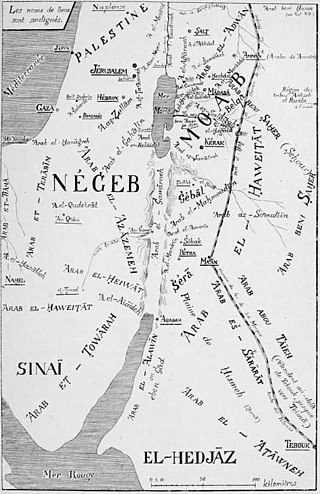
The Tirabin, were the most important Arab tribe in the Sinai Peninsula during the 19th century, and the largest inside Negev. Today this tribe resides in the Sinai Peninsula but also in Cairo, Ismailia, Giza, Al Sharqia and Suez, Israel (Negev), Jordan, Saudi Arabia and the Gaza Strip. A township named Tirabin al-Sana was built in Israel in 2004 especially for the members of al-Sana clan from Al-Tirabin tribe.

<span class="mw-page-title-main">Murjan Mosque</span> Ancient mosque in Baghdad, Iraq

Murjan Mosque is a historic mosque on al-Rashid Street located near the Shorja marketplace and the Abboud Building in Baghdad, Iraq. The walled mosque is significant for housing tombs of prominent Islamic scholars, including Nu'man al-Alusi and also for housing a madrasa. Today, it is considered an important ancient landmark in Baghdad.

Sabri Al-Haiki, also known as Sabri Abdulkarim Galeb Al-Haiki, and is a Yemeni painter, critic, and poet.

The prostration of recitation is a prostration (sujud) which occurs during the ritual Tilawa of Quran in Salah or outside it.

Khalil Ahmad Khalil is a Lebanese intellectual, researcher, translator, prolific, and academic. He was born in 1942 in Sur, South Lebanon. He has many works in the fields of sociology in religion, politics, culture and philosophy, as well as a great number of translations, including Lalande's Encyclopedia of Philosophy and the glossary of philosophical terms. He is considered one of the most prominent Arab intellectuals of the 20th century, and a leading member of the Progressive Socialist Party. He joined the Party in 1968, and retired all organizational politics work after the assassination of Party leader Kamal Jumblatt. He received a prize for his published works and translations, which enriched the Arabic library, as well as his academic achievement in the Lebanese University.

Mohammed Wajih Sobhi Fanous, was a Lebanese literary critic, academic, and researcher. He wrote about twenty books, ranging from literary criticism, cultural heritage, Islamic civilization, and contemporary themes. Some of his works have been translated into French. He held a number of cultural, intellectual, and academic positions, and was honored on several occasions.

Farhan Osman Saleh is a writer, researcher and militant from Lebanon. He was born in 1947, in the town of Kfarchouba in southern Lebanon. He is known for supporting Arab nations involved in the Israeli–Palestinian conflict. Saleh has published several books on politics, social, history and culture. He also writes fot Lebanese and Arab newspapers and magazines. He has also contributed to the establishment of a house for the dissemination of enlightening and modernist thought, a cultural magazine, and a seminar for cultural dialogue with a group of thinkers and intellectuals in Lebanon and the Arab world.

Hanna Abu-Hanna was a Palestinian writer, poet, and researcher. He was born in Reineh, Mandatory Palestine on October 16, 1928. He belongs to the first generation of Arab resistance poets in Israel. Hanna worked as Director of the Arab Orthodox College in Haifa until 1987. He was also a lecturer at the University of Haifa and at the Teacher Education College in 1973. Abu-Hanna earned a Master's degree in literature. He edited and prepared student programs in Jerusalem and Near East radio stations. He participated in the publication of the Al-Jadeed magazine in 1951, the Al-Ghad magazine in 1953, Al-Mawakib in 1984, and Al-Mawqaf in 1993.

Mohammed bin Ali bin Ibrahim Al-Shaybani Al-Bakri Al-Ahsa’i was an influential Shia Muslim scholar who adhered to the Ja'fari school of Islamic jurisprudence.

<span class="mw-page-title-main">Digital Information Center</span> Library in Iraq

Digital Information Center is an online portal for the Library of Al-Abbas Holy Shrine in Iraq. It provides a variety of digital library resources and services to scientific communities, supporting the educational system in Iraq in and aligning with the demands of the scientific renaissance.

<i>The Arch and the Butterfly</i> 2010 novel by Mohammed Achaari

The Arch and the Butterfly is a novel by Moroccan author Mohammed Achaari published in 2010. It is considered an extension of the author's first novel, South of the Spirit, because it re-enacts the clan. The novel traces the transformations of three generations of the Moroccan family of the Fersiwi family.

<span class="mw-page-title-main">Ibrahim al-Musawi al-Zanjani</span> Iranian faqih and writer

Sayyid Ibrahim al-Musawi al-Zanjani was an Iranian Ja'fari jurist and writer, best known for his works on various Islamic topics via Twelver Shia outlook, which most of them were published in the successive years of the late 1970s and early 1980s. Born in Sain Qaleh village, then part of Abhar to a well-known Musawi family. After studying in Qom, he went to Najaf and stayed there for about 31 years. He also lived in Kuwait and Syria for many years, fulfilling his Sharia and educational duties. He died at the age of 74 and buried next to the grave of his father in Radekan, Qazvin.

<span class="mw-page-title-main">Ibn Bunnieh Mosque</span> Mosque in Baghdad, Iraq

The Ibn Bunnieh Mosque, also known as the Hajj al-Bunnieh Mosque is a mosque in Baghdad located in al-Karkh district, opposite the Baghdad Central Station and near the Iraq Museum. Its unique Islamic architecture and style include its oval dome which is shaped like an egg and Arabic calligraphy of verses from the Quran on its walls made by the Iraqi master calligrapher Hashem Muhammad al-Baghdadi. The name of the mosque was attributed to Hajj Mahmoud al-Bunnieh who is buried next to the sanctuary from the western side. The mosque can hold 1,000 prayers.

<span class="mw-page-title-main">Shabandar Café</span> Café and social hub in Baghdad, Iraq

The Shabandar Café is one of the oldest and most famous coffeehouses in Baghdad, Iraq. It is located at the end of al-Mutanabbi Street near the Qushla. The café building was previously "al-Shabandar Press", which was established in 1907 and was owned by Musa al-Shabandar, who became Minister of Foreign Affairs at the time of the King Faisal II in 1941. The café is now a cultural and intellectual social hub and is considered one of the most important heritage landmarks of Baghdad where poetry, politics, culture, literature, and art are discussed and a place to increase one's knowledge about said topics.

Ḥassan Pasha was the governor of Baghdad from 1704 until his death in 1723 and the founder of the Mamluk state of Iraq. Of Georgian origin, he succeeded Vizier Ali Pasha. He was the father of Ahmad Pasha, who succeeded him as governor as well as the grandfather of Adila Khatun, the wife of Sulaiman Abu Layla who would also take the position after Ahmad Pasha.

References

  1. "مكتبة ودار المخطوطات للعتبة العباسية المقدسة". alnoor.
  2. "مكتبة ودار المخطوطات للعتبة العباسية المقدسة". alnoor.
  3. "About the library". alkafeel.
  4. "Nearly five thousand written copies classified as precious, rare and of heritage were collected in the Library". alkafeel.
  5. "وحدة ترميم المخطوطات في العتبة العباسية المقدسة". alnoor.
  6. "مكتبة العتبة العباسية المقدسة". alkafeel.
  7. "وحدة التزويد". alkafeel.
  8. "الفهرسة والتصنيف". alkafeel.
  9. "Digital information center". alkafeel.
  10. "التاليف والدراسات". alkafeel.
  11. "ترميم المخطوطات". alkafeel.
  12. "تصوير وتصنيف المخطوطات". alkafeel.
  13. "الترجمة". alkafeel.
  14. "التجليد". alkafeel.
  15. "الذاتية والخدمات". alkafeel.
  16. دور الخرائط المفاهيمية في تكوين المفاهيم الرئيسية لعمليات الفهرسة فــي المكتبات. Library of Al-Abbas Holy Shrine publications.
  17. حوث المؤتمر الدولي في المعلومات والمكتبات ج2. Library of Al-Abbas Holy Shrine publications.
  18. بحوث المؤتمر الدولي في المعلومات والمكتبات ج1. Library of Al-Abbas Holy Shrine publications.
  19. البصرة في مجلة لغة العرب. Library of Al-Abbas Holy Shrine publications.
  20. لنجف في مجلة لغة العرب. Library of Al-Abbas Holy Shrine publications.
  21. بغداد في مجلة لغة العرب (القسم الرابع). Library of Al-Abbas Holy Shrine publications.
  22. ماوصل الينا من كتاب مدينة العلم. Library of Al-Abbas Holy Shrine publications.
  23. نهج البلاغة المختار من كلام امير المؤمنين. Library of Al-Abbas Holy Shrine publications.
  24. بغداد في مجلة لغة العرب (القسم الثالث). Library of Al-Abbas Holy Shrine publications.
  25. ابو الفضل العباس في الشعر العربي. Library of Al-Abbas Holy Shrine publications.
  26. بغداد في مجلة لغة العرب (القسم الثاني). Library of Al-Abbas Holy Shrine publications.
  27. مانزل من القرآن في علي بن ابي طالب. Library of Al-Abbas Holy Shrine publications.
  28. درر المطالب وغرر المناقب. Library of Al-Abbas Holy Shrine publications.
  29. الدرر البهية في تراجم علماء الامامية الجزء الثاني. Library of Al-Abbas Holy Shrine publications.
  30. الدرر البهية في تراجم علماء الامامية الجزء الاول. Library of Al-Abbas Holy Shrine publications.
  31. شرح قصيدة محمد المجذوب (على قبر معاوية). Library of Al-Abbas Holy Shrine publications.
  32. سند الخصام. Library of Al-Abbas Holy Shrine publications.
  33. دليل الأطاريح الجامعية ج2. Library of Al-Abbas Holy Shrine publications.
  34. الأربعون حديثاً (الطبعة الثانية). Library of Al-Abbas Holy Shrine publications.
  35. رسالة في آداب المجاورة. Library of Al-Abbas Holy Shrine publications.
  36. دليل الأطاريح الجامعية ج1. Library of Al-Abbas Holy Shrine publications.
  37. منار الهدى الجزء الثاني. Library of Al-Abbas Holy Shrine publications.
  38. منار الهدى الجزء الأول. Library of Al-Abbas Holy Shrine publications.
  39. مكارم أخلاق النبي والأئمة. Library of Al-Abbas Holy Shrine publications.
  40. معارج الأفهام إلى علم الكلام. Library of Al-Abbas Holy Shrine publications.
  41. كشف الاستار. Library of Al-Abbas Holy Shrine publications.
  42. ديوان السيد سليمان الكبير. Library of Al-Abbas Holy Shrine publications.
  43. المجالس الحسينية. Library of Al-Abbas Holy Shrine publications.
  44. الصولة العلوية على القصيدة البغدادية. Library of Al-Abbas Holy Shrine publications.
  45. مجالي اللطف بارض الطف. Library of Al-Abbas Holy Shrine publications.
  46. الأربعون حديثاً. Library of Al-Abbas Holy Shrine publications.
  47. English eBooks Catalog. Library of Al-Abbas Holy Shrine publications.
  48. "Alkafeel publications » Unlisted Publications". alkafeel.
  49. AL-Abbas bin Ali (P.B.U.H.) The Staunch Advocate of Dignity and Sacrifice in Islam. Dept.of Intellectual & cultural Affairs.
  50. Backbiting & Its Enormous Effects. Dept.of Intellectual & cultural Affairs.
  51. Truthfulness Is a Survival Compass in a World in Crisis. Dept.of Intellectual & cultural Affairs.
  52. Patience Profuse Offer & Abundant Welfare. Dept.of Intellectual & cultural Affairs.
  53. A Collection Of Visits.[ permanent dead link ]
  54. (Marriage) (Sacred Contract & Delicious Fruits) Marriage Privileges. Dept.of Intellectual & cultural Affairs.
  55. (SHYNESS & INSOLENCE) Between (Intellect & Legislature). Dept.of Intellectual & cultural Affairs.
  56. Humbleness – The Head Of Goodness & The Basis Of Worshiping. Dept.of Intellectual & cultural Affairs.
  57. Pilgrims’ Principles towards the Massive Arba’een Pilgrimage. Dept.of Intellectual & cultural Affairs.
  58. The Fruits of the Arba’een Pilgrimage. Dept.of Intellectual & cultural Affairs.
  59. Modesty and Degradation Between Intellect and Sharia. Dept.of Intellectual & cultural Affairs.