
The London School of Hygiene and Tropical Medicine (LSHTM) is a public research university in Bloomsbury, central London, and a member institution of the University of London that specialises in public health and tropical medicine.

The Medical Research Council (MRC) is responsible for co-coordinating and funding medical research in the United Kingdom. It is part of United Kingdom Research and Innovation (UKRI), which came into operation 1 April 2018, and brings together the UK's seven research councils, Innovate UK and Research England. UK Research and Innovation is answerable to, although politically independent from, the Department for Business, Energy and Industrial Strategy.
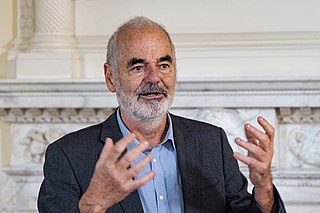
Sir David John Spiegelhalter is a British statistician and a Fellow of Churchill College, Cambridge. From 2007 to 2018 he was Winton Professor of the Public Understanding of Risk in the Statistical Laboratory at the University of Cambridge. Spiegelhalter is an ISI highly cited researcher.
Medical statistics deals with applications of statistics to medicine and the health sciences, including epidemiology, public health, forensic medicine, and clinical research. Medical statistics has been a recognized branch of statistics in the United Kingdom for more than 40 years but the term has not come into general use in North America, where the wider term 'biostatistics' is more commonly used. However, "biostatistics" more commonly connotes all applications of statistics to biology. Medical statistics is a subdiscipline of statistics. "It is the science of summarizing, collecting, presenting and interpreting data in medical practice, and using them to estimate the magnitude of associations and test hypotheses. It has a central role in medical investigations. It not only provides a way of organizing information on a wider and more formal basis than relying on the exchange of anecdotes and personal experience, but also takes into account the intrinsic variation inherent in most biological processes."
Peter George Smith CBE BSc DSc HonMFPHM FMedSci, is an eminent epidemiologist and Professor of Tropical Epidemiology at the London School of Hygiene and Tropical Medicine (LSHTM).
In medical research, a dynamic treatment regime (DTR), adaptive intervention, or adaptive treatment strategy is a set of rules for choosing effective treatments for individual patients. Historically, medical research and the practice of medicine tended to rely on an acute care model for the treatment of all medical problems, including chronic illness. Treatment choices made for a particular patient under a dynamic regime are based on that individual's characteristics and history, with the goal of optimizing his or her long-term clinical outcome. A dynamic treatment regime is analogous to a policy in the field of reinforcement learning, and analogous to a controller in control theory. While most work on dynamic treatment regimes has been done in the context of medicine, the same ideas apply to time-varying policies in other fields, such as education, marketing, and economics.

Linda P. Fried is an American geriatrician and epidemiologist, who is also the first female Dean of Columbia University's Mailman School of Public Health. Her research career is focused on frailty, healthy aging, and how society can successfully transition to benefit from an aging population.

Sheila Macdonald Bird OBE FRSE FMedSci is a Scottish biostatistician whose assessment of misuse of statistics in the British Medical Journal (BMJ) and BMJ series ‘Statistics in Question’ led to statistical guidelines for contributors to medical journals. Bird's doctoral work on non-proportional hazards in breast cancer found application in organ transplantation where beneficial matching was the basis for UK's allocation of cadaveric kidneys for a decade. Bird led the Medical Research Council (MRC) Biostatistical Initiative in support of AIDS/HIV studies in Scotland, as part of which Dr A. Graham Bird and she pioneered Willing Anonymous HIV Surveillance (WASH) studies in prisons. Her work with Cooper on UK dietary bovine spongiform encephalopathy (BSE) exposure revealed that the 1940–69 birth cohort was the most exposed and implied age-dependency in susceptibility to clinical vCJD progression from dietary BSE exposure since most vCJD cases were younger, born in 1970–89. Bird also designed the European Union's robust surveillance for transmissible spongiform encephalopathies in sheep which revolutionised the understanding of scrapie.

Vikram Harshad Patel FMedSci is an Indian psychiatrist and researcher best known for his work on child development and mental disability in low-resource settings. He is the Co-Founder and former Director of the Centre for Global Mental Health at the London School of Hygiene and Tropical Medicine (LSHTM), Co-Director of the Centre for Control of Chronic Conditions at the Public Health Foundation of India, and the Co-Founder of Sangath, an Indian NGO dedicated to research in the areas of child development, adolescent health and mental health. Since 2016 he has been Pershing Professor of Global Health and Social Medicine at the Department of Global Health and Social Medicine of Harvard Medical School in Boston. He was awarded a Wellcome Trust Principal Research Fellowship in 2015. In April 2015, he was listed as one of the world's 100 most influential people by TIME magazine.

Christl Ann Donnelly is a professor of statistical epidemiology at Imperial College London, the University of Oxford and a Fellow of St Peter's College, Oxford. She serves as associate director of the MRC Centre for Global Infectious Disease Analysis.
Ewout W. Steyerberg is Professor of Clinical Biostatistics and Medical Decision Making at Leiden University Medical Center and a Professor of Medical Decision Making at Erasmus MC. He is interested in a wide range of statistical methods for medical research, but is mainly known for his seminal work on prediction modeling, which was stimulated by various research grants including a fellowship from the Royal Netherlands Academy of Arts and Sciences (KNAW). Steyerberg is one of the most cited researchers from the Netherlands. He has published over 1000 peer-reviewed articles according to PubMed, many in collaboration with clinical researchers, both in methodological and medical journals. His h-index exceeds 150 according to Google Scholar.
Elad I. Levy is an American neurosurgeon, researcher, and innovator who played a major role in the development and testing of thrombectomy, which improved quality of life and survival of stroke patients. He has focused his career and research on developing evidence based medicine and literature showing the benefits of thrombectomy for the treatment of stroke. He is currently Professor of Neurosurgery and Radiology, and the L. Nelson Hopkins, MD Professor Endowed Chair of the Department of Neurosurgery at the State University of New York at Buffalo (SUNY).
Susan S. Ellenberg is an American statistician specializing in the design of clinical trials and in the safety of medical products. She is a professor of biostatistics, medical ethics and health policy in the Perelman School of Medicine at the University of Pennsylvania. She was the 1993 president of the Society for Clinical Trials and the 1999 President of the Eastern North American Region of the International Biometric Society.

Charlotte Helen Watts, is a British mathematician, epidemiologist, and academic. Since 2006, she has been Professor of Social and Mathematical Epidemiology at the London School of Hygiene and Tropical Medicine. She was also the Chief Scientific Advisor to the UK's Department for International Development from 2015 to 2020. Her research interests include HIV and gender-based violence.
Rosalind Raine is a British applied health research scientist, public medicine doctor, professor of health care evaluation and the founding head of the Department of Applied Health Research at University College London (UCL).
Hazel Marguerite Dockrell is an Irish-born microbiologist and immunologist whose research has focused on immunity to the human mycobacterial diseases, leprosy and tuberculosis. She has spent most of her career at the London School of Hygiene and Tropical Medicine, where as of 2020 she is a professor of immunology. She was the first female president of the Royal Society of Tropical Medicine and Hygiene. Jimmy Whitworth of the Wellcome Trust describes her as "a marvellous ambassador for global health and research."
Scarlett Bellamy is an American public health researcher who is a Professor of the Department of Epidemiology and Biostatistics at Drexel University. At Drexel she is Associate Dean of Diversity, Inclusion and Faculty Development.
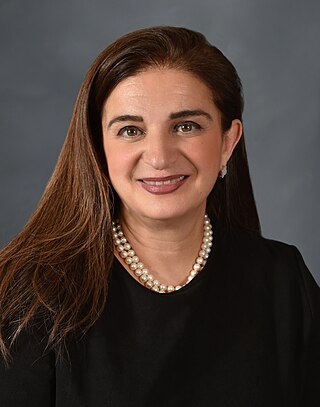
Roxana Mehran is an Iranian-American cardiologist and Mount Sinai Endowed Professor of Medicine at the Icahn School of Medicine at Mount Sinai. She is known for her work in interventional cardiology.
Emelda Aluoch Okiro is a Kenyan public health researcher who is lead of the Population Health Unit at the Kenya Medical Research Institute–Wellcome Trust program in Kenya. She looks to understand the determinants of health transitions and to evaluate access to health information. She is a Fellow of the African Academy of Sciences.
Cathy Lynn Zimmerman is a social scientist and professor at the London School of Hygiene and Tropical Medicine (LSHTM). She founded the LSHTM Gender Violence & Health Centre. Her research investigates migration, violence and health.

