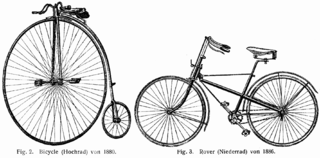
In business theory, disruptive innovation is innovation that creates a new market and value network or enters at the bottom of an existing market and eventually displaces established market-leading firms, products, and alliances. The term, "disruptive innovation" was popularized by the American academic Clayton Christensen and his collaborators beginning in 1995, but the concept had been previously described in Richard N. Foster's book "Innovation: The Attacker's Advantage" and in the paper Strategic Responses to Technological Threats.

Innovation is the practical implementation of ideas that result in the introduction of new goods or services or improvement in offering goods or services. ISO TC 279 in the standard ISO 56000:2020 defines innovation as "a new or changed entity, realizing or redistributing value". Others have different definitions; a common element in the definitions is a focus on newness, improvement, and spread of ideas or technologies.
Bryan Douglas Caplan is an American economist and author. Caplan is a professor of economics at George Mason University, research fellow at the Mercatus Center, adjunct scholar at the Cato Institute, and former contributor to the Freakonomics blog and EconLog. He currently publishes his own blog, Bet on It. Caplan is a self-described "economic libertarian". The bulk of Caplan's academic work is in behavioral economics and public economics, especially public choice theory.

Robert Wright is an American author and journalist known for his wide-ranging interests in philosophy, society, science, history, politics, international relations, and religion. He has published five books: Three Scientists and Their Gods: Looking for Meaning in an Age of Information (1988), The Moral Animal (1994), Nonzero: The Logic of Human Destiny (1999), The Evolution of God (2009), and Why Buddhism is True (2017). Wright has taught at Princeton University and the University of Pennsylvania; more recently, in 2019 he was Visiting Professor of Science and Religion at Union Theological Seminary, New York. In addition to teaching, lecturing, books, and journalism, Wright has been an innovator in the development of content on the Internet. He is the co-founder and editor-in-chief of Bloggingheads.tv, the founder and editor-in-chief of Meaningoflife.tv, the founder and chief correspondent of the Nonzero Newsletter and Nonzero Podcast, and the creator of the Nonzero Foundation. His running commentary on current events can also be followed weekly on Patreon in his ongoing dialogue with fellow commentator Mickey Kaus.

Steven Berlin Johnson is an American popular science author and media theorist.
Ivor Catt is a British electronics engineer known principally for his alternative theories of electromagnetism. He received a B.A. degree from Cambridge University, and has won the Electronic Design magazine's "best product of the year" award on 26 October 1989, after £16 million funding.
Susan Mallery is an American author of popular romance novels set in non-urban, close-knit communities. Because of her love for animals, pets play a significant role in her books.
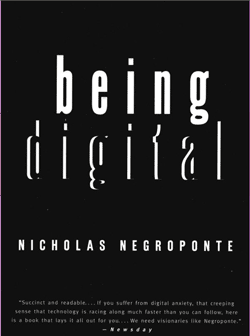
Being Digital is a non-fiction book about digital technologies and their possible future by technology author, Nicholas Negroponte. It was originally published in January 1995 by Alfred A. Knopf.

Broca's Brain: Reflections on the Romance of Science is a 1979 book by the astrophysicist Carl Sagan. Its chapters were originally articles published between 1974 and 1979 in various magazines, including The Atlantic Monthly, The New Republic, Physics Today, Playboy, and Scientific American. In the introduction, Sagan wrote:
As long as there have been human beings, we have posed the deep and fundamental questions. ... If we do not destroy ourselves, most of us will be around for the answers. ... By far the most exciting, satisfying and exhilarating time to be alive is the time in which we pass from ignorance to knowledge on these fundamental issues.
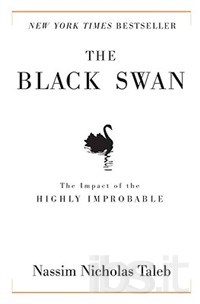
The Black Swan: The Impact of the Highly Improbable is a 2007 book by Nassim Nicholas Taleb, who is a former options trader. The book focuses on the extreme impact of rare and unpredictable outlier events—and the human tendency to find simplistic explanations for these events, retrospectively. Taleb calls this the Black Swan theory.

David Meerman Scott is an American online marketing strategist and author of several books on marketing, including The New Rules of Marketing and PR.
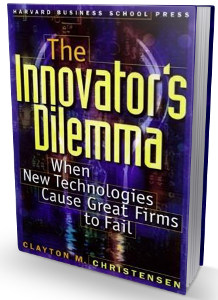
The Innovator's Dilemma: When New Technologies Cause Great Firms to Fail, first published in 1997, is the best-known work of the Harvard professor and businessman Clayton Christensen. It expands on the concept of disruptive technologies, a term he coined in a 1995 article "Disruptive Technologies: Catching the Wave". It describes how large incumbent companies lose market share by listening to their customers and providing what appears to be the highest-value products, but new companies that serve low-value customers with poorly developed technology can improve that technology incrementally until it is good enough to quickly take market share from established business. Christensen recommends that large companies maintain small, nimble divisions that attempt to replicate this phenomenon internally to avoid being blindsided and overtaken by startup competitors.
Logology is the study of all things related to science and its practitioners—philosophical, biological, psychological, societal, historical, political, institutional, financial. The term "logology" is back-formed from the suffix "-logy", as in "geology", "anthropology", etc., in the sense of the "study of science". The word "logology" provides grammatical variants not available with the earlier terms "science of science" and "sociology of science", such as "logologist", "logologize", "logological", and "logologically". The emerging field of metascience is a subfield of logology.

Open Data Now is a 2014 book on open data by Joel Gurin.
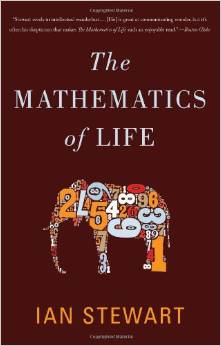
The Mathematics of Life is a 2011 popular science book by mathematician Ian Stewart, on the increasing role of mathematics in biology.

Kwame Alexander is American poet, educator, publisher, Emmy® Award-winning producer, and #1 New York Times bestselling author of 40 books, including poetry, memoir, and children's fiction. His mission is to change the world, one word at a time.

Feathers: The Evolution of a Natural Miracle is a natural history book by American conservation biologist Thor Hanson. Published by Basic Books in 2011 and written for general audiences, the book discusses the significance of feathers, their evolution, and their history both in nature and in use by humans.

I Used to be a Fish is a book written by Tom Sullivan for ages 4–8. A boy imagines his pet fish tells him the story of evolution.

Stamped from the Beginning: The Definitive History of Racist Ideas in America is a non-fiction book about race in the United States by the American historian Ibram X. Kendi, published April 12, 2016 by Bold Type Books, an imprint of PublicAffairs. The book won the National Book Award for Nonfiction.

How to Avoid a Climate Disaster: The Solutions We Have and the Breakthroughs We Need is a 2021 book by Bill Gates. In it, Gates presents what he learned in over a decade of studying climate change and investing in innovations to address global warming and recommends technological strategies to tackle it.


