
The Royal Philatelic Society London (RPSL) is the oldest philatelic society in the world. It was founded on 10 April 1869 as The Philatelic Society, London. The society runs a postal museum, the Spear Museum of Philatelic History, at its headquarters in the City of London.

Sir Edward Denny Bacon was a British philatelist who helped with the enlargement and mounting of collections possessed by rich collectors of his time and became the curator of the Royal Philatelic Collection between 1913 and 1938.

Walter Morley (1863–1936) was a pioneering English philatelist, stamp dealer and philatelic author.

Frederick John Melville was a British philatelist, prolific philatelic author and founder of The Junior Philatelic Society. He was also a founder in 1907 of the Philatelic Literature Society. Melville is a member of the American Philatelic Society's Hall of Fame and was a signatory to The Roll of Distinguished Philatelists in 1921.

The Roll of Distinguished Philatelists (RDP) is a philatelic award of international scale, created by the Philatelic Congress of Great Britain in 1921. The Roll consists of five pieces of parchment to which the signatories add their names.
Charlotte Waylen Tebay was a British philatelist. She was one of the first women philatelists and helped to organise the first stamp exhibitions in London.

The International Philatelic Union, formed 1881, was an early international philatelic organisation formed for the study of stamps and the promotion of philately generally. Its office was located in London. The society survived to see its jubilee in 1931, and an exhibition was held to celebrate the fact, but its later history is unclear.
Gilbert "Gillie" Harrison was an English philatelist, and rugby union footballer who played in the 1870s and 1880s. He was one of the "Fathers of Philately" entered on the Roll of Distinguished Philatelists in 1921.

The Crawford Library is a library of early books about philately formed between 1898 and 1913 by James Lindsay, 26th Earl of Crawford. By the time of his death in 1913, Crawford was thought to have amassed the greatest philatelic library of his time. Today, the library is part of the British Library Philatelic Collections.
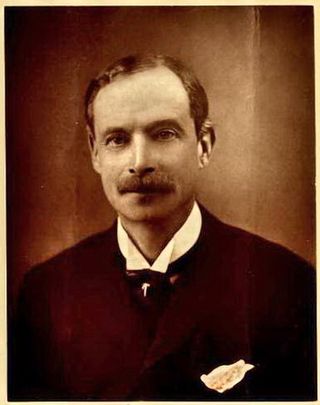
Marcellus Purnell Castle, known as M.P. Castle, was a British philatelist who was President of the Royal Philatelic Society London from 1913 to 1917, the first editor of The London Philatelist from 1892–1917 and whose name was entered on the Roll of Distinguished Philatelists as one of the "Fathers of philately". He was also awarded with the Lindenberg Medal in 1909.
Douglas Garth was a British philatelist who was one of the "Fathers of Philately" entered on the Roll of Distinguished Philatelists in 1921. He was an expert on the stamps of India and British Guiana and a Solicitor in the firm of Pemberton & Garth. Garth was the second son of Sir Richard Garth (1820–1903), a former Chief-Justice of Bengal.
The Philatelic Society of India (PSI) was formed in 1897 by a group of, mainly, expatriate Englishmen resident in the country as the first all-India philatelic society. During its first fifty years the society included most of the important Anglo-Indian philatelists and had a particularly strong publications record with two award-winning books. The society meets every first and third Saturday at the Mumbai G.P.O., convened by Dhirubhai Mehta, President, and D.M. Pittie, Hon. Secretary.
Theodor August Buhl was a British stamp dealer in London who published Stamp News, which he also edited until 1895.

Gordon Smith was a British barrister and philatelist who was one of the Fathers of Philately named on the Roll of Distinguished Philatelists in 1921.

Hedwige Alma Lee FRPSL RDP was a Swiss-born naturalised British philatelist who specialised in the stamps of Switzerland and in topical collecting. She won large gold medals for her displays at Naba 1984, Stockholmia 1986, Hafnia 1987 and Finlandia 1988 and her collection was exhibited in the Court of Honour at PhilexFrance 1989 and New Zealand 1990. She signed the Roll of Distinguished Philatelists in 1991 and later became the only non-resident member of the Consilium Philateliae Helveticae. The Royal Philatelic Society London award the Lee Medal in memory of Alma and her husband Ron.
William Reeve Rundell, sometimes Reeves, was an Australian postal officer.
Raymond James George Collins was a New Zealand philatelist who was added to the Roll of Distinguished Philatelists in 1936 and was the youngest man to receive that honour. Collins was unable to attend the signing ceremony in person.

William Thorne was a wealthy American businessman and philatelist. In poor health, he retired early from the leather trade and began to collect postage stamps. He was one of the founders of the Philatelic Society of New York and the second president of the Collectors Club of New York. He was the owner of the unique block of four of the 1869 24¢ United States stamps with inverted center. He sold his collection but restarted in order to provide a distraction from his poor health. He died in 1907 after three operations for what was thought to be throat cancer.
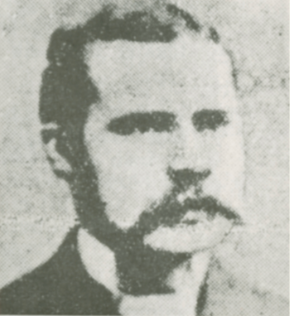
Thomas Ridpath was a Liverpool stamp dealer who handled some of the greatest rarities in philately such as the British Guiana 1c magenta of 1856 and the block of four of the 1869 24c United States stamps with inverted centre. He gave philatelic lantern displays at which the differences between genuine and forged stamps were shown enlarged on a screen and supplied the philatelic press with reports of new finds that they reported in their columns.

Adolf Passer FRPSL was an Austrian philatelist and authority on the stamps of Austria, Bosnia and Herzegovina and the Ottoman Empire and Turkey.

