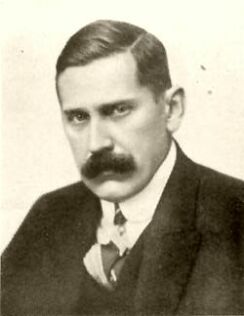
Othenio Lothar Franz Anton Louis Abel was an Austrian paleontologist and evolutionary biologist. Together with Louis Dollo, he was the founder of "paleobiology" and studied the life and environment of fossilized organisms.
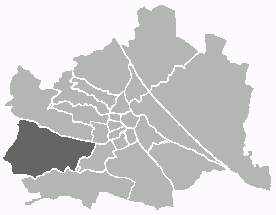
Hietzing is the 13th municipal District of Vienna. It is located west of the central districts, west of Meidling. Hietzing is a heavily populated urban area with many residential buildings, but also contains large areas of the Vienna Woods, along with Schönbrunn Palace.

The Burgtheater, originally known as K.K. Theater an der Burg, then until 1918 as the K.K. Hofburgtheater, is the national theater of Austria in Vienna. It is the most important German-language theater and one of the most important theatres in the world. The Burgtheater was opened in 1741 and has become known as "die Burg" by the Viennese population; its theater company has created a traditional style and speech typical of Burgtheater performances.
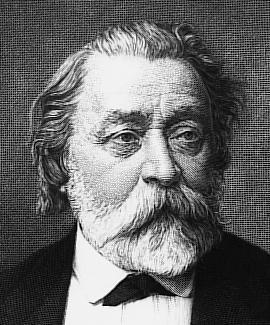
Baron Theophil Edvard von Hansen was a Danish architect who later became an Austrian citizen. He became particularly well known for his buildings and structures in Athens and Vienna, and is considered an outstanding representative of Neoclassicism and Historicism.
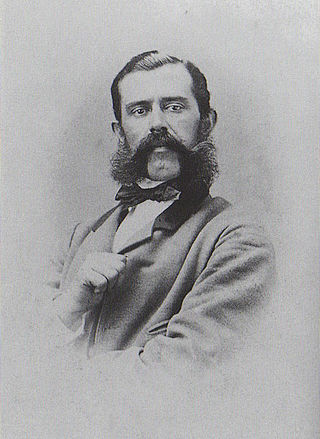
Felix Philipp Kanitz was an Austro-Hungarian naturalist, geographer, ethnographer, archaeologist, painter and author of travel notes, of Jewish heritage.

Ingo Zechner is a philosopher and historian. He is the Director of the Ludwig Boltzmann Institute for Digital History (LBIDH) in Vienna.

Josef Frank was an Austrian-born architect, artist, and designer who adopted Swedish citizenship in the latter half of his life. Together with Oskar Strnad, he created the Vienna School of Architecture, and its concept of Modern houses, housing and interiors.
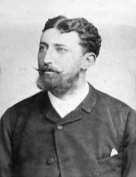
Johann Evangelist Hattey (1859–1904) was an Austrian architect born in Vienna. His father, born in Klášter, Pilsnerkreis, Bohemia, was called Josef (1818–1879) and owned some land and building plots in the city. His mother's name was Anna Maria Borik, born in Žinkovy in 1815 and buried at the Vienna Central Cemetery on 16 January 1894. Most of the buildings Hattey built were, and still are, in the 18th area of the Austrian capital called 18.Wiener Gemeindebezirk or achtzehnter Bezirk. According to University site, this is the list of buildings built in Vienna under his direction:

Erwin Puchinger was a Viennese painter, illustrator, industrial designer and graphic artist. He was an influential figure in Viennese art in the fin-de-siecle. Puchinger was a part of the Austrian Jugendstil and Gesamtkunstwerk movements, which sought to erase the boundaries between fine art and applied art. Puchinger worked in London, Prague and Paris as well as Vienna and collaborated with other major figures in Viennese art and design such as Ernst and Gustav Klimt and Otto Prutscher. He was a respected art professor at the Graphic Arts Institute, where he taught for more than thirty years. His work was also part of the painting event in the art competition at the 1936 Summer Olympics.

The Vienna Museum is a group of museums in Vienna consisting of the museums of the history of the city. In addition to the main building in Karlsplatz, the group includes some locations, numerous specialised museums, musicians' residences and archaeological excavations.
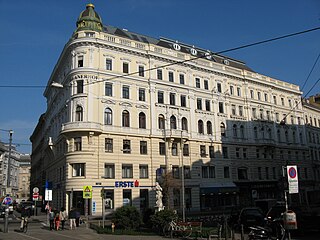
Carl Holzmann was an Austrian architect who designed several apartment buildings in the centre of Vienna, mostly in the Historicist style. They include the Paulanerhof (1894) and the Habig-Hof (1896).
Gustav Adolf Franz Xavier Gugitz was an Austrian architect.
Ernst Schwadron (1896–1979) was an Austrian architect and interior designer.
Maria Auböck is an Austrian landscape architect and educator. In 1985, she opened her own firm where, since 1987, she has been working together with János Kárász.

Dr. Emil Mayer was an Austrian photographer, lawyer, inventor, and businessperson.

Ignaz (Franz) von Mosel was an Austrian court official, composer and music writer.

Georg Decker was an Austro-Hungarian portrait artist.

Richard Gach was an Austrian architect, sketch artist, and watercolorist. He mainly designed schools for the city of Vienna and was involved in the construction of some residential buildings.

Klimt Villa is a building located in the Hietzing district of Vienna built in the early 1920s upon the last Viennese studio of the painter Gustav Klimt.


