Related Research Articles
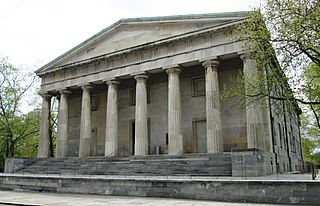
The Second Bank of the United States, located in Philadelphia, Pennsylvania, was the second federally authorized Hamiltonian national bank in the United States during its 20-year charter from February 1816 to January 1836. The bank's formal name, according to section 9 of its charter as passed by Congress, was "The President, Directors, and Company, of the Bank of the United States".
The Federal Reserve Act was passed by the 63rd United States Congress and signed into law by President Woodrow Wilson on December 23, 1913. The law created the Federal Reserve System, the central banking system of the United States.

Canton is the largest city in Fulton County, Illinois, United States. The population was 14,704 at the 2010 census, down from 15,288 as of the 2000 census. The Canton Micropolitan Statistical Area covers all of Fulton County; it is in turn part of the wider Peoria-Canton, IL Combined Statistical Area (CSA).

Peoria is the county seat of Peoria County, Illinois, and the largest city on the Illinois River. As of the 2010 census, the city had a population of 115,007. It is the principal city of the Peoria Metropolitan Area in Central Illinois, consisting of the counties of Marshall, Peoria, Stark, Tazewell, and Woodford, which had a population of 373,590 in 2011.

Banking in the United States began in the late 1790s along with the country's founding and has developed into highly influential and complex system of banking and financial services. Anchored by New York City and Wall Street, it is centered on various financial services namely private banking, asset management, and deposit security.
A banking license is a legal prerequisite for a financial institution that wants to carry on a banking business. Under the laws of most jurisdictions, a business is not permitted to carry words like a bank, insurance, national in their name, unless it holds a corresponding license. Depending to their banking regulations, jurisdictions may offer different types of banking licenses, such as

The Canadian Imperial Bank of Commerce, is one of the "Big Five" banks in Canada. The bank is headquartered at Commerce Court in Toronto, Ontario. CIBC's Institution Number is 010, and its SWIFT code is CIBCCATT. It is also one of the two major banks originally founded in Toronto alongside Toronto-Dominion Bank.

Raymond H. LaHood is an American politician who served as the 16th United States Secretary of Transportation from 2009 to 2013 under President Barack Obama. A member of the Republican Party, he previously served in the Illinois House of Representatives (1982–1983) and United States House of Representatives (1995–2009).
Citizens Financial Group, Inc. is an American bank headquartered in Providence, Rhode Island, which operates in the states of Connecticut, Delaware, Maine, Massachusetts, Michigan, New Hampshire, New Jersey, New York, Ohio, South Carolina, Pennsylvania, Rhode Island and Vermont.
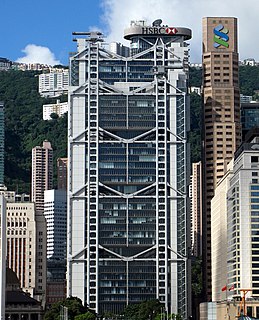
HSBC, officially known as The Hongkong and Shanghai Banking Corporation Limited, is a wholly owned subsidiary of HSBC, the largest bank in Hong Kong, and operates branches and offices throughout the Indo-Pacific region, and in other countries around the world. It is also one of the three commercial banks licensed by the Hong Kong Monetary Authority to issue banknotes for the Hong Kong dollar.

Lydia Moss Bradley was a wealthy bank president and philanthropist notable for her philanthropic works. She founded Bradley Polytechnic Institute in Peoria, Illinois, in 1897.

Louis Thomas McFadden was a Republican member of the United States House of Representatives from Pennsylvania, serving from 1915 to 1935. A banker by trade, he was the chief sponsor of the 1927 McFadden Act, which rechartered the Federal Reserve System in perpetuity, liberalized branch banking for national banks and increased competition between member and non-member banks. He later became an opponent of the Federal Reserve System and Anti-Semitic conspiracy theorist.
First Busey Corporation is a financial holding company headquartered in Champaign, Illinois.
Butterfield, officially The Bank of N. T. Butterfield & Son Limited, is a bank founded and based in Bermuda. It provides services to clients from Bermuda, the Cayman Islands, Guernsey and Jersey, where its principal banking operations are located, and The Bahamas, Switzerland, Singapore and the United Kingdom, where it offers specialized financial services. Banking services comprise deposit, cash management and lending solutions for individual, business and institutional clients. Wealth management services are composed of trust, private banking, asset management and custody. In Bermuda, the Cayman Islands and Guernsey, Butterfield offers both banking and wealth management. In The Bahamas, Singapore and Switzerland, Butterfield offers select wealth management services. In the UK, Butterfield offers residential property lending. In Jersey, it offers select banking and wealth management services. Butterfield is publicly traded on the New York Stock Exchange and the Bermuda Stock Exchange .]</ref>
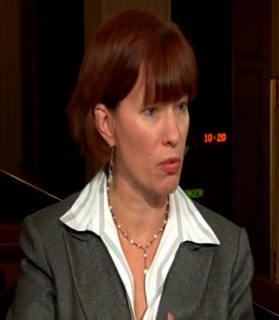
Heather Adeline Steans is a Democratic member of the Illinois Senate, representing the 7th district. She was appointed after winning a special primary election that followed the mid-term resignation of her predecessor, Senator Carol Ronen.
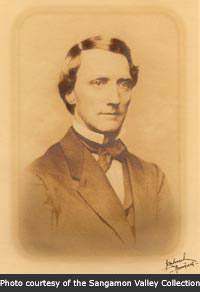
John Whitfield Bunn was an American corporate leader, financier, industrialist, and personal friend of Abraham Lincoln, whose work and leadership involved a broad range of institutions ranging from Midwestern railroads, international finance, and Republican Party politics, to corporate consultation, globally significant manufacturing, and the various American stock exchanges. He was of great historical importance in the commercial, civic, political, and industrial development and growth of the state of Illinois and the American Midwest, during both the nineteenth century and the twentieth century. John Whitfield Bunn was born June 21, 1831, in Hunterdon County, New Jersey. Although every one of the business institutions co-founded or built by the Bunn Brothers has ceased to exist, and fallen purely into the realm of history, each of these businesses left an important legacy of honorable industrial, commercial, and civic vision for Illinois, the Midwest, and the United States.

National Weather Service Lincoln, Illinois also known as National Weather Service Central Illinois is a weather forecast office responsible for monitoring weather conditions for 35 counties in Central and Southeastern Illinois. The Central Illinois office initially consisted of two forecast offices in Peoria and Springfield until the current location in Lincoln became the sole local forecast office in 1995. Federal meteorology offices and stations in the region date back to the 19th century when the Army Signal Service began taking weather observations using weather equipment at the Springer Building in Springfield. Since that time the presence of the National Weather Service greatly increased with the installation of new weather radars, stations and forecast offices. The current office in Lincoln maintains a WSR-88D (NEXRAD) radar system, and Advanced Weather Interactive Processing System (AWIPS) that greatly improve forecasting in the region. Lincoln is in charge of weather forecasts, warnings and local statements as well as aviation weather.
The Peoria and Rock Island Railroad was a railroad of 91-mile (146 km) in length, located in the U.S. state of Illinois. It provided service between the two cities listed in its corporate name. Chartered on March 7, 1867, it was built between 1867 and 1871 and first provided passenger service between these two cities on July 8, 1871. The railroad is best known for being the right-of-way for the 26-mile (42 km) Rock Island Trail State Park, a rail trail conversion.

A bank examiner is a financial professional who has the task of making sure that banks and savings and loan associations are operating legally and safely, in accordance with the bank regulations imposed on these institutions by the chartering level of government. In the United States, they may conduct supervision on behalf of a U.S. government agency, the Federal Reserve System, a state banking authority, or for the financial institutions themselves as internal auditors. The main duties of a bank examiner are to ensure that a bank's operations are legal and can provide financial stability. A bank examiner will also review financial statements, evaluate the level of risk associated with loans, and assess the management of a bank.
Harriet-Ann Omobolanle (Bola) Adesola is an accountant in Nigeria. She is the Senior Vice-Chairman at Standard Chartered Bank Group where she was previously the CEO of Standard Chartered Bank for Nigeria and West Africa. Adesola has over 25 years of experience in the banking sector.
References
- 1 2 3 "Louisa McCall". alliancelibrarysystem.com. Parlin-Ingersoll Library, Canton, Illinois. September 24, 1999. Retrieved April 16, 2019.