Related Research Articles
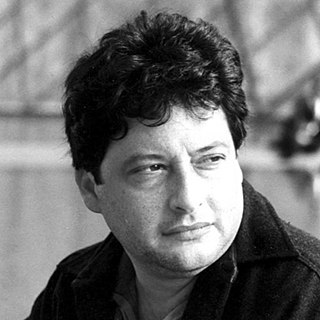
Andrés Mignucci Giannoni FAIA was a Puerto Rican architect and urbanist of Corsican ancestry. His work received recognition for its integration of the disciplines of architecture, urban design and landscape architecture in the creation of public spaces with a sense of place, human scale, and environmental responsibility. In 2005 Andrés Mignucci was elected to the College of Fellows of the American Institute of Architects. In 2012, he was awarded the Henry Klumb Award by the Puerto Rico College of Architects. In 2019, Mignucci received the Distinguished Professor Award by the Association of Collegiate Schools of Architecture, and was named Arts and Literary Arts Scholar in Residence at the Rockefeller Foundation's Bellagio Center in Bellagio, Italy.
Joaquín del Palacio (Kindel) was a Spanish photographer who was born in Madrid in 1905 and died in Madrid in 1989. He changed his name to Kindel to adapt to the foreign names that were starting to work in Spain and so look modern too: KIN came from Joaquín and DEL was for the beginning of his last name. For him, taking pictures was "just a matter of look and shoot when he saw something he liked. And light, rather than technique".

Paseo de la Castellana, commonly known as La Castellana, is a major thoroughfare in Madrid, Spain. Cutting across the city from south to north, it has been described as the "true structuring axis" of the city.
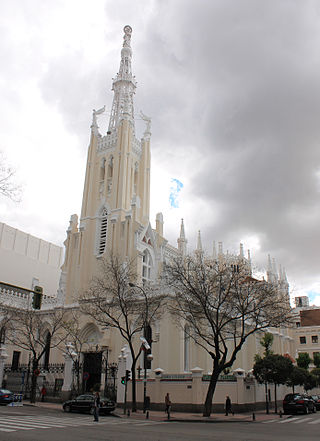
The Church of the Conception is a Neogothic Catholic church in Madrid, Spain.
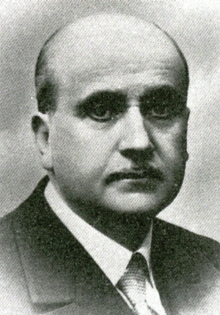
Modesto López Otero was a Spanish architect. He taught for many years in the Superior Technical School of Architecture of Madrid. He directed construction of the Madrid University City, much of which was damaged during the Spanish Civil War (1936–39). He designed many houses, office buildings, monuments and churches. The Arco de la Victoria (1956) celebrates the victory of the Nationalist forces led by General Francisco Franco over the Republicans.
Guillermo Bermúdez Umaña was a Colombian architect and professor of the National University of Colombia. His works are mainly private homes and public buildings, mostly in Bogota.

Carmen Espegel Alonso, is a Doctor of Architecture at the Escuela Técnica Superior de Arquitectura de Madrid (Spain), where she teaches Architectural Project classes representing the Espegel Teaching Unit. She has been working at her own studio since 1985 and in 2003 she founded the firm espegel-fisac arquitectos. Her reference work, "Heroines of Space. Women Architects in the Modern Movement", is a theoretical and historical synthesis of the role of women in Architecture.

José Antonio Sosa Diaz-Saavedra is a Spanish architect, university professor and researcher. He is a member of the Royal Canarian Academy of Fine Arts of St. Michael Archángel.
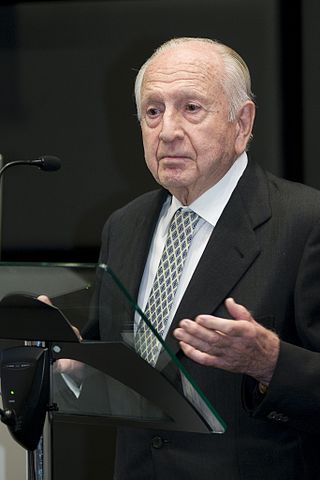
Antonio Lamela Martínez was a Spanish architect.

Luis Lacasa Navarro was a Spanish architect. His work in Spain and Paris before and during the Spanish Civil War (1936–39) was rationalist and functional. He is best known as co-designer of the Spanish Pavilion at the 1937 Paris Exposition, a work designed to showcase the modern legitimacy of the embattled Spanish Republic. After the war he went into exile in the Soviet Union.

The Casa Sindical is a building in Madrid, Spain. It currently hosts the headquarters of the Ministry of Health of Spain.

The Calle Mayor is a centric street in Madrid, Spain. Located in the Centro District, the Calle Mayor starts in the Puerta del Sol and ends at the cuesta de la Vega.

The Valencia Tower is a residential building in Madrid, Spain. It is the most known as well as most controversial project by Javier Carvajal.
The Spanish Architecture Award is a prize which has been given biannually by the Consejo Superior de los Colegios de Arquitectos de España (CSCAE) since 1993.

Carmen Córdova (1929–2011) was an Argentine architect who was part of the Modern Architecture Organization (OAM). In 1994 she became the first woman dean of the Faculty of Architecture, Design, and Urban Planning at the University of Buenos Aires. In 2004, she received a Lifetime Achievement Award from the Fondo Nacional de las Artes.

José López Sallaberry was a Spanish architect and urbanist who worked in the Neoplateresca style.

The calle de Serrano, or simply Serrano, is a street in Madrid, Spain. It is noted as location for luxury flagship stores.

The Hospital Universitario de la Princesa is a hospital located in the Lista neighborhood in Madrid, Spain, part of the hospital network of the Servicio Madrileño de Salud (SERMAS).

Manuel de las Casas was a Spanish architect.

Hanequin de Cuéllar was a Spanish architect and sculptor who worked in Castile. In the documentation, he is named only as Hanequin and modern historians have given him the last name of Cuéllar because he lived and worked in the area of influence of Cuéllar (Segovia), and possibly to differentiate him from his father, Hannequin de Bruxelles, also an architect.
References
- ↑ "Luis Laorga". Arantzazu.org. 2014-02-22. Archived from the original on 2015-11-19. Retrieved 2015-11-19.
- ↑ "Concurso de anteproyectos para la nueva Basílica de Ntra. Sra. de Aranzazu, Patrona de Guipozcoa". Revista Nacional de Arquitectura (107): 467. 1950. ISSN 0211-3376 . Retrieved 2018-12-08.
- ↑ Oiza, Francísco Sáenz; Gutiérrez, Luis Laorga (1949). "Concurso de ideas para la construcción de una Basílica hispano-americana a nuestra Señora de la Merced en la prolongación de la Castellana". Revista Nacional de Arquitectura (92): 349. ISSN 0211-3376 . Retrieved 2018-12-08.
- ↑ Oiza, Francísco Sáenz; Gutiérrez, Luis Laorga (1947). "Concurso Nacional de Arquitectura. Proyecto de plaza de acceso al acueducto de Segovia: Primer premio". Revista Nacional de Arquitectura (61): 5. ISSN 0211-3376 . Retrieved 2018-12-08.
- ↑ REVISTA NACIONAL DE ARQUITECTURA 114. junio 1951. pg. 20. Una parroquia modesta en el suburbio madrileño. Parroquia de Ntra. Sra. del Rosario en la carretera de Extremadura
- ↑ FERNÁNDEZ-GALIANO, Luis. ISASI, Justo y LOPERA, Antonio. “La quimera moderna. Los poblados dirigidos de Madrid en la arquitectura de los 50” Hermann Blume. Madrid. 1989.
- ↑ "Urbanización de "El Encinar de los Reyes, S.A.": Luis Laorga, José López Zanón, arquitectos". Arquitectura: Revista del Colegio Oficial de Arquitectos de Madrid ( COAM ) (9): 31–40. 1959. ISSN 0004-2706 . Retrieved 2018-12-08.
- ↑ LÓPEZ LUCIO, RAMÓN “La Colonia del General Moscardó” en “Un siglo de Vivienda Social 1903-2003” Tomo I. Carlos Sambricio Ed. Editorial Nerea. Madrid 2003.
- ↑ ARQUITECTURA nº34 octubre 1961. pg. 31-33. “Edificio para viviendas en Madrid en la calle Concha Espina con Rodríguez Marín”
- ↑ Gutiérrez, Luis Laorga (1958). "Colegio de Nuestra Señora del Recuerdo en Chamartín de la Rosa". Revista Nacional de Arquitectura (203): 32. ISSN 0211-3376 . Retrieved 2018-12-08.
- ↑ "Concurso de proyectos para la Universidad Laboral de La Coruña". Arquitectura: Revista del Colegio Oficial de Arquitectos de Madrid ( COAM ) (31): 19–36. 1961. ISSN 0004-2706 . Retrieved 2018-12-08.
- ↑ "Concurso para la Universidad laboral de Madrid: primer premio, Luis Laorga, José López Zanón". Arquitectura: Revista del Colegio Oficial de Arquitectos de Madrid ( COAM ) (42): 2–5. 1962. ISSN 0004-2706 . Retrieved 2018-12-08.
- ↑ "Universidad Laboral de Huesca (España): J. Laorga y J. López Zanón, Dres. arquitectos". Informes de la Construcción. 23 (227): 33–44. 1971. ISSN 0020-0883 . Retrieved 2018-12-08.
- ↑ "Escuela Técnica Superior de Ingenieros de Caminos, Canales y Puertos, en Madrid, España: L. Laorga y J. López Zanón, arquitectos". Informes de la Construcción. 22 (210): 35–46. 1969. doi: 10.3989/ic.1969.v22.i210.3718 . ISSN 0020-0883 . Retrieved 2018-12-08.
- ↑ LAMET, Pedro Miguel. “José María de Llanos. Azul y rojo” Editorial La Esfera de los Libros. Madrid. 2013.
- ↑ Arenas, Enrique (2015). Luis Laorga, arquitecto PHD (phd). E.T.S. Arquitectura (UPM). Archivo Digital UPM.
| International | |
|---|---|
| National | |
| Artists | |
