Related Research Articles

The Balkans, also known as the Balkan Peninsula, is a geographic area in southeastern Europe with various geographical and historical definitions. The region takes its name from the Balkan Mountains that stretch throughout the whole of Bulgaria. The Balkan Peninsula is bordered by the Adriatic Sea in the northwest, the Ionian Sea in the southwest, the Aegean Sea in the south, the Turkish Straits in the east, and the Black Sea in the northeast. The northern border of the peninsula is variously defined. The highest point of the Balkans is Mount Musala, 2,925 metres (9,596 ft), in the Rila mountain range, Bulgaria.

Piatra Neamț is the capital city of Neamț County, in the historical region of Western Moldavia, in northeastern Romania. Because of its privileged location in the Eastern Carpathian mountains, it is considered one of the most picturesque cities in Romania. The Nord-Est Regional Development Agency is located in Piatra Neamț.

The open-mid central unrounded vowel, or low-mid central unrounded vowel, is a type of vowel sound, used in some spoken languages. The symbol in the International Phonetic Alphabet that represents this sound is ⟨ɜ⟩. The IPA symbol is not the digit ⟨3⟩ or the Cyrillic small letter Ze (з). The symbol is instead a reversed Latinized variant of the lowercase epsilon, ɛ. The value was specified only in 1993; until then, it had been transcribed ⟨ɛ̈⟩.

The New Generation Party – Christian Democratic was a nationalist political party in Romania.

Maria Tănase was a Romanian singer and actress. Her music ranged from traditional Romanian music to romance, tango, chanson and operetta.

Andrei Gabriel Pleșu is a Romanian philosopher, essayist, journalist, literary and art critic. He has been intermittently involved in politics, having been appointed Minister of Culture (1989–91), Minister of Foreign Affairs (1997–99) and presidential counsellor for external affairs (2004–05).
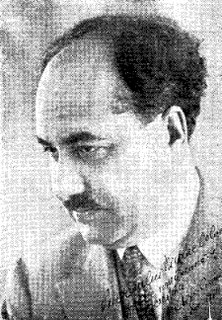
Nichifor Crainic was a Romanian writer, editor, philosopher, poet and theologian famed for his traditionalist activities. Crainic was also a professor of theology at the Bucharest Theological Seminary and the Chișinău Faculty of Theology. He was an important racist ideologue, and a far-right politician. He was one of the main Romanian fascist and antisemite ideologues.
Vintilă Mihăilescu was a leading Romanian cultural anthropologist, and a Professor at the National University of Political Studies and Public Administration. He was the brother of mathematician Preda Mihăilescu.

Lothar or Lotar Rădăceanu was a Romanian journalist and linguist, best known as a socialist and communist politician.

Ovidiu Papadima was a Romanian literary critic, folklorist, and essayist.
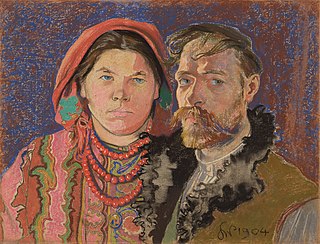
Chłopomania or Khlopomanstvo are historical and literary terms inspired by the Young Poland modernist movement and the Ukrainian Hromady. The expressions refer to the intelligentsia's fascination with, and interest in, the peasantry in late-19th-century Galicia and right-bank Ukraine.

Emil Isac was an Austro-Hungarian-born Romanian poet, dramatist, short story writer and critic. Noted as one of the pioneers of Symbolism and modernist literature in his native region of Transylvania, he was in tandem one of the leading young voices of the Symbolist movement in the neighboring Kingdom of Romania. Moving from prose poems with cosmopolitan traits, fusing Neo-romantic subjects with modernist free verse, he later created a lyrical discourse in the line of Social Realism. Isac was likewise known for criticizing traditionalist and nationalist trends in local literature, but, by the end of World War I, opened his own poetry to various traditionalist influences.
The World According to Ion B. is a 2009 HBO Romania and Alexander Nanau Production documentary film. The film was written, produced, directed, and photographed by Alexander Nanau.
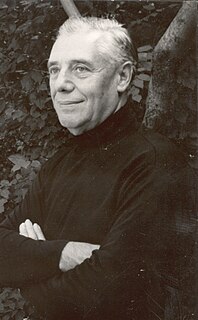
George Ivașcu was a Romanian journalist, literary critic, and communist militant. From beginnings as a University of Iași philologist and librarian, he was drawn into left-wing antifascist politics, while earning accolades as a newspaper editor and foreign-affairs journalist. As editor of Manifest magazine, he openly confronted the Iron Guard and fascism in general. In the mid 1930s, he became a member of the Romanian Communist Party (PCdR), though he maintained private doubts about its embrace of Stalinism. Despite enjoying protection from the more senior scholar George Călinescu, Ivașcu was persecuted, and went into hiding, during the first two years of World War II. He reemerged as a pseudonymous correspondent, then editorial secretary, of the magazine Vremea, slowly turning it away from fascism. In parallel, he also contributed to the clandestine left-wing press, preparing for an Allied victory.

The Old Man and the Bureaucrats is a 1967 novella by the Romanian writer Mircea Eliade. It tells the story of a man who is interrogated by Romania's communist authorities, and puzzles the interrogators when he tells stories of local lore. The book was published in English in 1979. Together with two other stories by Eliade it forms the basis for the 1996 film Eu sunt Adam.

Aron Cotruș was a Romanian poet and diplomat, member of the fascist Iron Guard.

Sofia Nădejde was a Romanian novelist, playwright, translator, journalist, women's rights activist and socialist.

Ștefan Petică was a Romanian Symbolist poet, prose writer, playwright, journalist and socialist activist. Born in the countryside of Tecuci, he early displayed a voracious appetite for literature and philosophy. After high school, he made his way to the national capital Bucharest, where university studies soon gave way to low-paid newspaper work. Petică published one volume of poetry before his premature death, and left his mark as one of the first exponents of the domestic Symbolist movement.

Aurel Baranga was a Romanian playwright and poet.
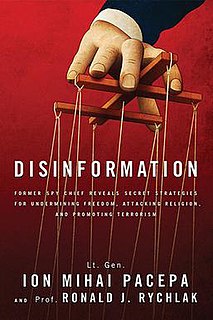
Disinformation: Former Spy Chief Reveals Secret Strategies for Undermining Freedom, Attacking Religion, and Promoting Terrorism is a 2015 non-fiction book about disinformation tactics and history rooted in information warfare. It was written by former general in the Securitate, the secret police of Socialist Republic of Romania, Ion Mihai Pacepa, and law professor Ronald J. Rychlak. It was published in 2013 along with a companion film, Disinformation: The Secret Strategy to Destroy the West.
References
- 1 2 3 4 John Neubauer (2007). "General Introduction". In Marcel Cornis-Pope; John Neubauer (eds.). History of the Literary Cultures of East-Central Europe: Junctures and disjunctures in the 19th and 20th centuries. Vol. III. Amsterdam; Philadelphia: John Benjamins Publishing Company. p. 59. ISBN 978-90-272-9235-3.
- ↑ Corina L. Petrescu (2011). "Performing Disapproval toward the Soviets" (PDF). In Martin Klimke; Jacco Pekelder; Joachim Scharloth (eds.). Between Prague Spring and French May. New York; Oxford: Berghahn. Archived from the original (PDF) on 16 December 2014.

