Spirit possession is an unusual or an altered state of consciousness and associated behaviors which are purportedly caused by the control of a human body and its functions by spirits, ghosts, demons, angels, or gods. The concept of spirit possession exists in many cultures and religions, including Buddhism, Christianity, Haitian Vodou, Dominican 21 Divisions, Hinduism, Islam, Wicca, and Southeast Asian, African, and Native American traditions. Depending on the cultural context in which it is found, possession may be considered voluntary or involuntary and may be considered to have beneficial or detrimental effects on the host. The experience of spirit possession sometimes serves as evidence in support of belief in the existence of spirits, deities or demons. In a 1969 study funded by the National Institute of Mental Health, spirit-possession beliefs were found to exist in 74% of a sample of 488 societies in all parts of the world, with the highest numbers of believing societies in Pacific cultures and the lowest incidence among Native Americans of both North and South America. As Pentecostal and Charismatic Christian churches move into both African and Oceanic areas, a merger of belief can take place, with demons becoming representative of the "old" indigenous religions, which Christian ministers attempt to exorcise.

Necromancy is the practice of magic involving communication with the dead by summoning their spirits as apparitions or visions for the purpose of divination; imparting the means to foretell future events and discover hidden knowledge. Sometimes categorized under death magic, the term is occasionally also used in a more general sense to refer to black magic or witchcraft as a whole.
Maya, literally "illusion" or "magic", has multiple meanings in Indian philosophies depending on the context. In later Vedic texts, māyā connotes a "magic show, an illusion where things appear to be present but are not what they seem"; the principle which shows "attributeless Absolute" as having "attributes". Māyā also connotes that which "is constantly changing and thus is spiritually unreal", and therefore "conceals the true character of spiritual reality".
Magic realism, magical realism or marvelous realism is a style or genre of fiction and art that presents a realistic view of the world while incorporating magical elements, often blurring the lines between fantasy and reality. Magical realism is the most commonly used of the three terms and refers to literature in particular. Magic realism often refers to literature in particular, with magical or supernatural phenomena presented in an otherwise real-world or mundane setting, commonly found in novels and dramatic performances. In his article "Magical Realism in Spanish American Literature", Luis Leal explains the difference between magic literature and magical realism, stating that, "Magical realism is not magic literature either. Its aim, unlike that of magic, is to express emotions, not to evoke them." Despite including certain magic elements, it is generally considered to be a different genre from fantasy because magical realism uses a substantial amount of realistic detail and employs magical elements to make a point about reality, while fantasy stories are often separated from reality. Magical realism is often seen as an amalgamation of real and magical elements that produces a more inclusive writing form than either literary realism or fantasy.

Ceremonial magic encompasses a wide variety of rituals of magic. The works included are characterized by ceremony and numerous requisite accessories to aid the practitioner. It can be seen as an extension of ritual magic, and in most cases synonymous with it. Popularized by the Hermetic Order of the Golden Dawn, it draws on such schools of philosophical and occult thought as Hermetic Qabalah, Enochian magic, Thelema, and the magic of various grimoires. Ceremonial magic is part of Hermeticism and Western esotericism.
Black magic has traditionally referred to the use of supernatural powers or magic for evil and selfish purposes.
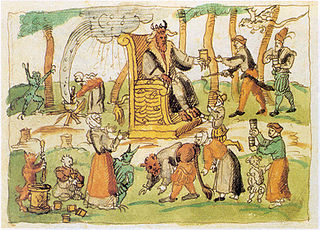
A Witches' Sabbath is a purported gathering of those believed to practice witchcraft and other rituals. The phrase became especially popular in the 20th century.

Franz Bardon was a Czech occultist and student and teacher of Hermetics.

The association of Nazism with occultism occurs in a wide range of theories, speculation, and research into the origins of Nazism and into Nazism's possible relationship with various occult traditions.

Mentalism is a performing art in which its practitioners, known as mentalists, appear to demonstrate highly developed mental or intuitive abilities. Performances may appear to include hypnosis, telepathy, clairvoyance, divination, precognition, psychokinesis, mediumship, mind control, memory feats, deduction, and rapid mathematics. Mentalists perform a theatrical act that includes special effects that may appear to employ psychic or supernatural forces but that are actually achieved by "ordinary conjuring means", natural human abilities, and an in-depth understanding of key principles from human psychology or other behavioral sciences.
Sex magic is any type of sexual activity used in magical, ritualistic or otherwise religious and spiritual pursuits. One practice of sex magic is using sexual arousal or orgasm with visualization of a desired result. A premise posited by sex magicians is the concept that sexual energy is a potent force that can be harnessed to transcend one's normally perceived reality.
An egregore is a concept in Western esotericism of a non-physical entity or thoughtform that arises from the collective thoughts and emotions of a distinct group of individuals.

The body of light, sometimes called the 'astral body' or the 'subtle body,' is a "quasi material" aspect of the human body, being neither solely physical nor solely spiritual, posited by a number of philosophers, and elaborated on according to various esoteric, occult, and mystical teachings. Other terms used for this body include body of glory, spirit-body, luciform body, augoeides, astroeides, and celestial body.

Inspiration is an unconscious burst of creativity in a literary, musical, or visual art and other artistic endeavours. The concept has origins in both Hellenism and Hebraism. The Greeks believed that inspiration or "enthusiasm" came from the muses, as well as the gods Apollo and Dionysus. Similarly, in the Ancient Norse religions, inspiration derives from the gods, such as Odin. Inspiration is also a divine matter in Hebrew poetics. In the Book of Amos the prophet speaks of being overwhelmed by God's voice and compelled to speak. In Christianity, inspiration is a gift of the Holy Spirit.
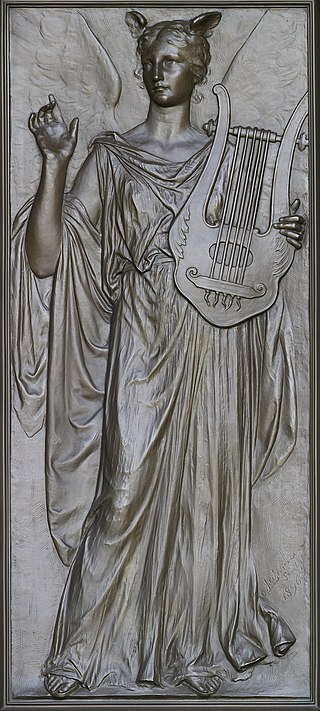
Imagination is the production of sensations, feelings and thoughts informing oneself. These experiences can be re-creations of past experiences, such as vivid memories with imagined changes, or completely invented and possibly fantastic scenes. Imagination helps apply knowledge to solve problems and is fundamental to integrating experience and the learning process. As a way of building theory, it is called "disciplined imagination". A way of training imagination is by listening to storytelling (narrative), in which the exactness of the chosen words is how it can "evoke worlds".
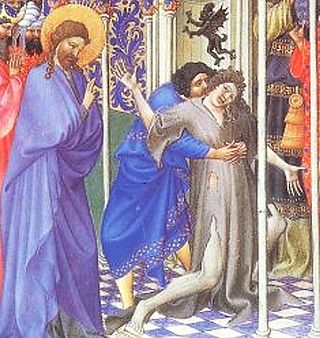
In English translations of the Bible, unclean spirit is a common rendering of Greek pneuma akatharton, which in its single occurrence in the Septuagint translates Hebrew ruaḥ tum'ah.
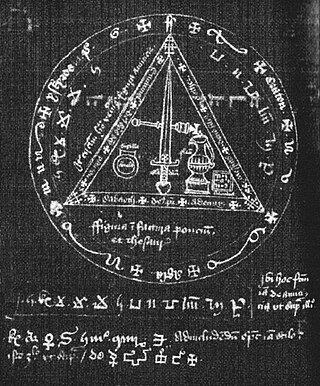
During the Middle Ages, magic took on many forms. Instead of being able to identify one type of magic user, there were many who practiced several types of magic in these times, including monks, priests, physicians, surgeons, midwives, folk healers, and diviners. The practice of magic often consisted of using medicinal herbs for healing purposes. Classical medicine entailed magical elements. They would use charms or potions in hopes of driving out a sickness. People had strongly differing opinions as to what magic was, and because of this, it is important to understand all aspects of magic at this time.
Ernst Schertel was a German author, probably best known for his 1923 Magic: History, Theory and Practice. He had an "astonishingly diverse career", including running an eight-member dance troupe, the Traumbuhne Schertel, which was active from 1925 to 1927.
In chaos magic, gnosis or the gnostic state refers to an altered state of consciousness in which a person's mind is focused on only one point, thought, or goal and all other thoughts are thrust out. The gnostic state is used to bypass the "filter" of the conscious mind – something thought to be necessary for working most forms of magic.