Related Research Articles
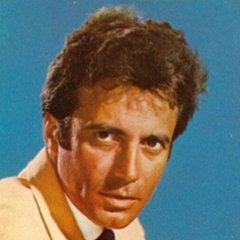
Alejandro Rey was an Argentine-American actor and television director.

The Soul of the Accordion is a 1935 Argentine tango musical film directed by Mario Soffici and written by José A. Bugliot. It is considered one of the earliest classics of Argentine cinema.

Mateo is a 1937 Argentine crime drama film directed by Daniel Tinayre, which he adapted from the play by Armando Discépolo. Starring Luis Arata, Enrique Santos Discépolo, José Gola and Alita Román, it was the first successful film of Tinayre's.

The Newsie and the Lady is a 1938 Argentine comedy film directed and written by Luis César Amadori.
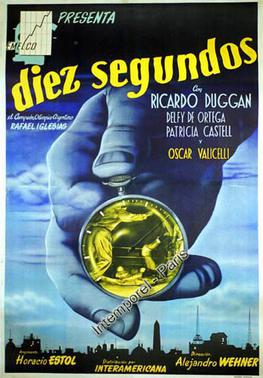
Diez segundos is a 1949 Argentine film directed by Alejandro Wehner, produced by Emelco studios. The film is a boxing drama starring Ricardo Duggan, María Esther Buschiazzo, Patricia Castell, Carlos D'Agostino (voice), Delfy de Ortega, María Rosa Gallo, Oscar Valicelli and Oscar Villa. It premiered on November 23, 1949 in Buenos Aires. The film was distributed by Interamericana. Castell and Rosa Gallo would later star alongside each other in several films and television series over several decades including Perla Negra and Zíngara (1996).
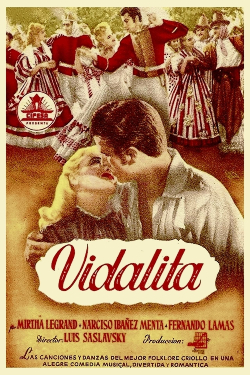
Vidalita is a 1949 Argentine comedy film directed and co-written by Luis Saslavsky and produced by Emelco. It stars Mirtha Legrand as the title character, a girl who cross-dresses as a gaucho to be able to take charge of her grandfather's estate. This was considered transgressive for the time.i Fernando Lamas stars as the captain of the fort, who falls in love with Legrand's character "to the point that he is willing to marry her without knowing if she is a man or a woman".
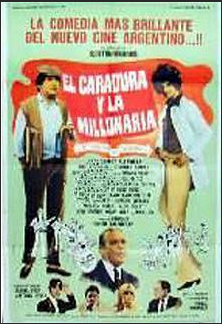
El Caradura y la millonaria, also known as No estoy enamorada de tí, pero te quiero. is a 1971 Argentine comedy film directed by Enrique Cahen Salaberry. It was one of several films by Cahen Salaberry after his return from Spain to Argentine cinema in the 1960s. The screenplay was written by Luis Cesar Amadori and Antonio Botta. It is a remake of the 1938 film El canillita y la dama. The film premiered on 6 March 1971, and starred Juan Carlos Altavista and María Vaner, with Vaner performing her own songs.
Juegos de verano is a 1973 Argentine erotic film directed by Juan Antonio Serna and starring Linda Peretz and Ricardo Morán.
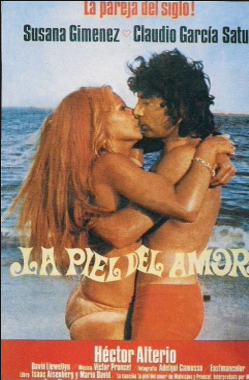
The Skin of Love is a 1973 Argentine romantic comedy-drama film directed by Mario David, who also wrote the script, working with Isaac Aisemberg. Shot in Mar del Plata, it stars Susana Giménez, Claudio García Satur, Héctor Alterio and David Llewellyn. Víctor Proncet composed the soundtrack. Though not critically acclaimed, it became a popular film on television in Argentina.

Los golpes bajos is a 1974 Argentine film directed by Mario Sábato. It is a film about boxing, inspired by José María Gatica. Shot in Eastmancolor, Sabato wrote the script in collaboration with Mario Mactas. The film stars Aldo Barbero, Héctor Alterio, Walter Vidarte and Ana María Picchio.
No apto para menores is an unreleased Argentine film directed by Carlos Rinaldi. The film's release was blocked by the censorship authorities in 1979. It has only "be seen by a few".

Alita Blanca Barchigia, better known as Alita Román, was an Argentine film actress of the Golden Age of Argentine Cinema (1940–1960).
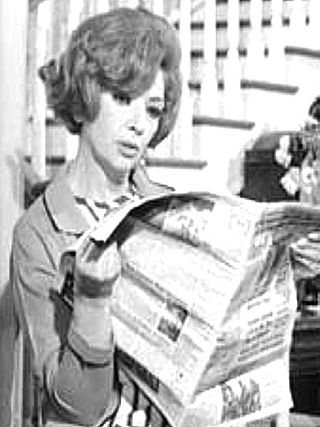
Myriam de Urquijo born Pilar Palacios de Urquijo was an Argentine film, stage and television actress.

Rosa Palumbo, was an Argentine actress, singer and vedette. She had a career in theater and also made five films. In 1944, she formed the "Comedy Society of Rosita Contreras" and debuted as a comedic actress comedy in Una divorciada peligrosa, directed by Enrique Guastavino, followed by La novia perdida in the same year. Other works included Retazo and Al marido hay que seguirlo. In 1950, she became a member of the initial executive committee of the Ateneo Cultural Eva Perón.

Paulette Christian was a French-Argentine vedette, singer and actress of film, theater and television who had a long career in Argentina. Christian had been a member of the anti-Nazi resistance during World War II. She spent seven years in the US. She made her acting career during Argentina's golden age of film and television. She appeared with José Cibrian, Osvaldo Miranda, Angel Magaña, Zulma Faiad, Jorge Larrea, Susana Campos, Amelia Bence, among others. She debuted on television in 1955. She was a pioneer in the French bataclanas style in Argentina, along with May Avril and Xénia Monty. She committed suicide in 1967.
Aurelia Del Carmen Guarini is an Argentine anthropologist, teacher, film director, and film producer specializing in anthropological documentary films. She teaches visual anthropology and directs documentaries in Argentina and in Cuba. She serves on the documentary projects' evaluation committee at the National Institute of Cinema and Audiovisual Arts and participates in Cine Ojo projects.

Aída Olivier was an Argentine dancer, vedette and actress of cinema and theatre.
Mario David was an Argentine film director and screenwriter. He directed and wrote 12 films between 1971 and 1996.
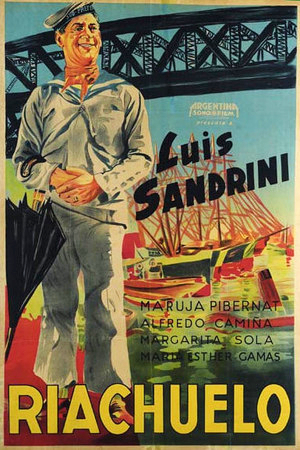
Riachuelo is a 1934 Argentine comedy film directed by Luis Moglia Barth and starring Luis Sandrini as his popular character Berretín. The cast also included Maruja Pibernat, María Esther Gamas, Alfredo Camiña, Margarita Solá, Héctor Calcaño, Froilán Varela and Juan Sarcione. It was the third film produced by Argentina Sono Film, one of the first major film studios in the country, which had inaugurated the sound period and the Golden Age of Argentine cinema the previous year with the release of ¡Tango! The film premiered on 4 July 1934 at the Renacimiento theater in Buenos Aires.
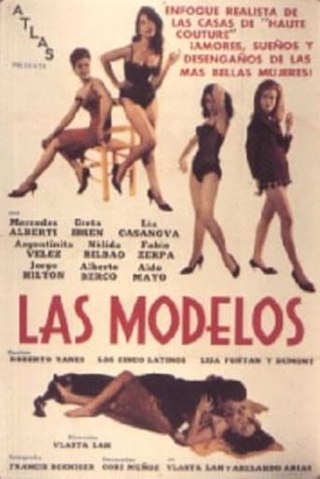
Las modelos is a 1963 film directed and written by Vlasta Lah, the first woman director of sound films in Argentina and the only woman filmmaker in 1960s Latin America. It was her second and last film, released after her 1960 directorial debut Las furias. The film tells the story of Sonia and Ana, two young haute couture models, who are played by two real-life models instead of actresses.
References
- Blancos Pazos, Roberto (1997). Un diccionario de actrices del cine argentino (1933-1997) Buenos Aires, Editorial Corregidor. ISBN 950-05-1077-4.
- Manrupe, Raúl; Portela, María Alejandra (2001). Un diccionario de films argentinos (1930-1995) Buenos Aires, Editorial Corregidor. ISBN 950-05-0896-6.
